googlee7ea825f63edb3f6.html

Saturday, 14 October 2023

‘THE WEB OF FEAR’ (PATRICK TROUGHTON’S DOCTOR WHO)

First broadcast Feb/Mar 1968
Written by Mervyn Haisman + Henry Lincoln 
PLOT SPOILERS lie ahead, as likely as line delays! 


“It’s like a spider's web, ain't it?”
“Yes. And we're the flies, all right. But where is the spider?”


Yeti on the Circle Line

A mere three stories after ‘The Abominable Snowmen’… this is the fastest reappearance so far. Which takes us to a poser. As we’ve seen before, ’Doctor Who’ is often torn between the requirement of individual stories to do their own thing and the imperative to build up a rogue’s gallery of monsters. Repeat performances can lead to diminished returns. And yet the Yeti…

Their first appearance was, if not bad, not better than okay. While this, their second, is widely regarded as a classic. Despite retaining the original writers, Mervyn Haisman and Henry Lincoln. What can have caused this uptick in quality?

One answer is setting. Classic ’Who’ spends so much time hanging round the same few sets, getting those sets right is significant. And this is of course the one where they decided to take the Tube. Which makes a virtue out of the necessity for limited and confined spaces. And of then throwing everything into semi-darkness so you don’t see quite how limited and confined they are.

Even the one above-ground sequence in the fourth episode, though shot at least partially in the streets, is normally made up of close-cropped shots - rarely including any sky, keeping things claustrophobic. (Taking the Yeti out of the shadows, alas, works less well.)


But there’s an extra element… At first, the travellers don’t know they’re in the Underground. And while of course we watch with hindsight, surely even contemporary viewers would have recognised it before them. Or at the very least Londoners would, at a time the Beeb was London-centric. And they were supposed to. The original plan, after all, had been to shoot on location.

So familiar names like ‘Holborn’ and Charing Cross’ have been taken over by this alien entity, it’s remorseless progress displayed on the regular Tube map. (Wyndham does something similar with above-ground place names in ‘Day Of the Triffids’.) This may be so widely seen as a classic story because it does such a classic ’Who’ thing - defamiliarise the familiar, turn it into something sinister.


And, whether the setting inspired, whether new script editor Derrick Sherwin had a hand in it, or whether it was just a case of second time lucky… Haisman and Lincoln also turn out a significantly better script this time round.

In the big scheme of things this may follow in the wake of ‘The War Machines’ in establishing the ‘aliens head for the Home Counties’ story type. But it’s eerily empty settings are actually a more similar experience to ‘Dalek Invasion Of Earth’. And like that story only more so, everything is stripped down for action, pressed into service. It feels less meandering, more compelling.

As is not unusual, very little makes sense. (If what the Great Intelligence wants is the Doctor, who go to so much trouble to take over the whole of London?) But pressing questions are constantly thrown at you, to snatch your attention from this.

As has happened before now, the Doctor couldn’t be in an episode because Troughton had gone on holiday. Normally, everyone else keeps talking and hopes you don’t notice. This time his absence is foregrounded. The first episode cliffhanger essentially tells you itself how he escapes, even if we were likely to conceive he might be killed off. But with everyone constantly talking about him, you cannot help but wonder where he is or what he’s up to.
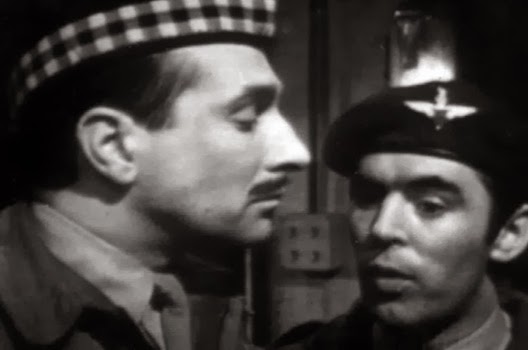

Though the overriding question, who is the traitor, suffers from hindsight. We all now know it can’t be the main suspect, because it’s the Brigadier. (Here still a Colonel.) Which, unfortunately, it mostly seems to be set up for. The eventual reveal seems both arbitrary and guessable. The Staff Sergeant dies then gets better again, even when the Private who died with him doesn’t? Mmm.

(There are admittedly set-ups. When Driver Evans, the comedy Welshman, gives the Doctor a Yeti figure which brings their bigger brethren to your door, he says this is on the Staff Sergeant’s order. Yet how he steals the web sample from the tobacco tin remains a mystery. And the most useful takeover for the Intelligence would be one person the Doctor never seems to suspect, the scientist Anne Travers. That way he’d know the lab findings straight away, without waiting for them to be passed on to the military.)

All-Out For the Otherly


More than most of the Troughton era, this story is saturated in the Cold War era, marinaded in paranoia. In the tradition of spy movies, what the Great Intelligence is after is intelligence. Intelligence inside the Doctor’s head rather than encrypted onto microfilm, but still intelligence.

Then there’s the deliberately inconclusive ending, when the Doctor’s rather Doctorly and Jamie’s more action-packed solutions conflict - allowing the Intelligence to escape. This of course sets it up to come back and be bad another day. But that was never so foregrounded with either the Daleks or the Cybermen. The lack of triumphalism is striking, and does suggest the way the Cold War didn’t just mean war, but war without end. (Early publicity shots of Jon Pertwee involved Yeti, so sure were they of a third outing. As it happened, quarrels over the rights ensured they never came back.)

Yet at the same time, again more than most of the Troughton era, looking for exact Cold War analogies won’t get you all that far. The Cybermen, as we’ve already seen, were a bad fit for stand-on Reds. The Great intelligence would be an even worse one. For that matter, it doesn’t really lead to any kind of analogies. ’The Abominable Snowmen’, as we saw, led naturally to talk of psychology and Buddhism. This story is so tightly woven it seems impervious to that sort of thing. Analogies bounce off like bullets from a Yeti’s hide.


Instead… Yes the Yeti are back, but this is the story which goes all-out for the otherly, ’Doctor Who’ as (capitalised) Weird fiction, if ever there was. But that Weirdness is conveyed through reference to things to be found here but which still feel otherworldly, on the borderline between being tangible and nebulous – webs, fog, pulsing fungus. The Intelligence is described as “a formless, shapeless thing, floating about in space like a cloud of mist.” The last story was titled ’The Abominable Snowmen’. Whereas this time that non-stuff even takes over the name. And not content with that it reappears in the end credits.

The vanishing fungus sample, however awkward a part of the whodunnit, fits neatly into this, as if the stuff is inherently ungraspable. Compared to them the Ice Warriors and Cybermen are solid, material things. They may well beat you in a fight. But at least you’ll recognise what’s going on while it happens.

In fact the image which will most likely will stay with me isn’t a rearing Yeti in a dark tunnel, even if that’s where Google searches go. In fact it’s Jamie and the Colonel opening a door. They fear there might be Yeti lurking the other side, as happened earlier. Instead they come across the pulsing fungus. It doesn’t look like the next room has something strange in it, it looks like the door opens to strangeness itself, one reality system invading another. It’s not entering our reality to enact some plan against us, the mere act of it entering our reality is inherently destructive.

Writing about an ‘Outer Limits’ episode he doesn’t even like, Mark Holcomb hits on the term “clinical weirdness”. And much of ‘Web Of Fear’s atmosphere comes from the matter-of-fact military mindset being held up against the all-out weird.

Moving the action forward a few decades, formally speaking this follows on from ‘Tomb Of The Cybermen’. Yet because of this sheer otherly business, it’s perhaps more akin to ’Web Planet’, even if the style is less interpretative dance and more Expressionist sketch. Count the ways - all a plot to trap the Tardis/Doctor (delete as appropriate), drones mysteriously carrying out the will of an alien intelligence, whose voice we don’t hear for some while. Not to mention the re-use of webs!

The Troughton era has a reputation for being formulaic. And it’s true that foes recur more frequently than with Hartnell. But just as the Cybermen were reworked in order tell new stories about them, so here is the Great Intelligence.

Yetis On the Loo In Tooting Bec

Among many other things, this is the story which establishes the meta gag “all these tunnels look the same to me.” You could perhaps argue for a long time over whether this is iconic and so became an establishing story in the show’s history, or it was establishing so now feels iconic. So let’s not.

Let’s note instead it doesn’t start in the standard way, with the Tardis landing somewhere new and their crew finding their way about. They’re travellers, after all, not secret agents. Instead the Intelligence makes a grab for the Doctor. There’s nothing that automatically associates that with repeat foes. In fact, ’Web Planet’ used it for an entirely new adversary. And ‘Celestial Toymaker’ for a retconned one. But it was also used with the Daleks, in both ‘The Chase’ and ‘The Evil Of the Daleks’. And a rise in repeat foes made it more likely.


But it’s generally agreed that more was being established here than ‘rogues gallery on rota’. It was also a prototype for stories set on contemporary Earth.(Well, England. Well, London. Well, North London.) Which came into their own with the next Doctor. (Even if they made full use of colour, while this is in every inch a black-and-white story.)

And so we inevitably head to that well-known Jon Pertwee comment: “All the threats should come to Earth… There’s nothing more alarming than coming home and finding a Yeti sitting on your loo in Tooting Bec.” (And I would indeed be alarmed at that thought. My loo being in Tooting Bec, that’s going to get inconvenient.)

An idea which Wood and Miles, in their ’About Time’ guide, pillory as “the worst idea ever.” They make one valid point, that incongruity is primarily a visual motif and less a a story idea. (You see much of it in Surrealist art, for example.) But ’Who’ is often bog-standard plots set on repeat, enlivened by some iconic visuals.

And how do we respond when we get that? Firstly children often perceive ‘imagistically’, taking in a cascade of images, rather than try to follow involved plots. I for one, if looking at old TV shows or comics from my youth, often stumble on an image embedded but isolated in my brain, and think “oh, that’s where that came from.”

Further, memory is primarily visual and highly selective, more a still camera than a CCTV recorder. Where ’Doctor Who’ remained alive, before re-releases were even conceived of, was in people’s memories. The disappointment some feel when re-united with those classic stories may be that their association was only ever with a few images, but became misattributed to the surrounding three hours.

But more importantly, both sides in this debate suppose the link between creating incongruity and Earth-set stories. Which isn’t necessarily the case. What we need is the juxataposition of familiar and unfamiliar, which is quite distinct from saying that we’re English so can only relate to English settings. The important feature in the example above is that the ordinary-looking door opens from an ordinary-looking room. And for that to happen things don’t need to be set on Earth. The earlier story 'The Macra Terror’ worked in a very similar way, despite being set on an unspecified colony which was quite unlike everyday Earth.

Saturday, 30 September 2023

‘THE ENEMY OF THE WORLD’ (PATRICK TROUGHTON’S DOCTOR WHO)

First broadcast Dec ’67/ Jan ’68
Written by David Whitaker
Beware the standard PLOT SPOILERS


DOCTOR: But isn't there another way out of this?
KENT: Only one. Be Salamander.

The Doctor Doubled (Twice)

In the distant year of 2018, Salamander poses as a public benefactor. But his plot is to set off volcanoes (and the like) around the world, blame the Governor of that region for not doing anything about them, depose him and replace him with his own man. Perhaps closely followed by laughing cruelly. And by coincidence he happens to look exactly like you-know-Who…

The initial impetus for this story was the same as for ‘The Massacre’. Feeling confined by always playing the same role, the lead actor asked if he could also do a villainous double. (And unless I miss my guess Troughton’s next words were “and I’d like to try an Italian accent… no wait, Mexican.”)

With ’The Massacre’, this was turned into an existential drama about the meaninglessness of identity and futility of existence. Mostly conveyed by making no sense whatsoever. This time its taken it as an excuse for a rip-roaring adventure story, with action babes in helicopter chases. Things had changed, it seemed, over those last few years…

This has come to be known as the ‘*Who’* does Bond story. But patented Bond motifs don’t appear - the over-elaborate execution attempt, the steady supply of gadgets, the penetrating of the villain’s secret lair and so on. It’s more Spy-Fi in general, which was after all a very Sixties genre.


Take for example rebel agent Astrid. She’s more Avengers woman than Bond girl, to the point you’re not surprised to hear Mary Peach subsequently auditioned for the show. Dressed throughout like a principal boy from a panto, she somehow refrains from slapping her thighs. It’s notable that she has relatively minimal screen time with the Doctor, and least of all when she’s being at her most kickass.

(Though the Guards seem graduates of Incompetent College even more than usual, perhaps even rivalling those of ‘The Space Museum’. No wonder she kicks her way through them with such impunity.)

The Bond comparison may be because that’s the best-known example of the genre. Or perhaps because some explosion footage is filched from ’From Russia With Love’. But it leads to this story’s reputation as the one that broke from the base-under-siege rule.

And indeed, sometimes it seems to exult in doing this. There doesn’t seem any real reason to relocate the action from Australia to Hungary other than to say that they’ve done it. Or more accurately, to say that they did it via rocket ship in under two hours. (Maybe Astrid knows a short-cut around Polynesia.)

And there’s the strangely unusual feature that the cliffhangers aren’t actually cliffhangers, and more like chapter endings. Episode four even picks up elsewhere from episode three’s ending. With all the running and shooting going on, it sometimes feels like everything that happens is a cliffhanger bar the episode endings themselves. (Bizarrely, another point of similarity to ’The Massacre’.) 

Okay, Bond to Spy-Fi, it might not sound so much of a shift. But once made you realise the Troughton era has been here before. With ‘The Faceless Ones’, ’The Evil of The Daleks’ and (perhaps to a lesser degree) ‘The Power Of the Daleks’ were all stuffed with espionage, treachery and surveillance. (‘The Highlanders’ is the notable exception, and that was essentially imposed upon the production team.)

But let’s take the bait and say the brief was ‘Bond on a budget’. The problem here’s the obvious one. It’s a bit like saying “pyramids, but small”. Remember the most recent Bond film when this was broadcast hadn’t been ’From Russia With Love’, but the somewhat more lavish ’You Only Live Twice’. Even ’The Avengers’, though another TV show, was granted a higher budget by commercial rival ITV.

The first episode gets going quickly, and soon turns into a chase involving hovercraft and helicopters. Okay, one hovercraft and one helicopter, still one more than you might expect. But you start to suspect the budget was spent on luring us in. Episodes two and three feature, among other delights, a display of villainy by smashing the good guys’ crockery, not quite on a league with killer lasers.

We’re all now used to the show staple of running round corridors as a way of filling time. Here someone sits down in a corridor and has a bite to eat. When Salamander exultantly tells a rumbled Jamie “ingenuity requires a constant stream of new ideas”, it seems almost an auto-critique.

Plus, it soon becomes obvious that showing two Troughtons is a logistical challenge that has to be saved for the final episode. And the solution’s to keep the Doctor out of the action. He keeps demanding proof of Salamander’s no-good nature. Whether for his own benefit or to show the world who their enemy is, that isn’t made terribly clear. But, seen from our ‘post-truth’ era, it all seems somewhat naive.

(I’d have been tempted to introduce a farce scenario, where the Doctor and Salamander keep narrowly missing one another. So one orders his men to all stand on their heads and leaves the room, only for another to enter and demand to know what they’re up to.)


For Evil to Exist, Good Men Must Be Credulous

And we’ve grown wearily used to this. An episode of set-up, and episode of resolution, and a whole bunch of running round in the middle. But just when we’re sunk into this, in episode four… yes, four… Whitaker throws in a curve ball.

Admittedly this answers a narrative question no-one’s been asking. Salamander’s power comes largely from his ability to manipulate the weather, like a one-man form of climate change. But we’ve been told he’s a diabolic mastermind, a type we’ve grown used to, and besides this is all futuristic stuff with rockets anyway. So no-one, within the tale or without, has wondered just how he achieves this. (Weather control seems a feature of this era. It has already appeared in ‘The Moonbase’, and shows up in the Avengers episode ’A Surfeit of H20’, 1965, and the Spy-Fi film ’Our Man Flynt’, 1966.)

It turns out Salamander has a team of patsies, who he’s hidden in an underground bunker for years, telling them nuclear war rages up above and they need to stoke up the weather against imagined foes. He’s a Devilish figure, more often seen manipulating or disposing of others than doing stuff himself. But the surface Salamander mostly worked by blackmail. While this Salamander, someone who brings out the good in people but then twists it for his own nefarious ends, seems more narratively interesting.

But more, the evil doppelganger trope is widely thought to be about the elements you most repress in yourself coming back in the guise of another person. And this is more the stuff an evil un-Doctor would do. There’s something almost Christ versus Anti-Christ about it. Against the Doctor who was the most quiet and unassuming, Salamander is a charismatic public figure who has the world idolising him.

For much of the time, he exists in a kind of double vision. We’re prompted to see him as a set of villainous signifiers, all scheming, swarthy and foreign. (And Not At All Racist, Just of Its Time.) Whereas the great world public all see him as a kind of saviour. (“A public benefactor. Quite a speaker too.”) So the bunker becomes a correlative to being trapped inside Salamander’s concocted worldview.

In the end there’s precisely one shot of the two Troughtons, the thing we came here for. But Salamander almost immediately then getting thrown out the Tardis, there is something satisfying to that - like they’re two magnetic poles which repel one another.

Moreover it turns out that, when it didn’t look like he was up to much, Whitaker’s been adept with some smart set-up. First a question mark is thrown over Giles Kent, leader of the rebels, who tips off Salamander’s guards to force the Doctor into impersonating him.


We then meet black-clad, stern and abrasive Donald Bruce, who looks to be Salamander’s right-hand man. But this is followed by supercilious Benik, who manages to be unpopular even among his own men. (There’s multiple good performances, but Milton Johns excels in the love-to-hate-him department.). And Bruce turns out to be the ‘good German’, the one good man stuck in a bad system, willing to turn against his boss. (Apologies to any German readers. It’s the term popular use has stuck us with.)

As much as James Bond has a moral, it would be an anti-moral, that it takes a killer to kill a killer. Whitaker instead brings back a classic ’Who’ moral, that power will destroy itself. Benik orders his men to shoot to kill, then is laughingly told by a dying woman he’ll never be able to get the needed information from her now. Salamander is the one who dematerialises the Tardis, hoping for escape, instead extruding himself.

All in all, there is much to enjoy in this story. You just need to get over the hump of the second and third episodes. (Small wonder it’s reputation increased from the time when only the third was available.) But it’s also an odd mixture of protracted with bumpily elliptical, the latter particularly a problem in the last episode. Salamander meets his demise so late its as if he was trying to hang on for the final bell. Which means, after the absence of cliffhangers throughout, the final episode has one. Go figure!

Saturday, 23 September 2023

“AS FAR AS WE CAN FLY”: ’SPACE RITUAL’ BY HAWKWIND

(Top 50 Albums)


“Originally we just wanted to freak people out but now we’re just interested in sound. For instance, if a monotonous sound like a chanting goes on long enough, it can really alter people's minds.… We try to create an environment where people can lose their inhibitions. We also want to keep clear of the music business as much as possible - just play for the people. It's like a ship that has to steer around rocks, we have to steer round the industry.”
- Dave Brock, ’NME’ (Jan ’71)

”Everything exists for itself, yet everything is part of something else.”
- ’Space Ritual’ sleevenote

“You couldn't overstate the importance of Hawkwind if you tried. They're a credible candidate for the most important band in the history of everything, ever.” - Me

”Waiting For Take-off”

’Space Ritual’ (known by pedants as ’The Space Ritual Alive In Liverpool and London', 1973) is the finale and cumulation of Hawkwind’s classic space trilogy - following from and building on ’In Search Of Space’ (1971) and ’Doremi Farso Latido’ (1972). Citation does not seem needed. So what led to such an outpouring of awesomeness as this?

We have something of a clue in an earlier release, their eponymous debut. Which stated in the liner notes “by now we will be past this album”, suggesting they regarded it as something of a staging post. (It was after all released in April 1970, by a band who had only played their first gig in November 1969.) And I’m going to suggest that it lacks four vital elements…

First, though Nik Turner plays on the debut, he sang no lead vocals. Now, Dave Brock was the founder and band leader. (And sole constant member, up til today.) Who sang, frequently. But the founder felt no inclination to be the front man. Turner, whose initial involvement had been as a roadie, fell into that role but once there took to it with some relish.

They were described by frequent collaborator Michael Moorcock as, respectively, the band’s backbone and spirit. Brock was the tent pole, keeping the band up. But Turner was the carney character who called the punters in. (Though he sometimes shared, sometimes alternated that role with Robert Calvert. No-one has ever said Hawkwind’s history is insufficiently confusing.)

Second, though Dik Mik contributed electronics for the first album he didn’t team up with Del Dettmar till the second. (Dettmar was credited for synths, Dik Mik for “audio generator”. I have no idea what that is.) Now this was a time when bands often turned to electronic music. But the new instruments were mostly played in the old way, as if a concert pianist had his Steinway swapped for a synth at the last minute. Whereas with Hawkwind…

The first ever electronic film soundtrack, by Louis and Bebe Barron for ’Forbidden Planet’ (1956), had been credited as “electronic tonalities” rather than music. (Largely to circumvent their non-membership of the Musician’s Union. But it’s still a good description.) And Dik Mik and Dettmar worked in a similar way. They’d surge unpredictably, their sound barely controllable, like even the player isn’t really sure what’s going to happen next. And as both were more tinkering boffins than proper musicians that’s not altogether surprising. They saw their role as to “add atmospherics”. And electronics from this early era often has this quality, as if the preserve of haphazardly gifted amateurs, the Doctor in the Tardis rather than Jean Luc Picard aboard the Enterprise. More the Silver Apples than Rick Wakeman.

But the main giveaway is that it lacks the brilliant ‘cosmic hieroglyph’ cover designs Barney Bubbles would provide for the space trilogy. These were complete and integrated works of design, rather than just a logo slapped atop an image of the band. See for example ’In Search of Space' below. (Just about visible is the way the gatefold had a jagged centre opening.)


”Space is one solution”

Finally, and perhaps the cherry to place on the top of all this, the first album containing no references to space. Though adverts for it still proclaimed “Hawkwind Is Space Rock”.

Now mention Hawkwind and most will say ‘Space Rock’ straight back at you. But then mention Space Rock and most will say ‘Hawkwind’. Pink Floyd’s early years notwithstanding, they pretty much define the genre. (As much as ex-member Lemmy’s next band, Motorhead, would do for Heavy Metal.) Partly because having had one… precisely one… hit single they fell into the strange situation of being the underground band the overground has heard of.

Okay, but Space Rock… was ‘space’ any more than just a euphemism for the verboten subject of drugs? Well partly, yes. ‘Acid rock’ often had the more mainstream-friendly (not to mention law-abiding) monicker substituted for it. And the lyrics to classic Hawkwind tracks such as ’Master of the Universe’ and ’Orgone Accumulator’ are respectively cosmological or Reichean, but those are fairly transparent metaphors for the real subject. (“It’s no social integrator/ It’s a one-man isolator”… hmm.)

Acid rock originally meant whatever soundtrack was added to Acid Trip parties. (Which early on was just regular rock music.) But Hawkwind weren’t just a setting to take drugs to, their music was a slightly different means to the same end. They nailed the notion of music as drug, music whose primary purpose was to alter the perceptions of the audience. Band members liked to tell the anecdote that they hid their drugs in their equipment, then kept prying police dogs away by playing sub lows at them. Which sounds a bit too good to actually be true. But there’s a symbolic kind of truth to it.

As Andrew Means said of them, “the listener is just as much a traveller as the musician”. Dave Brock cheerily conceded “it was basically freak-out music.”

And this is where space comes in, as a handy a metaphor for sonic exploration. It was a way of framing music which defied the confines of convention just like space transcends gravity. John Weinzierl of Amon Duul, more or less Hawkwind’s German cousins, summed up what it was to be radical youth at odds with all around you: “We had to come up with something new… Space is one solution.”

But space also stood for both the beyond and the imagination, the outer and inner realms, inasmuch as they’re different things. Robert Calvert commented “we can hypnotise the audience into exploring their own space. Space is the last unexplored terrain, it’s all that’s left, it’s where man’s future is.”

While Brock said: ”We were all reading science fiction and after the first moon landing, exploring the idea that everything could change. We were taking LSD, and the journey outward was also an inner journey, I suppose.” (Which was exactly what drew me to Science Fiction as a youth. And a huge part of the initial importance of Hawkwind to my young self was that you could get your music and your Science Fiction in one serving.)

Ken Kesey was ever-keen to point out that it was a CIA weapons programme which had given hippies LSD to take, initially literally. So it’s fitting that the other great product of the Cold War, the Space Race, provided the other escape route.

One route to sonic exploration was free jazz. Nik Turner described his aim as to “play free jazz in a rock band.” He’d hung out with free jazz players while travelling through Berlin, who were key in persuading him that expression was more important than technical ability. This was more to do with the approach than the sound. Though some of his sax playing can be very free jazz, particularly on ’You Shouldn’t Do That’.

But overall, their biggest free jazz inheritance was less direct. It was the way the band played in the moment and proved themselves so adept at improvisation. In the BBC documentary ’This Is Hawkwind, Do Not Panic’ Lemmy recalled: “It was a real rapport. We could be facing different ways and change at the same time during a jam… I’ve never had that since. I’ve never had it before that, come to that.”

This was the Sixties era, where collectivism held sway. (The line from ’Sonic Attack' “think only of yourself” is clearly intended as the Devil talking.) As Murray Ewing notes “how much the lyrics are about ‘we’ and ‘us’, ‘Deep in our minds’, ‘we shall be as one’, ‘So that we might learn to see/The foolishness that lives in us’. Consciously tribal, Hawkwind were seeking to create a communal experience.”  Added to which vocals are often chanty and choral-sounding, even with a whiff of folk to them. (This was perhaps only true for Brock. But then Brock contributed so many of the vocals.)

Yet Turner’s squalling sax is on the same track as some of the most intense riffing you’re likely to hear. ’You Shouldn’t Do That’, a sixteen-minute epic, audaciously opened their second album ’X In Search Of Space’ (1971). Repetition and sensory overload should surely be contrary forces, yet here they’re combined into one heady brew. It may well be the band’s finest studio moment.

Joe Banks tried to capture their recipe:“Hawkwind took the heavier end of the 60s underground sound as a starting point and created a monolithic concoction of garage rock, primitive electronics and free jazz, with the power of repetition and the riff always to the fore.” And he’s right about the riffs. Hawkwind’s USP was to combine the earthiness of hard rock with the spaciness of… well, space without losing the benefits of either.

Pink Floyd, then still darlings of the UFO club rather than arena fillers, were an early influence. But, as so often, it’s the differences which are significant. On ’Interstellar Overdrive’, aesthetes and post-graduates, Floyd dispense with the riff almost as soon as they can. They just needed a countdown routine, a hand-hold to hook the listener, before dumping them deep in zero gravity. Whereas Hawkwind, deranged freaks, pile on the riff with the zeal of young lovers.

Banks again: “Hawkwind’s willingness to let the music splurge messily outside the lines - to overwhelm a song’s structure without destroying it - is what sets them apart from the rest of the British rock scene….In a scene dominated by music that values technical flash over visceral noise, Hawkwind are travelling in the opposite direction by unlearning the rules of traditional blues-based rock.”

Well, yes and no. There was a whole period where clueless music journos noted Hawkwind had synths and sang about space, and so labelled them Prog. (Partly because of the bozo assumption that anything early Seventies that didn’t look like Glam must by definition be Prog.) Despite them not having anything like the flamboyant approach to musicianship or the ‘clean’ sound of the genre. Rightly reacting against this, we tended to veer too far the other way and insist on their absolute originality.

Whereas, in truth, their genesis came amid an era of heavy riffing. ‘Hard rock’, a term which now sounds more like a tautology than something that needs inventing, came into common use around this time. Iron Butterfly’s ’In-A-Gadda-Da-Vida’, released in 1968, had done much to trailblaze this. Hawkwind’s first album was released a mere two months after the Black Sabbath’s debut. (Who weren’t yet associated with a metalhead scene which was only starting to exist, but thought of as a “people’s band” much in the same way as Hawkwind. They may not have played as many counter-cultural benefits. But then who did?.)

”Perhaps The Dying Has Begun”

And this part-explains an often-asked question. In wider culture, they’re the British Grateful Dead, the symbol of a counter-culture which hadn’t died just because the media had announced it was time to move on. (Assisted by the way both bands has such vivid iconography, and such fanatical fans so given to networking.)

But the Grateful Dead had started in 1965, so it made some sense to see them as the emblem of an enduring Sixties. Hawkwind’s first gig wasn’t until 1969… until November 1969, barely scraping their way into the decade which supposedly defined them. And their first album didn’t appear until 1970, when the dream had been deemed over. Rob Chapman’s magnum opus ’Psychedelia and Other Colours’ (2015) mentions them not once. It seems a conundrum. How can you come so late to the party, and be its soundtrack? The answer to this is to turn the question the other way up.

It’s easy enough to portray hippies as blissed-out innocents, without a single salient idea beneath their headbands. Yet Hawkwind’s conception of space was one sometimes found in Science Fiction, where the Romantic notion of the Sublime was enhanced , extended and projected out onto the vastness of the cosmos. It’s where we must be, but at the same time it may well destroy us without even noticing. Think of the lyrics to ’Space Is Deep’:

“Space is dark, it is so endless
“When you're lost it's so relentless
“It is so big, it is so small
“Why does man try to act so tall?”
 

Or a couplet from ’Lord of Light’, which captures the perennial dualism: “A day shall come, we shall be as one/ Perhaps the dying has begun.” Or the way ’Brainstorm’ is simultaneously escape route from Earth, space rocket as one step up from teenage wheels (“Can’t get no peace till I get into motion/ Sign my release from this planet’s erosion”) and one-man suicide trip (“I’m breaking up, I’m falling apart/ I’m floating away.”).

True, psychedelic music hadn’t all been twee and pastoral. (However it was later caricatured.) Something like Pink Floyd’s ’Careful With That Axe Eugene’ was exquisitely sinister. But they were never so relentless, never so deranged, never bit into the brown acid as deeply as Hawkwind.


And where better to experience all of this than live? Live albums normally signify a band at an impasse. The label are on at them to put out something but they’re too coked up. Whereas Hawkwind were always primarily a live band. Their studio albums were often recorded in as close to live conditions as possible, sometimes containing live tracks regardless. But it was the all-live ’Space Ritual' where they really reached the stars. (Let’s see how many other entries in this top fifty are live albums. Not expecting a high number.)

And around this time they were gigging ceaselessly. Gigs organised like (in the album title) a ritual or (in the parlance of the time) a trip, rather than a live-action jukebox. And though culled from two separate shows, and requiring editing even to fit on a double LP, the album seeks to document that trip as much as possible. The three new tracks (‘Born To Go’, ‘Upside Down’ and ’Orgone Accumulator’) weren’t released on any subsequent studio album, confirming this was intended as a ‘proper’ release.

Brock… and it seems it mostly was Brock… had a gift for dynamics, both within and between tracks. He’d segue between the rocket-propelled heavy riffing tracks and the more lyrical numbers with finesse. For example from ’Born to Go’ into ’Down Through The Night’. These were often sung respectively by Turner and Brock, a similar dynamic to Waters and Gilmour in Pink Floyd from this era. (Most notably in ’Brain Damage’ where they trade vocals within one track.) And ’Space Ritual’ segues all the way through, not breaking for applause till the finale.

However, while it’s great we get to hear it, it’s shame we can’t see any of it. The band had ploughed the profits from their one hit single into creating an audio-visual experience. But filming, especially under stage lights, was a more expensive and technically challenging prospect in those far-flung days.

”World Turned Upside Down Now”

’Orgone Accumulator’ proved to be the pointer towards the next era of Hawkwind - not spacey but sleazy, low-down and rumbling. Rather than the riff just being the touch-paper to the sonic derangement, the track sticks unrelentingly with the riff like a pair of tight-fitting jeans, all rocket propulsion with no zero gravity. It’s described by Joe Banks (in the Quietus) as “brilliantly moronic”. 

To quote Murray Ewing again: “A community-binding collective of tribal shamans no more, Hawkwind became something like a normal band.” In the clearest sign of a changing of the guard, Dik Mik was replaced by the classically trained Simon House. (Though Del Dettmar stayed for one more album.)

Tracks became more like songs. Lyrics, which had been concerned with evoking the sense of something, more took up scenarios or even mini-narratives. Sleeves went for a more regular fantasy look. See for example the next release, 1974’s ’Hall of the Mountain Grill’ below. (The front cover, if not the back, is still by Barney Bubbles. But it’s an SF image adorned by band logo and album title, unlike the integrated design of earlier.)


But if they were now less space more rock, this was still a pretty good seam of rock. If they were no longer astral travellers, they were finding some pretty good places to visit on the ground. Though naysayers portray Hawkwind as something stuck in the Sixties it would be truer to say the very opposite, that they acted as a barometer of change. Their late Seventies era was full of dystopian grandeur, befitting the sourer times. The classic line was from ’High Rise’ – “He was just like you might have been/ On the ninety-ninth floor of a suicide machine”. It’s all that communal “we” chanting inverted. Now we all succumb to the same fate. Just one at a time.

”We Turned All This Noise On”

The winged shadow of Hawkwind is cast far and wide. Like Black Sabbath they may have stamped their identity on a genre, but their influence went way beyond that. John Lydon (ostensibly the default anti-hippy) has recounted buying their first album, and played no less than ’You Shouldn’t Do That’ when given a BBC radio show, while the reformed Pistols covered ’Silver Machine’. Joe Strummer was a fan, as were Black Flag's Henry Rollins and Dez Cadena. Crass' original mission statement was to be to the Pistols what Hawkwind were to the Beatles.

…and we’re not done yet, that was just the punks! Conrad Schnitzler, founder member of Kluster and Tangerine Dream, called them his favourite band. When Joy Division turned into New Order and took up electronics, they emulated Hawkwind. The Orb recorded a tribute called Orbwind.

Nigel Ayers of Nocturnal Emissions saw Hawkwind as the primary influence on Industrial and Noise music: “This is something that they rarely mention in the press, as Hawkwind have this reputation as a British ‘hippie band’… Whereas if they were a German hippie band… Zoviet France have told me they were very keen on Hawkwind. SPK were well into Hawkwind back in Australia… Hawkwind were the first band I was aware of to popularise the idea of sonic attack - infra and ultra sound as a weapon… Whenever I saw Throbbing Gristle I thought ‘Hawkwind without the lights and without the tunes’.” (‘Sound Projector’ 7, 2000)

In fact Throbbing Gristle, then trading as COUM Transmissions, played their first gig supporting Hawkwind. Even after becoming TG, they traded under the description “post-psychedelic trash”, while Simon Reynolds describes their sound (quite accurately) as “psychedelia inverted”.

Want to experience the vastness of space? Don’t hand over your savings to Branson or Bezos. Just get hold of these three albums, and you’ll be out there in no time.

“The streets were our oyster,
“We smoked urban poison,
“And we turned all this noise on,
“We knew how to fight.
“We dropped out and tuned in,
“Spoke secret jargon,
“And we would not bargain,
“For what we had found,
“In the days of the underground”

- ‘Days Of The Underground’

Otherwise unattributed quotes are from Joe Banks’ ‘Hawkwind: Days Of the Underground’ (Strange Attractor Press), which is a labour of love - with all the advantages and disadvantages that brings.

Saturday, 19 August 2023

THOSE DEAD MAN’S BLUES (ANOTHER SPOTIFY PLAYLIST)


Another Spotify playlist now up for your amusement and delicitation. With a suitable illo from Mexican printmaker Jose Guadalupe Posada. They’re developing more and more of a death theme, it seems. Well, that’s life. 

John Cale: If You Were Still Around
Mclusky: Whiteliberalonwhiteliberalaction
Ewan MacColl & Peggy Seeger: Aikendrum
Tunng: These Winds
Judy Dunlop + Ashley Hutchings: The Oak
Richard & Linda Thompson: Beat The Retreat
Bert Jansch: Poison
R.E.M.: Old Man Kensey
Robert Plant: Monkey
PJ Harvey: The Glorious Land
The Angels Of Light: Sunset Park
CAN: Soul Desert
The Waterboys: Medicine Jack
Julian Cope: Ain’t No Gettin' Round Gettin' Round
Faust: Tell The Bitch To Go Home

"Well here's the truth about Medicine Jack,
He painted his face and his whole shack black,
He went up in the woods and he never came back,
He must have got too close to the railroad track."


See y’all sometime in September…

Saturday, 12 August 2023

'THE INHERITORS’ BY WILLIAM GOLDING

(The final instalment of Pariah Elites. Beware, prehistoric PLOT SPOILERS lie below!)


“Here is a picture. Someone is - other. Not one of the people.”

Seeing The Picture

William Golding always cited his second novel, ’The Inheritors’, (1955) as his favourite, even it it never achieved the recognition awarded its predecessor ’Lord Of the Flies’. It’s centred on the people, a pre-human group from stone age times. And tells of their encounter with the new people, modern humans. Now surely such a thing cannot belong in a series on pariah elites, alongside van Vogt potboilers? Don’t be so fast…

Its distinction is to be written not just from the perspective of the people, but in an approximation of the language they would have used. Or, as Golding’s daughter Judy more accurately put it: “my father uses our language to show the lives of people who don’t really have it.” And accordingly every sentence, whether prose or dialogue, deepens our understanding of the people.

The language is therefore simple and direct, at points almost reading like stage directions. But still with something evocative to it:

“The red creature turned to the right and trotted slowly towards the far end of the terrace. Water was cascading down the rocks beyond the terrace from the melting ice in the mountains. The river was high and flat and drowned the edge of the terrace.”

And they speak so simply and directly, of course, because they lead a simple and direct life, chiefly based around foraging.

“Life was fulfilled, there was no need to look farther for food, to-morrow was secure and the day after that was so remote that no one would bother to think of it.”

Their perspective is in many ways child-like, including ascribing sentience to objects if they’re seen moving.

“The water was not awake like the river or the fall but asleep, spreading there to the river and waking up.”

But the best-known aspect of this is their communicating via ‘pictures’, as in their phrase “I see/ do not see that picture.” This suggests two things, that they have not ventured far into abstract thought, and that idea and memory are not separated. Stuck with a problem they assume it must have been encountered before, so the answer will lie in the past. While “this is a new thing” is said like a curse. Though we casually use phrases such as “I see what you mean”, there is something transportive about this. I first heard it decades ago, in a TV documentary on Golding, and found it has remained in my head ever since.

At the same time, their other senses are so acute they are described as having their own autonomy. For example, Lok’s feet are “clever” in dodging obstacles as he runs, while at another point “Lok’s ears spoke to Lok” but he doesn’t hear them as he’s asleep. They follow a trail less by visual clues than by scent, and can become so locked into the task their other senses barely register with them.

And speaking of Lok… His name is literally the first word of the novel and we stay with him right up until the penultimate chapter. The slowest-witted of the adult people, often in a state of “obedient dumbness”, he therefore becomes an unreliable narrator. Events are described through him faithfully but not always comprehendingly. We’re often required to read past his words to understand what’s actually going on. At points, others in the group are required to explain to him, and thereby us, what’s really happening.

But also, what he doesn’t perceive is as important as what he does. For example, when he first sees the new people he assumes they have “bone faces”. Which turns out to be their skin, but in the hitherto unfamiliar shade of white.

He hears the new people’s chatter, of course incomprehensible to him. But he continues to assume they can understand him. And he’s similarly unable to comprehend their hostility, like a schoolboy unable to take in that he’s being bullied, let alone do something about it. When they fire an arrow at him, he first assumes they must be sending him a gift.

But let’s ask an awkward question. If written through him so comprehensively, why isn’t it written as if by him, in the first person? Instead the novel opens more cinematically, the members of the tribe as brought into view one by one as they enter a setting. And at this point, emotions are given visual indicators. (“The grin faded and his mouth opened till the lower lip hung down.”) Though internal states do creep in as it progresses. (“Quite suddenly he was swept up by a tide of happiness and exultation.”)

The answer is this novel can’t be too centred on an individual, because it’s about a collective. Lok would not have seen himself as a discrete being, but as a part of the people. In one passage, heading on an errand, he looks back on the rest of the group from a vantage point where he’s no longer visible to them:

“All at once Lok was frightened because she had not seen him. The old woman knew so much; yet she had not seen him. He was cut off and no longer one of the people; as though his communion with the other had changed him. He was different from them and they could not see him. He had no words to formulate these thoughts but he felt his difference and invisibility as a cold wind that blew on his skin.”

And this is not in reaction to being lost or exiled, just temporarily separate. Later when he first sees the others he recoils into the comforting sense of being one of the people:

“They came in, closer and closer, not as they would come into the overhang, recognising home and being free of the whole space; they drove in until they were being joined to him, body to body. They shared a body as they shared a picture. Lok was safe.”

Then, right at the end of the novel, one section switches over to impersonal narration. For the first time we see Lok rather than see through him. (“A strange creature, smallish and bowed.”) At this point he’s the only one of his people left, bar a stolen baby. And, as he cannot exist alone, he’s effectively already dead. He’s described objectively because he’s become an object. When the root they’ve made the totem of their deity, Oa, is described simply as a tree root its heartbreaking, but heartbreaking precisely because its an unarguable truth.

There’s a section in Wyndham’s ’Day Of the Triffids’ (1951) which parallels this:

“The prisoner and the cenobite are aware that the herd exists beyond their exile; they are an aspect of it. But when the herd no longer exists there is, for the herd creature, no longer entity. He is a part of no whole: a freak without a place…no more than the twitch in the limb of a corpse.”


This communion also manifests in a profound empathy. When the old man of the group falls in the freezing river “the group of people crouched round Mal and shared his shivers.” They’re doing more than warming him with their body heat. They see no particular distinction from if they had fallen into the river. ‘An injury to one is an injury to all’ isn’t a credo to aspire to, it’s a functional feature of their lives.

Their ‘telepathy’ must be seen as stemming from here. Though that’s the term commonly used by commentators, and it would best suit this series, I’m not sure it’s quite right. Certainly not in the sense of a phoneless phone call. There’s a sense shared between them which is a combination of suggestibility and empathy. They share the same experiences which frame their thought, so share much the same thought, so can project their ‘pictures’ between brows. And the suggestion can travel because it is non-verbal, akin to the way a simple phrase can get communicated across a bad connection.

And what’s crucial here is that the people do not lose something nebulous such as ‘innocence’, even if that’s how the book is often described. They lose tangible things, a group bond and a perspective on the world perhaps beyond what we can imagine.

None of this is to suggest they lack individuality, or fail to see any sense of it in each other. Fa is clearly more acute than Lok. She not only works out before him the threat the new people pose, she hides from him her own realisation that they’ve killed a child. It’s that they don’t see the significance in individuality that we do.

The people are in an interchange between tribe and family group, from grandparents/elders down to infants. This was perhaps partly to make the cast list manageable, and partly to make them more sympathetic to Fifties audiences. (Golding’s daughter has suggested they were based on his own family.) Lineage is an unimportant question to them, subservient to if not overridden by the sense they are the people. Inferred from his actions, Liku must be Lok’s child, but he never refers to her as such.


Are We the Baddies?

How accurate is any of this? Golding seems to have told different tales over the years about the level of research he did. But we know he wrote the book quickly, and in the covering note originally sent to his publisher he confessed to doing little. Most likely, he simply relied on the knowledge he’d already absorbed and concentrated on writing.

I’ve done no great deal of research either, but some seems solid enough. Contrary to a common error, the people are nomadic rather than itinerant. As the novel opens they’re travelling from their winter to their summer quarters, and on reaching there act like coming home. It’s explained in some detail how they’re able to harvest fire but not make it, so carefully carry embers around with them embedded in clay.

We also discover they see it as sinful to hunt and kill, but acceptable to snatch already-dead prey from predators. Yet not only do we now know Neanderthals hunted, I’d not sure this mode of subsistence has existed anywhere. (Please correct me in the comments if I’m wrong!)

In Golding’s day it was still accepted that Neanderthals lacked the culture and communication skills of the Cro-Magnons, and so were if not eliminated then out-competed by their more innovative cousins. The discoveries of subsequent years have not exactly been kind to these easy notions. It would seem truer to say they did things differently, rather than not at all.

But then again, was this written as an exercise in scholarly accuracy? I do not see that picture. The Bible story of Cain slaying Abel is a kind of secondary Fall myth, where man turned against man and so became marked forever. It’s often regarded now as a mythologised retelling of hunting versus farming. This could be seen the same way, save that the stages represented are hunting versus gathering. We are better off reading it as a myth or fable than as a history of pre-history.

So it doesn’t make much literal sense that Lok looks uncomprehendingly upon the new people bonking, when he’s almost certainly a father himself. Or that the new people are white, when as more recent arrivals from Africa they’d more likely have been darker skinned than the natives. But this is a work of fiction, which affects us via symbols. Lok looks upon the new people as a child would upon adults. And the new people need to remind us of us, at a time when Golding’s readers would have been almost entirely white. So white they are.

How many times have you seen this trope in films? An exploratory mission is crossing a landscape, which seems devoid of life but turns out to contain hostile natives. The camera pans to their narrowed eyes, peering sinisterly from behind foliage. Golding reverses this, keeping the Cro-Magnons at a distance for almost the first half of the book. It progresses almost schematically, we see them first as distant murky shapes, very slowly getting closer to them. A whole chapter is given over to Lok and Fa observing their camp from hiding, literally reversing the standard perspective.

And their lurking at the periphery of the people’s vision is highly effective dramatically. This book is as compelling a read as anything else in this series, despite the relative lack of gaudy pulp covers, rocket ships and missile strikes.

The new people are compared to “when the fire flew away and ate up all the trees,” a collective trauma. But everyone instinctively runs from a fire, while they have something compelling about them. At one point Lok finds a flagon of their beer. Fa warns him off it, but he feels compelled to drink. “It was a bee-water, smelling of honey and wax and decay, it drew toward and repelled, it frightened and excited like the people themselves.” Soon, intoxicated by it, he cries out he now is the new people. It’s like Pandora’s Box as a liquid.

But of course all this raises the further question - why would we need such a fall myth be told? Despite what almost every writer in this series has assumed, evolution is not about linear progress but branching. Following one branch precludes the others, but that doesn’t make one branch objectively better.

In which case, why does this persist? Why, if that ’out-competed’ theory about the Neanderthals was so baseless, was it so widespread for so long? Of course, because people wanted it to be true. A capitalist society will forever try to divide us up into two groups, the entrepreneurs and forward thinkers versus the passive non-adaptors, who need to be dragged along the march of progress. (As one example, in Britain the Tories currently favour the term “the blob” for any and all of their adversaries, with its connotations of an inert blocking mass.) It seems to make sense to us, and so we project it back through time.

We serve ourselves up a fait accompli. The Cro-Magnons must surely have been innovators because they survived to become us. The Neanderthals cannot have been, because they died out. It’s a cross between doing down the neighbours and dissing the dead, in order to big ourselves up. And, in so doing, bestowing upon us an abundance of the things we regard as important.

So stone age dramas most commonly become a version of the Robinson Crusoe myth. They set brutishness up against an embryonic form of civilisation, smarts trumping strength, as if this was the era we struggled to rid ourselves of alternately our childhood or our ‘animal-ness’. (With the two often lazily elided together.)

As Susan Mandala has said: “Scientific and fictional accounts of human evolution share the same basic structure and elements as fairy tales, with humans emerging as transcendent after overcoming a series of obstacles.”

Meanwhile, over the other side of the fence, I have sometimes been treated to a hippie theory that spiritual, creative people (such as the Irish) were descended from Neanderthals and grasping, possessive types (aka the English) from Cro-Magnons. You may already be able to guess how accurate that is. As so often, the supposedly ‘alternative’ theory retains the mainstream concepts while somehow trying to invert the value system between them.

Golding is not, of course, as foolish as that. The people don’t lead some Edenic life, but one periodically plagued by hunger. Fa, the brains of the outfit, is firmly told to stop having ideas because girls don’t do that sort of thing. But like the hippies he retains the concepts. Except in his case he asks what downside those advances might have brought with them, and devises a scenario which best demonstrates his concerns.

The people live as part of the landscape. Lok’s reaction to returning to their summer camp is: “The river had not gone away either or the mountains. The overhang had waited for them. Everything had waited for them; Oa had waited for them. Even now she was pushing up the spikes of the bulbs, fattening the grubs, reeking the smells out of the earth, bulging the fat buds out of every crevice and bough.”

While the new people impose themselves upon the landscape, chopping down trees, broadening paths to carry their canoes. Tools become cursed objects, functionally useful but separating their wielder from the world, imposing upon them a utilitarian mindset. What makes them more civilised also makes them more savage. (Disclaimer: the people will use rocks and sticks as tools, in an impromptu manner, but do little to fashion them and don’t hang on to them after their immediate function is served. The only exception seems to be the thorn bushes they hold onto as defensive weapons.)

Ellethinks saw the distinctive thing about the new people as their use of abstract language, focusing on a scene where their onset stimulates linguistic concepts even in Lok. (And, though she doesn’t say so, to a greater degree in the smarter Fa, who’s able to devise a pincer assault on the new people.) This is a valuable point, but in itself insufficient. There must have been a means by which the new people were able to develop this enhanced language, it can’t by itself have instigated their difference from the people. It must be effect, not cause.

The final chapter switches to follow Tuami, one of the new people. They have taken the people’s baby. (Though I don’t think it was known then that Cro-Magnons and Neanderthals interbred.) He whittles at a knife he is making, whose handle will be half of the baby and half one of his own people. When it’s finished he intends to kill the group leader and usurp his role. The last line is “he could not see if the line of darkness had an ending.”


The Yesterday People

So to return to the initial question, does this belong? There’s one obvious similarity to other Pariah Elite novels. If in varying degrees, they try to capture in prose how the world would look to a differently working mind. But that’s a partial likeness at best. And Golding’s pessimism seems entirely at odds with the teleological optimism of something like ’The Tomorrow People’. 

And yet for all that they’re remarkably similar. Not just in their nascent form of telepathy, but their collective identity (that shared use of “people” is scarcely a co-incidence) which is enough of an erosion of the self/other distinction to turn them from violence. Andrew Rilstone smartly said that for all their jaunting and telekinesis “the Tomorrow People's main power is that they are nice.”

’The Tomorrow People’ portrays us in a state of becoming, for the nice will inherit the earth. While the people are effectively the Yesterday People, the last of the nice. But Golding’s pessimism isn’t absolute. He doesn’t say the line of darkness had no ending, only that Tuami could not at that point see it. The knife he makes is dualistic, and Neanderthal DNA still lies within us. We may see that picture yet.

Saturday, 5 August 2023

‘THE MIDWICH CUCKOOS’ BY JOHN WYNDHAM


(The latest in our look at Pariah Elites in fiction. Again with PLOT SPOILERS. First instalment here.
 Full list here.)


“Who are these children? There’s something about the way they look at one with those curious eyes. They are - strangers, you know.”

”In Arcadian Indistinction”

So John Wyndham wrote ‘The Chrysalids’, a commentary on the generation gap via the metaphor of psi powers. Which could be summed up a one-nil to youth. But, fifty-two when this was published and not necessarily down with the kids, he essentially played out the scenario again - and in reverse. ’The Midwich Cuckoos’ (1957) was to take on the perspective of the parents.

Should you not know the plot… everyone in the rustic village of Midwich is struck asleep at once. And when they awake, all the women have become pregnant. (Even the virgins, in what cannot feel other than a twist on immaculate conception.) And the children they carry turn out to be cuckoo-like aliens, sporting.. you may be ahead here… enhanced mental powers. If 'The Chrysalids’ could be reduced to the line “they cannot tolerate our rise”, this would be ‘Adults come from Earth, children from Venus.’

Brecht’s plays ‘He Who Says Yes’ and ‘He Who Says No’ (both 1930) rehearse twin arguments, whether a child should or should not be left behind for the greater good. But he rigs the odds each time, introducing different criteria which determine each of the courses of action, undermining any actual comparisons. And this is essentially what Wyndham does in these two books.

(I rather like the idea of two novels looking at the same events, one from one side’s perspective, the other from the norms. As if such divergent views couldn’t be contained within one cover. But that’s not at all what Wyndham has done.)

First and most obviously, we have the change in setting to ’The Chrysalids’ - back to more familiar territory in about every way. As we’ve looked at before on this blog, as one of the first countries to urbanise Britain developed a culture which venerated rural life. More than Big Ben or Saint Pauls, the Post Office and the bicycled bobby were our symbols. Wartime films such as ’Went The Day Well?’ (1942) showed rustic villages being taken over by foreign invaders not as some staging-post to London, but as if the heart of the nation was already seized.

And Wyndham does something similar with his more alien disturbing of Midwich’s restive calm. The first chapter reads like one of those spotters’ guides to English villages, pointing out the age of the apse in the local Church, so beloved to my parents. (He wrote much of the novel in the Hampshire village of Steep, as if gazing out the window for location information. The nearby, and similar-sounding, Midhurst has also been suggested as a source.)

Had none of the events in ’The Chrysalids’ happened, it would still have been a dystopia. Not just for the powered children, objectively a dystopia. Instead it’s their telepathy which offers a route out of the situation. Whereas, had none of the events in ’Midwich Cuckoos’ happened, had none of the Children arrived, English villagers would have led lives of, in Wyndham’s phrase, “Arcadian indistinction”.

Murray Ewing describes Wyndham’s writing style as “analgesic”. But its in Midwich where he goes into analgesic overdrive. The horror of the situation doesn’t rear up, it creeps up on you, slowly and remorselessly.

’Day of The Triffids’ had a weight of backstory to convey, but front loaded action before filling us in. This book devotes much time to explaining what happened in Midwich before the incident, which boil down to “nothing much”. Which may lay it on a little. The first six chapters, the first quarter of the book, tellingly have Midwich in their name. And only in the last of these do the mass pregnancies even happen. Though, inevitably, we now know what comes next and are in a hurry to get there. Wyndham’s intended reader didn’t, and so quite possibly wasn’t.


Further, ’Triffids’ stuck rigidly to its narrator’s perspective. For around half the book, he’s trying to find his love interest and we don’t know where she is because he doesn’t. ’Chrysalids’ isn’t so rigid because of the telepathy conceit, but has times when other characters fall out of contact with the narrator.

This book has a first-person narrator too. But there’s whole chapters he’s not present for, sections which go on so long you forget about him until he’s back. (There’s a brief ‘explanation’ he’s recounting events he was told of later.) At times, you’d be forgiven for thinking his presence was some sort of contractual obligation, which only required honouring formally.

Why the difference? If narrated by a Midwich local, this book has the village’s voice. Because this is not one person’s story, its the village’s story. With the assumption Midwich stands for the Home Counties, which stand for England, which stand for Britain. While we may react with derision to such a notion now, readers at the time would have taken this for granted. And its done because this is a story about our species encountering another. There needs to be a way this is conveyed collectively.

But things are taken further than that, and for their own reasons…

Mostly, one character relays events to some of the others, which they then discuss which something not far from philosophical detachment. Throughout, events occur at a distance - reported on, or sometimes elided over. Both ’Triffids’ and ’Chrysalids’ are rip-roaring action-adventures by comparison.

Advice is dispatched by Zellaby, some sort of public intellectual, the pipe-puffing equivalent of Dr. Vorless from ’Triffids’. (It’s surprising how many relate him to Coker, it’s definitely Vorless.) However, Vorless’ authority is effectively conveyed by his only appearing once, giving us our instructions and going. Whereas here its not the narrator but Zellaby’s perspective which dominates, which is of interested, detached contemplation But as we see him through the narrator this distances him further. We’re told: “as so often with Zellaby, the gap between theory and practical circumstances seemed too inadequately bridged.”

To use a term Graham Greene was fond of, this is a story of an involvement. The whole book can often feel like one of his many discourses, speculating and ruminating. At first he sees the changed Children purely as a fascinating object for study. But in the end… quite literally at the end he has to take himself out of his former existence, pontificating in studies before the dinner gong goes off, and get to grips with events. From thought to deed.

But Won’t Somebody Please Worry About the Children?

Zellaby is given to saying such things as “the desirability of intermittent periods of social rigidity for the purpose of curbing the subversive energies of a new generation.” Presumably to be brought about by the power of polysllabery alone. Or, at another point…

“The true fruit of this century has little interest in coming to living-terms with innovations; it just greedily grabs them all as they come along. Only when it encounters something really big does it become aware of a social problem at all, and then, rather than make concessions, it yammers for the impossibly easy way out, uninvention, suppression - as in the matter of The Bomb.”

(And we should note all of this gets settled by means of a bomb.)

The Campaign for Nuclear Disarmament was formed the year this book was published. And Midwich’s, and therefore the novel’s, resident intellectual is here to tell us how foolish the demands of those ban-the-bombers are. Though to be clear, they aren’t being compared to the Children. Instead, they’re part of the problem the Children are able to exploit. Lives of post-war ease and comfort have left them ill-equipped for this struggle.

Why this desire to dunk on the new generation? One barometer of this would be the increase in higher education. Though the rise would curve up more steeply in the Sixties, the trend had already begun. And higher education offered youth something much closer to a space of their own than the parental home or workplace. The era where your children simply grew to replace you as you wore out, new parts to be slipped in the same mechanism, that was was coming to a close.


As an example, compare a still from the film (more of which anon) to another teacher-and-pupil image, from ’An Unearthly Child’, the first ever episode of ’Doctor Who’. About which I once said: “The focus is less on Susan than the fascination she exerts over her teachers… [they] stand behind, looking to her. But she gazes out of the frame as if it’s a world which doesn’t contain her… expression inscrutable.” (As also said at the time, her mystery is beguiling not threatening, a significant difference. But the similarity between the images is still striking.)

While one Penguin cover frames a single Child in the foreground, again looking away from his environment, in the all-black outfit stereotypical to Beatniks.


However, as with van Vogt’s slans, the Children develop faster than regular kids and so are of indeterminate age. In some, this leads to a tendency to take their oldest age and go into moral panics about the teenager, juvenile delinquency and so on. But this tendency shouldn’t be over-indulged. Much of the book is about the disturbing effect of them being simultaneously the Children and regular children.

Some themes are era-specific, others universal. And for something that’s universal, try this. You have a child. You created them from yourself, and yet they’re someone else. They arrive as a stranger to you. You cannot simply impose your will on them like they’re a remote limb of yours. Changeling stories unsurprisingly go back into folklore. (And get referenced here.)

Yet, as is often, this universal theme had an era-specific context. Dr. Spock’s manual ’Baby and Child Care’ had been influential on post-war attitudes. He asked parents to take their cues from children rather than impose a routine on them, ‘demand feeding’ becoming almost a byword for his school of thought. This was based on the idea that a child’s actions should be seen as natural and normal. And the inevitable phobia which came from this reassuring voice was an ‘otherly’ child, who was not and could not be explicable to you.

And yet who is missing from this perspective? Who is definitely not detached, and from the off?

“It’s all very well for a man. He doesn’t have to go through this sort of thing, and he knows he never will have to. How can he understand? He may mean as well as a saint, but he’s always on the outside. He can never know what it’s like, even in a normal way - so what sort of an idea can he have of this? - Of how it feels to like awake at night with the humiliating knowledge that one is simply being used? - As if one were not a person at all, but just a kind of mechanism, a sort of incubator…. And then to go on wondering… what, just what it may be that one is being forced to incubate. Of course you can’t understand how that feels - how could you? It’s degrading, it’s intolerable. I shall crack soon. I know I shall.”

Which seems so central to the main conceit that surely the whole thing would have been much more effective if our central character had been a woman. Yet of course here this is effectively a short-term plot obstacle, an attack of the vapours by Zellaby’s wife, to be overcome by reassuring male voices. And - par for the course - even this isn’t actually said by a woman, it’s Zellaby reporting his wife’s words.

The narrator has a wife too, but she is un-induced due to a plot device. While the child of Zellaby’s wife, despite the outburst above, turns out to be normal. His daughter does have a changed child, but he succeeds in sending her away from Midwich and thereby out of the novel. In short Wyndham seems to signpost this road, then baulk at the prospect and instead detour around it. So if analysts don’t seem to talk about this theme much, its submerged in the book itself.

”The Eyes That Shine"


The book was the first work of Wyndham’s to be filmed, in 1960. A film about as successful as the later adaptation of ’Triffids' was a failure. But that success may have led to it over-imprinting itself on the book in our minds. One edition used a film still on the cover, not something ever done with ’Triffids’. (And yes, it’s the image we looked at earlier.)

In general the differences are effectively conveyed by the change in title, to ’Village of the Damned’. The film’s much more dramatic and suspenseful, a streamlining of the sometimes languid novel. And if that sounds like a good thing, it probably is. It demonstrates how much of the book can be cut without losing anything essential, how much the analgesia was over-applied. The problem is, the film’s success is largely on its own terms.


Google Image ‘Village of the Damned 1960’ (to cut out the later version) and what dominates is those malevolent glowing eyes, lighting up whenever the Children use their sinister powers. The trailer opened with them and they were spelt out on the film poster. (“Beware the stare that will paralyse the will of the world!”)

In the book, in a not unusual motif, their strangeness also lies in their eyes. Yet in a characteristically quieter way, their eyes don’t light up but their irises are gold. (There are perhaps two phrases from the book which the film built on - “they had a quality of glowing gold” and “The… boy turned, and looked at us. His golden eyes were hard, and bright.”) Yet this film invention is present on almost all the later book covers. Only the 2000 Penguin edition keeps to the gold original.


Further, in the book they look alike. Not similar, not even like identical twins, more like clones, unrecognisable even by their birth mothers. There’s way more of them than in the film, in fact there’s fifty-eight. It becomes evident they share one mind. (“It will not be an individual who answers me, or performs what I ask, it will be an item of the group.”)

They mostly wander Midwich in an undifferentiated mass, neither spoken to by nor speaking to anyone. Direct, sustained conversation with them doesn’t happen until more than two-thirds in. (And they influence us with a thought. Why would they bother to talk to us much?) And when they do speak they neither try to conceal their nature, not exult in their success. (“He spoke simply, and without innuendo, as one stating a fact.”)

The film may well improve things by upping the stakes in giving Zellaby a changed son of his own. Amusingly called David, the same as the lead in ’The Chrysalids’. (Though most likely only by coincidence.) Yet this takes away even as it gives, assigning the Children a natural leader and spokesman, undercutting their collective otherness.

And if the dominant image of the film is the shiny eyes, the best-known scene is the final showdown - with the “I-must-think-of-a-brick-wall” business. Zellaby first wishes to break through the wall surrounding their minds and ends up building one to defend his own, his character arc in microcosm. (Its the briefcase, badge of his academic authority, that conceals the bomb.)

But this is played entirely differently in the book. There, as the narrator phrases it, the Children become children again, trustingly carrying in what they believe is part of his film projector equipment. It becomes almost a variant of the “could you kill baby Hitler?” quandary.

A dog reacts against baby David, as animals would in the later and more clear-cut horror ’The Omen’ (1976). Some versions of the film poster called them “Child-demons”. We’re explicitly told, in a actual dialogue quote, “these children are bad.” While Wyndham said, in a 1960 BBC interview, “they aren’t so evil in the original story”.

In the film the children are invaders, if with a slightly different strategy to the usual march across Westminster Bridge. But in the book they have less a strategy than an assumption - their superiority and therefore their success are taken as self-evident, they just need to await victory. And in this way the parallels actually function, they are like ’The Chrysalids’, in particular the Sealand woman who said “we cannot tolerate their obstruction”. As they say…

“This is not a civilised matter, it is a primitive matter. If we exist, we shall dominate you — that is clear and inevitable. Will you agree to be superseded, and start on the way to extinction without a struggle?”

While Zellaby comes to understand…

“We, like the other lords of creation before us, will one day be replaced. There are two ways in which it can happen: either through ourselves, by our self-destruction, or by the incursion of some species which we lack the equipment to subdue. Well, here we are now.”

The triffids may gesture towards weird fiction. Their way of being is wholly incomprehensible to us, even as they’re garden plants come to get us. While the Children, however strange and however powerful, have more explicable motivations. While still infants they punish their parents for accidentally harming them, ascribing motive to happenstance as children will. (One mother accidentally jabs her child with a safety pin while changing him, and he causes her to repeatedly jab her own arm.)

Even when older, they tolerate us insofar as we don’t get in their way. They stretch our terms of reference, but they don’t lie wholly outside of them. And this is necessary for the theme of evolution to apply. The Children come next after us.

Evolution was Wyndham’s theme, running (as we’ve seen) through all three of his main books. And there’s an odd paradox at the heart of this, for this “primitive matter” is simultaneously about who is the most evolved. In one sense, cosy Midwich is too evolved to deal with the problem of the Children, in that it’s too removed from the harsh imperatives of life. With nothing to threaten us, we’ve grown languid. The Children arrive to reassert the law of the jungle. (And Midwich’s civility is specifically posed as the problem. Children colonies are set up elsewhere but, foreign being a less well-behaved place, they’re soon wiped out.)

And yet at the same time the Children are more evolved. Evolution is an advance, and they look down at us norms from the next step up the ladder. And yet (again), at the immediate level evolution presents itself as a kind of trial by combat, victors surviving from one day to the next. Evolution is simultaneously a gladiatorial contest, decided in the cut-and-thrust of the arena, and a foregone conclusion.

Notably, both notions are widely considered part of evolution. Yet they’re pretty close to mutually exclusive. What’s more, if the first is true then the Children’s rise is inevitable. It would be like asking about the outcome of a knife fight where one brings a sharpened stone and the other a long-range missile. (And note Zellaby’s arc is not despair at the impossibility of resisting such a powerful foe, it’s about accepting his involvement in the battle of survival.)

Yet if Wyndham was aware of this paradox, there’s no sign of it in the book. His theme is the effect of evolution on popular culture. Yet by definition that means the effect of popular notions of evolution. The fears and dreams it led to didn’t come from it, at least not directly, they were fears and dreams we conjured up ourselves then assigned to it.

And speaking of winners and loser of evolution… well more of that in our final instalment…