Tuesday, 28 January 2014


Saturday, 25 January 2014

.JPG)

Friday, 17 January 2014
HAAS: 'IN VAIN'/ MIRA CALIX: 'QUEEN OF TORCHES' (GIG-GOING ADVENTURES)

HAAS:
'IN VAIN'
Queen
Elizabeth Hall, South Bank Centre, London, Fri 6th Dec
Performed
by the London Sinfonietta
Though
a mere seventy minutes long, this work by contemporary composer Georg
Friedrich Haas carries such a dramatic and tonal range that it's hard
to frame, let alone analyse. No less a fellow than Simon Rattle,
writing in the programme, asks not at all rhetorically “how to
describe it?” In short, there's not much chance of comparing
this one to Question Mark and the Mysterions. I am
doubtless setting myself up to fail. But let's push on regardless...
Hass
is often described as a Spectralist. Like all genres of music, people argue over what precisely it might
mean. But a working definition for me would be blending the sonic
adventurousness of Modernism with the emotional heft of Romanticism.
Which seems pretty much win/win. Though this work apparently never
succumbs to such a thing a conventional tuning, it at no point feels
challenging or difficult, like being set a mental exercise. Many
times it feels richly melodic. In the same programme Jo Kirkbride
find it “grounded in a deeply Romantic tradition of swirling
sentiments and long, languorous lines.”
It's
chiefly famed for two things. First, written back in the millennium,
it was a riposte to the election of far-right politician Jorg Haider
in Haas' native Austria. (Which, alas, turned out to be a toehold for
his fellows boots to return to Europe.) And, perhaps not unrelatedly,
its known for the way sections are performed in total darkness.
(Where the musicians must surely play by feel alone.)

Absolute music is the general term for music which is
non-representational, the equivalent of abstract art. When such music
comes appended with a political message, we might want to ask where
it isn't just one big Rorschach blot? If we were told the message was
that New England is lovely this time of year, that the rate of profit
has a tendency to fall or that Everton have been playing rubbish all
season – would our brains reorient and our ears just start to hear
that?
Perhaps
not, because despite knowing the anti-Haider stuff my ears still
picked up quite a different sense from the piece. Rattle says “this
piece is all about opposition of all types, about light and
darkness.” Most obviously manifest in the literal light and
darkness, of course. (One of Haas' other pieces is performed under
constant darkness. Here the light is as much a symbol as its
absence.) My simple ears may merely have been reductive but what I
heard was an inherent dualism – the mournful, trailing fanfares of
the brass against the low murmurations of the strings, made up not of
individual notes but something closer to sound fields - something
almost on the edge of hearing.
The
structure of the piece also seemed to bear this out – which is
actually a kind of anti-structure. Despite the great musical variety
there's no division into movements, everything ultimately flows into
something else. Rattle's take seems to be that it visits the
primordial roots of music and climbs out again. Perhaps, but it
worked best for me not pinned to any particular dualism (the
seasons?, life and death?, creation and entropy?) but as more of a
universal statement. It's black and white is like the shifting
black-and-white of a yin/yang symbol.

Now
Haas, present in the audience, rose to take applause at the end. And
he seemed a most sensible chap. And I doubt he wants Haider and his
noxious xenophobe cronies to be part of some endlessly recurring
dynamic. He'd probably rather they were consigned to the dustbin of
history, just like the rest of us do. The political statement,
thereby, kind of went by the wayside for me.
But
then, does that matter? Beethoven's third symphony was originally
written about Napoleon, but we don't let that dominate our thinking
when we listen to it now. Hass may simply be more absolute in his
music than he knows. You're better off listening to it in the
metaphoric dark, letting your senses pick up on what they will.
Haider and his ilk will hopefully become a footnote of history, while
people still listen to this work.
You
can hear the whole thing on YouTube should you so wish. But let's link to a sampler for
now...
MIRA
CALIX: 'THE SUN IS THE QUEEN OF TORCHES'
Dome
Studio Theatre, Tues 10th Dec

I
first saw Mira Calix in this very venue several years ago, as part of
the sadly-defunct Loop festival. Her unorthodox approach to
electronics was almost indescribable and simply awesome. I later took
in the 'Brainwaves' piece, inspired by her taking
an MRI scan. Which was intriguing and highly inventive, but left me
mildly agnostic.
In
short, I've liked her less each time I've seen her.
This
piece chiefly involved her creating sound through what was presumably
a contact mike, either striking the floor or tearing at a black
curtain behind her. A violinist and dancer were also involved.
I
would concede I am not the most receptive person in the world when it
comes to contemporary dance. But I couldn't help but feel the other
two were there not to complement the performance but act as a kind of
fallback – to fill things out if the electronics didn't strike up
as well as intended.
Certainly
the high points were where the electronics did strike up, layers of
processed noise building into a kind of wall of sound - as if Calix
was playing the very building. And the violinist worked best when
complementing the elecroacoustics, and least when detracting from
their purity with conventional notes and melodies as if he'd ambled
in from some recital.
Dubbed
a “sculptural art performance” it did contain a cool visual
element. As Calix tore more into the backing sheet the stage lights
correspondingly dimmed, and thicker and thicker shafts of light
poured in from behind. Presumably this is where the title of the
piece comes in. I was reminded of the shamanic ritual where paint is
blown across a hand placed on a rock, then the hand taken away to
reveal the handprint as a negative image – used as a symbolic
gateway to the spirit world. And at it's best the performance did
have something of a shamanic feel, using as tools the very basics of
sound and sight but mixing them with modern technology. (There was
also a theme about the new technology of photovoltaic cells... well,
there usually is with this sort of thing, isn't there?)
But
overall the highpoints were not frequent, and the piece felt overlong
for it's contents. It was conceptual in the wrong sense, a vaguely
interesting idea rattling around in the hope it might at some point
land on something. In essence, it was differently successful.
No
vidclips of the night (and I doubt they'd display the better elements
of it anyway). So here's something more reminiscent of the first time
I saw her, 'NuNu', based around the amplified
sounds of insects and (IMHO) splendid stuff...
Saturday, 11 January 2014
SIGUR ROS/THE WATERBOYS (MORE GIG-GOING ADVENTURES)

SIGUR
ROS
Brighton
Centre, Wed 20th Nov
Though
originally
claiming to be singing in their own imaginary language,
Sigur Ros later confessed they'd only ever meant that as a gag. In
actuality they were simply scatting. Yet ideally, not only would they never have let on, they'd have
convinced every country they visited that they were singing in a
native language that wasn't theirs. That way, everyone can imagine
you're singing something, which they can somehow
intuit, without ever knowing for sure. After all, what is glossolalia but scatting given a religious context? Nonsense can be important
stuff.
However,
that alone would suggest their music is merely some kind of template,
a big cavernous space onto which the listener can project whatever
they want to imagine. Which admittedly would explain the keen-ness of
marketing types to license their music for ads and soundtracks.
(Requests which normally get turned down. Frontman Jonsi has spoken
of his amusement at the resulting mini-industry in Sigur-Ros-alike
compositions.)
That
suggestion does perhaps have advantages over the other
theory they get saddled with, that their soundscapes are a kind of
sound painting of the landscapes of their native Iceland. And true
enough, there's great footage out there of their touring their home
island. Yet their music isn't cold and glacial, like Joy Division or
Echo and the Bunnymen, it's richly melodic and quite often rhapsodic.
The Bunnymen
shot the cover art for their third album in Iceland.
Whereas the projections which accompany this live show, while
frequently of nature scenes, are rarely of anywhere particular. Many,
in fact, veer towards the abstract. (A sense emphasised by the
overlaying of the images on the band as they play.) Joy Division's
sound, at least when it had been through Martin Hannett's production,
was resolutely Modernist. Sigur Ros are more resonant of the previous
Romantic era. It's the difference between Shostakovich and
Rachmaninoff.

Ultimately,
both theories are insufficient to the point of being diminishing. A
more likely means to get somewhere would be to try and fit them
together. They combine into a music reflecting both the enticing
beauty and overwhelming scale of nature. Tracks show a vast dynamic
range, rising to thumping crescendos utilising the full eleven-piece
ensemble, then falling to the merest whisper from a single voice.
It's nature to simultaneously find yourself and lose yourself in.
… which,
and you may well be ahead of me here, makes it ideal music to see
live. Not because of the stage show. (Impressive though that is,
filling the eye without distracting from the music.) Not because they
improvise or add elements or do crazy stage dancing, because they
don't much. The truth is something much more simple. It's perfect
music to experience collectively, in a big space full of people,
forests of hands flying up as one. I normally steadfastly avoid the
elephantine carbuncle that is the Brighton Centre. When a gig there
can still feel involving, that's the sign of a
band that's on to something.
It
also felt right to see them on a dark Winter's evening. For the band
look on the bright side in an almost literal sense. While stage shows
by necessity involve lighting in some form, this seemed unusually
based around the concept. Old-fashioned light bulbs (the ones that go
off over people's heads in cartoons) sat on stands adorning the
stage, emitting a warm orange glow, as if Edison had gone in for
forestry.
Perhaps
the actual moment of truth about all that 'sound-of-Iceland' schtick
isn't what you see there but the proportion of time where you can't.
For their homeland infamously falls into near-complete darkness in
the depths of Winter. Perhaps the perfect night to see them would
have been a couple of weeks later, on the Winter Solstice itself.
Certainly it started to feel like a modernisation of some ancient
ritual, nourishing the light in the dark like it's performing our
magic which will see it grow again. (I was probably getting carried
away by that point.) In choosing a name for his non-existent
imaginary language, Jonsi hit upon Hopelandic. And indeed it all
seems less the sound of mighty grinding glaciers than of flickering
hope.
Despite
the appeal of all that dynamic range, I think I took most to the more
subdued and serene tone of the encore. It may have been that we
needed to the bigger, more attention-grabbing stuff to pull us in,
but once we were there the band had less need to address us and could
simply speak.
From
Brighton (unfortunately cutting off a bit abruptly)...
...and
from Brixton, earlier in the year...
And,
as if all that wasn't enough, check out the “evolving”
video to the track 'Stomur' from the band's website, made
from ever-changing footage supplied by fans – some live footage,
some everyday diary stuff.
From
Iceland to... Ireland. (We don't just throw this show together, you
know.)

THE
WATERBOYS
De
Le Warr Pavilion, Bexhill-on-Sea, Sat 14th Dec
This
tour was announced as a celebration of the twenty-fifth anniversary
of the Waterboys' most popular album, 'Fisherman's
Blues.' But as Mike Scott (singer and sole constant in an
ever-changing line-up) soon tells us it's actually the
five-week anniversary of 'Fisherman's Box', a new
collection of out-takes.
There
is of course far too much of this sort of thing nowadays. Where every
bump into the mike gets a retrospective release. Where editing down
to get the good stuff has suddenly become a bad idea. Where our
culture is so oriented around perpetual consumption we lap it all up
regardless. Those CDs you buy because of all the extra material, even
though you had the original LP, how often do you actually play those
extra tracks? This box set, for example, runs across seven discs.
Well,
most of the time that's true. But then Mike Scott's music with the
Waterboys has never been constrained by such norms. He'd promised “we
won't be playing the original Fisherman's Blues album in order or
anything tame like that. That's not the Waterboys' style.” A full
third of the set must have been taken up by these rediscovered songs.
So rather than this being a retrospective affair, the night was
instead filled with classic songs you'd simply never heard before. I
came out feeling that 'Fisherman's Box' must be
the most essential box set since 'The Can Tapes.'
Scott
was always a prodigiously prolific songwriter who had the greatest
difficulty in fitting his compositions into the then-constrains of
two sides of vinyl. (See
for example me raving about the awesomeness of 'Beverley Penn',
effectively thrown away at the time.) But the trip to Ireland which
launched the album seemed to spike his output still further. He'd
originally intended to visit new band member Steve Wickham in Dublin
for a week or two. As
he later commented “100 songs and 2
years later" the album was ready for release. Apparently, he
still had trouble editing things down to the seven CD limit!
While
Steve (Wick) Wickham's fiddle playing had accompanied Scott on the
recent 'Appointment
With Mr Yeats' tour, about eighteen months ago, this gig
reunites the dream team line-up by bringing in Anthony (Anto)
Thistlethwaite on sax and mandolin. A Scotsman, an Englishman and an
Irishman... it may sound like the start of a joke to some – but for
me it was a very good reason to take the trek to Bexhill.
As
the launched into their Patti Smith tribute 'A Girl Called
Johnny', in the venue where last I saw Smith herself, it
felt like a baton being passed. I'd
written of that night “there’s nothing you could
possibly compare Patti Smith gigs to except each other.” Yet, while
there must be few music-makers in the world of Smith's calibre, Scott
is surely one of them.
'Fisherman's
Blues' is of course famous for marking the point where the
band (to quote Smith) “plugged into traditional music.” And
notably, earlier songs tended to go through a kind of 'Fisherman's
Blues' filter, such as the stripped-down three-piece
version of the once-epic 'Don't Bang the Drum.' As
the place names above might suggest, this mostly meant Irish
tradition. Yet Scott also spoke warmly of the band's then interest in
Americana, even temporarily relocating to California to be produced
by the larger-than-life Bob Johnston. (One full CD from the set is
apparently dedicated to this period.) They even play a Ray Charles
and a Hank Williams cover. I became quite excited by this discovery,
before recalling the original album had a track asking 'Has
Anyone Here Seen Hank?'

All
of which said, I would have to say I find some guilty of printing the
legend. For example David
Simpson's Guardian piece makes it appear Scott had some
sort of Damascene conversion. Personally, I consider their previous
album, 'This is the Sea' to be their finest. But
even those who disagree would be hard pressed to describe it as a
standard Eighties rock album, sharing stadium space with Simple
Minds.
Simpson
focuses on the track 'Fisherman's Blues' as if it
was Scott's version of 'Solsbury
Hill', an abrupt and deliberate volte face in musical
style, a bold statement of intent. But, especially in retrospect, you
can see how much of an interchange there was. Wickham had already
played on the track 'The Pan Within' and the very
same month (March '85) they recorded their first cover of Van
Morrison's 'Sweet Thing'. 'Billy
Sparks', described by Scott as “a ragggle-taggle folk
romp” dated from still further back, Nov '82. (Though admittedly
it's not one of their best songs.)
The
references in the track to being “loosened from the bonds that held
me fast” may well be about slipping music biz expectations, for
it's an otherwise uncommon image from Scott. But the line he cites as
marking the decisive break is “far away from dry land and its
bitter memories." When the previous album was called 'This
is the Sea'?!? (And in fact 'Fisherman's
Blues' is the most old-style track on its album.)
Yet
if the shift from the 'big music' of London to the traditions of
Ireland was organic rather than calculated, it was still a smart one.
'This is the Sea' was released in '85 and
Fisherman's Blues' in '88. It was after punk's
Year Zero rhetoric and post-punk's futurist experimentation, where
every release came on like a Modernist manifesto. By that point music
had changed direction and come to re-water it's own roots. 'Has
Anybody Here Seen Hank?' had become a pertinent cry once
more. (Dexy's
Midnight Runners had already taken the same turn into Celtic folk,
albeit more cartoonishly, in '82.)
Plus,
the 'big music' sound of the band's earlier albums... it was great,
but big music can only get so big before it becomes a Jenga tower.
There's only so much up up there. A sideways step was what was
required, and Ireland provided the place to step into.
More
widely, by the late eighties Thatcherism was consolidating and
counter-culture seemed on the wane. (Several commentators have
connected Scott's departure to Ireland with his song 'Old
England', a diatribe against the ravages of her ruinous
policies.) Post-punk had been based around the utopian/dystopian
dialectic of science fiction, but by '88 the future no longer seemed
ours. A weird switch occurred, as if the monetarists were now the
modernists and we'd become the conservatives, the custodians of some
cherished tradition. As in the words of the 'Likely Lads' theme tune,
the only thing we had to look forward to was the past. Certainly
during that era I mentally divided music into stuff with a history,
which came from some longstanding tradition, from the cappuccino-less
froth that was flavour of the month.
Well,
the past is a nice place to visit but you wouldn't want to live
there. A Scotsman, an Englishman and and Irishman – that's not the
same recipe as three Irishmen. Despite Simpson, Scott never “walked
away from rock music”, but took what he wanted with him. It was the
marriage of his tradition, of teenage playing in
punk bands, with Irish tradition which produced the flock of
beautiful children. The successor album, 'Room to Roam',
where they did abandon rock music in imitation of
Irish tradition, was notably less successful. What the band needed
then was another sideways step... 'Fisherman's Blues'
was a moment in a band's musical history, not a magic escape button.
But
of course they didn't get trapped in the past forever. The band
proved last year there's more life left in them, that when they raid
their back catalogue it's for something extra, not a consolation
prize for the lack of something new. Scott chose the name to suggest
something ever-fluid, ever-changing. It looks like he's sticking to
that.
The
classic 'We Will Not Be Lovers.' I love the
opening section with Scott, Anto and Wick grouped together...
...and
the band and audience singing happy birthday to Scott, who turned
fifty-five that very day. (My voice is in there somewhere. Thankfully
inaudible.)
Recognise
that backdrop? I didn't till the very end, when they reassembled
themselves into the cover of 'Fisherman's Blues'
(albeit with a couple of stand-ins). Which does serve to sum up the
album quite well. The very fact they go to such effort emphasises
what a classic it is. The only other cover I can remember having been
reassembled in such a way is 'Sgt. Pepper'. But
'Pepper's cover is so composed,
a statement that popular music had become
something important. Whereas this is as casual as it is classic, a
quick line-up of the musicians, as if done hastily between takes. And
the fact that it is a line-up, in old-time
black-and-white even, makes it feel traditional – as if from before
the days cameras were quick enough to snapshot moments. As if they
were itinerant players, showing up at the mansion house to play the
wedding dance. And indeed, the album is all those things...
Monday, 6 January 2014
SPOT THE DIFFERENCE

For
beginners only... One of these two men actually fought in the First
World War. Can any boy or girl guess which?
“The
conflict has, for many, been seen... as a misbegotten shambles – a
series of catastrophic mistakes perpetrated by an out-of-touch elite.
Even to this day there are leftwing academics all too happy to feed
those myths."
“Politicians
who took us to war should have been given the guns and told to settle
their differences themselves, instead of organising nothing better
than legalised mass murder".
First quote: Michael Gove, Tory Secretary State of Education who was not born until 1967. He has now stuck his foot in his mouth so many times it must imagine it lives there.
Second quote: Harry Patch, last British survivor of that War
Slightly
harder question – how much baseless jingoistic crap will we hear
the Tories spew out over the 'Great' War in the next few months?
Saturday, 4 January 2014
COLOUR OUT OF SPACE
Brighton
(various venues), 8-10 November 2013

Yes,
the welcome return of the International Experimental Sound Festival, now for the
sixth time. I slackly made none of the week-long warm-up events, and
missed some of the day-time stuff, but still by my reckoning saw some
forty-four acts and one talk. Which is kind of hard to sum up,
especially when it spans so vast a musical range. A problem I intend
to solve by avoiding it. Here's just some random snapshots of stuff
that went on, which doubtless misses out much that really should get
mentioned...
Primate
Arena, one of my personal highlights, were inexplicably thrown on
first on the Friday night – before most punters had even arrived.
Had they travelled from Tel Aviv just for this? They proved
themselves well named, like they'd set themselves the constraining
rule to work only with the rudiments of music. Impro music has a
tendency to the full-on, to beset the listener with squally showers -
which can have its place but sometimes seems to me a symptom of
failure. Not sure what else to do, the players max up the volume and
slam down the accelerator. The faster we travel the more likely we
are to pass some sights. Whereas Primate Arena seemed to bode well
for the festival ahead, by demonstrating just what subtlety can exist
in this music.
The
sax player blew gently, with just enough breath for sound to emit,
not venturing so far as to play a single thing which might credibly
be called a note. But perhaps they were most summed up by the singer,
who sat less unmoving than comatose, barely parting her lips,
seemingly too far away from the mike for any sound to transmit. The
result was like a butterfly's wings causing some great chain reaction
in your ears, like a few rough pencil marks which still serve to map
out some vast edifice - even more gargantuan for just being hinted
at.
Woven
Skull, performing later in the evening with Core of the Coal Man,
took a different tack to volume and tempo. They were perhaps just
taking the old Jesus and Mary Chain trick, of turning Phil Spector's
wall of sound into a wall of noise. But, unconstrained by song
structures, they could push things so much further. Three drummers
drumming, with screeching viola and guitar thrown on top, built in
intensity until I feared both for their sanity and mine.
Perhaps
they had pulled a reversed reversal. The first thing you notice with
this music is the way rhythm and melody are summarily dispensed with.
In such a context, to bring rhythm back in overwhelming force is like
when a storm strikes in midsummer – nothing is nailed down in
expectation of it.
Roman
Nose found rhythm in more unexpected sources. It's a simple trick,
loop the most unlikely sound source and you have a de facto rhythm.
But they took it for all it was worth, throwing more and more
elements in the sonic whirlpool, while throwing the strangest ethnic
sounds on top like the folk music of the end of time.

There's
a tendency, particularly within this scene, to go as far out on a
limb as possible in terms of sound. Someone doesn't just want to be a
circuit bender, but the bendiest of circuit benders. Which often ends
up with you waving to them for a distance. The best stuff comes not
from excess but from the unexpected juxtaposition.
Take
for example the Y Band's use of vocals. Of course I get the reason
why vocals so often tend to the scream, moan or guttural intonation –
it's the stuff which can't be transcribed or otherwise reduced to
language. But, somewhat marvellously, the Y-vocalist started off
almost like a crooner singer. Perhaps the ghost of a crooner, cursed
to haunt popular venues in perpetuity – but still a crooner.
(Admittedly you don't have to come very close to conventional singing
here to sound like conventional singing.) He even came on stage last,
like Frank Sinatra after his band.
The
juxtaposition with the strange, surreal music produced something
almost Lynchian. There's the sense of being lulled into a dream and
disturbed by a nightmare simultaneously. As so often they used a
mixture of conventional instruments and impro devices, guitars
accompanied by bicycle pumps. But the stranger sounds didn't come
across as ostentatious or gimmicky, they just stirred themselves into
the stew of strangeness. (Vidclip at end.)
The Y
Band, I am not making this up, are some offshoot of the A Band.
(Whether there's twenty-four other alphabetical splinters doing the
rounds I couldn't tell you.) Yet the one time I saw the A Band I took against them, while
the Y Band I'd put in the A list. It makes no sense. But then nothing
does around here...

Disbelievers
and nay-sayers tend to imagine us adherents to be gullible sorts,
wanna-be hipsters praising with equal relish each display of the
emperor's new clothes. In fact the Marmite reactions come like
nowhere else. (With the sole exception of Rat Bastard, who seems to
show up every year having not even changed his T-shirt. His
'confrontational' noise-guitar antics I have genuinely not heard
described by anyone as anything better than tedious. Can't we just
lie to him about the venue next time?)
In my
case, there's whole genres, such as free jazz, which pass straight by
me. And some might even have taken to the Gwilly Edmondez and THF
Drenching's vocal malarkey, but I just used it as an opportunity to
nip out for a Grubbs burger. After another act, which I'd much
enjoyed, I came back into the bar to find a group of mates
obliviously playing 'Operation'.
Meanwhile,
a sizeable section of the crowd seemed to bail out early on for DDAA
(Deficit Des Annees Anterieures or Defecit Of Previous Years –
yep, they're French). True, they did sound like repetitive beats on
Mogadon, served up by some old folks who had recently taken over the
asylum. (Or however that saying goes.)
Yet
that was precisely what was great about them! The beats slowed to the
point where they may as well have been drones. While their vocals, at
first mere intonations, slowly developed into fine and fluent
harmonies. It was like centuries had been chopped out of music, and
we had fast-forwarded from Gregorian chants straight into
electronica. It was excruciating, true, but sublimely
excruciating! I am not one to make grand national generalisations,
but it did seem reminiscent of those scenes in Godard films that seem
to go on beyond all point, and only then does the point start to
emerge. It may have moved at the pace of continental drift, but if
you stayed with it the effect became mesmerising.

I was,
I'll confess, initially daunted to hear Makino Takashi's 'Space
Noise' film was going to be over half an hour of purely
abstract images and electronic noises. And certainly it took a while
to get going. But the programme had told us “Takashi treats image
and sound as elements of equal importance”, and as the film and his
live electronic accompaniments went on they seemed to get
deeper - as if what was on the screen wasn't
changing so much as enriching. Soon the sounds and visuals mixed in
some synaesthesic sense, until you were no longer taking them in on
separate channels. Immersive is perhaps an over-used term, but it's
the most appropriate one here. After thirty minutes, I was only sorry
it was over.
The
tape improvisations of Dinosaurs With Horns (aka Jospeh Hammer and
Rick Potts) were given something approaching pride of place for so
egalitarian an environment, headlining Saturday night then being
interviewed the next morning.
Tape-looping
may be at base no more than the truism that the more look look into
something the more you see in it. Which might make it sound like
sleight of hand, magic always relies on sleight of hand in some form.
Being a fanciful type, I like to imagine there's something of Blake's
“infinity in a grain of sand” about it all. Watching them
perform, you cannot help be struck by how ably they can weave things.
But at the same time, and perhaps more importantly, they give off the
sense that everything has actually been this rich and strange all
along - they were just the first to notice.

The
interview was interesting despite their not being the most
forthcoming of types, more keen to focus on the mechanics of
manipulation than any bigger picture. They came across as stoner
nerds, stirring strange improvised brews in their suburban basement
as an alternative to leaving the house. They spoke of how their
native Los Angeles was media-saturated even in their youth, with 24
hour TV while our lives were still marked by the closedown signal.
I came
to think of them as the complementary opposite of Black Flag,
operating from the same town at much the same time but taking things
in opposite directions. It's the difference between the urge to
destroy and to repurpose. The trashiness of mass culture drove Black
Flag to iconoclastic fury, yet spurred DWH to find ways to use it
creatively. (It clearly gave them great glee to explain that one of
their videos was actually originally a demonstration of a Disney
ride.) It's like both are Dada, but one is Heartfield and the other
Schwitters.
They
spoke of how the viewer always creates, a truism which immediately
undermines the consumerist presumptions of mass culture. It's a
peculiar distinction between the mind and the body. Feed the body on
a trash diet and... well, I guess we all know 'Super Size
Me'. But something in the human mind is able to take
popular entertainers and production-line cartoons and turn them into
tapestries. This sort of music is often taken to be marginal and
inward-looking. Yet Dinosaurs With Horns are not challenging the way
you hear weirdo impro music so much as changing the way you take in
the mass media.

And if
my powers of description have seemed inadequate so far, they fail
completely from this point on. Take the low drones and rumbles of
Fordell Research Unit. As the players sat calmly and almost
motionless, like Max von Sydow playing chess with death, what emitted
seemed less human construct than force of nature. If you could
somehow hear a mountain range forming, it might sound something like
them. Like a lot of these monumental soundscapes it was immensely
powerful yet strangely reassuring.
Equally
I couldn't explain why Dan Frohberg's ambient soundscapes sounded so
utterly transporting, when so much of that music just seems New Age
meanderings. Even his appearance, bearded hippy barefoot on the
floor, seemed a positive sign – like he was Terry Riley's honorary
Godson.
The
period after Colour Out Of Space is a little like coming back home
after a holiday. Where all the intensity and sense of innovation is
suddenly over and the regular world reasserts itself on your
jet-lagged self, and seems even more slow, dreary and orthodox than
when you left it. On the other hand, you welcome the chance to catch
up on your sleep.
Two
clips, both courtesy of Dullbedsit Blogger. Firstly some “random
bite-size chunks”. Not to look a gift horse in the mouth but no
outfits are identified and I'm not sure it's music where a short
segment really conveys anything. Still, it does demonstrate the
variety of styles...
...and
that promised Y Band vidclip...
Wednesday, 1 January 2014
SO LAST YEAR
New
Year is of course a time to reflect and take stock. Which for me
normally means totting up everything I've got behind on here. Frankly
the picture is worse than ever, but I will try to catch up over the
next couple of months. Mostly visual arts posts, which take the
longest to write. But initially the catch-up over gigs will continue.
(Which is the one thing I'm normally most on top of. That pesky
fiftieth anniversary of 'Doctor Who'!) If, on that
basis, you don't feel like checking back here for the next while, I
don't suppose anybody would blame you.
If
I don’t seem to have covered films much this year, that’s because
I haven't seen them much either. This has been the official year of
the missed film. Which is probably less to do with losing interest,
and more to do with repeatedly coming home from work completely
knackered.
Films
I should doubtless have written something enthusiastic about include
‘The Spirit of 45’, ‘The Place Beyond the Pines’,
‘The World’s End’, ‘Prisoners’, ‘The Selfish Giant’
and ‘Gravity’. To my shame, I also failed to
cover Cine-City’s welcome and fulsome Jan
Svankmajer retrospective 'The Inner Life of Objects'. Alas,
all I managed was some comments on 'Conspirators of
Pleasure' over at 'I
Munch Movies'. (Who generally did the thorough job I
didn't.)
If
pressed, I’d give a slightly softer thumbs-up to ‘Star
Trek Into Darkness’ and ‘The Wolverine’.
(Though it galls me to type that bolt-on pronoun. When was he ever
called that in the comics? And are ‘Casper the Friendly
Ghost’ and ‘Muffin the Mule’ also
now supposed to be the mature and sophisticated?)
‘Man
of Steel’ and ‘The Desolation of Smaug’
seemed to belong together as (respectively) a re-imagining and an
adaptation completely uninterested in their source material. So
gaining any enjoyment from either became predicated on ignoring what
was actually promised on the film poster. 'Man of Steel'
in particular seemed keen to throw out anything but the most formal
elements of Superman.
It
seems a further step down. For the last few years you haven't been able to
make a film that wasn't made already in some other form. Now it seems
you also need to ignore what’s been made already, in case it’s
not contemporary enough. It’s the inevitable result of any feedback
loop – degeneration of sound into noise.
Saturday, 28 December 2013
WOODEN SHJIPS/CALIFONE/MOUNT KIMBIE (BELATED GIG-GOING ADVENTURES)

WOODEN
SHJIPS
Audio,
Brighton, 9th Dec
Themselves
San Francisco-based, Wooden Shjips are presumably named after the classic Jefferson Airplane track. (Though how they came by that
strange extra letter I've njo idjea.) And naming a band after a track
already used by another band most commonly signifies music that's
merely going to regurgitate. But, shortly after seeing the Black Angels, it seems I'm going to have
to make another exception to my rule.
For
they're not much like the Airplane at all, subjecting songs to their
psychedelic curdling. Their sound's more metronomic, open and
expansive. 'Space rock' is a term often used interchangeably with
psychedelic but in this case would be more fitting. Their website describes their mission statement as “transforming heady
psychedelic rock into minimalist masterpieces”, and as the organ
swirls they sound like something closer to the Velvet's 'What
Goes On'. Except with Hawkwind's guitar sound. And
something of Question Mark and the Mysterious thrown in too.

They
came with the perfect backdrop film, a Pollock come to life meets
Bridget Riley combined with the old TV closedown signal. A shorthand
way of saying this isn't going to be that pretty
kind of psychedelia, with all those coloured lights and childhood
whimsey.
They
have such a good rhythm section - tight, driving and spacious
simultaneously – that you start to wonder if they didn't spent
years honing their skills marshalled into someone's backing band, and
tonight is their first chance to break free. The vocals would even by
the most charitable source be described as weak, but then they
clearly aren't intended to be dominant. (They barely speak to the
audience between tracks, as if words don't interest them.) It's the
organ that takes to the fore, its surges at times almost breaking
into drones. At times the player (who in police parlance I now know
to be called Nash Whalan) would only marginally move his hands, like
some expert driver, like Irwin Schmidt in those classic old Can
clips.
I
suspect, however, that everything that makes the band so great live
would start to work against them on CD. Truth to tell, they don't
have a great range, they're one of those bands who have their sound
and would rather stick to it. And what makes for the hypnotic force
of repetition would, once recorded, most likely soon become mere
repetition.
But
definitely a band to take in live, should they sajl your way.
From
Paris...
...and
a live session on American radio...
CALIFONE
The
Hope, Brighton, Sun 17th Nov

You
could describe Califone as having parked their easy chair at the
point where the venn diagrams of blues, folk and country converge.
The slow and steady pace of their songs makes them feel like boxcars
traversing the landscape, allowing listeners to hitch a ride. Though
Tim Rutili is the singer and chief songwriter you could hardly call
so unassuming a fellow a frontman. Looking like Columbo's more
crumpled slacker brother, he keeps mischievously suggesting he should
introduce each number in a declammatory Gene Simmonds style. Then
almost murmurs the words to their track 'Funeral
Singers', “The book is aching for the tree/ Return,
return, return to me...”
...and
they must be the only band matching that description to have written
a fiddle-led ode to Surrealist film-maker Luis Bunel. For there's
also a persistently left-field edge to what they do, it just takes
you a while to notice its there. It's like they've stepped straight
from the back porch to the sound lab, skipping all the intervening
stages. (They are, after all, not from some rustic backwater but
Chicago, virtual home of experimental rock.)
Let's compare them momentarily to Tunng, who twist folk tunes
until you're haunted by their strangeness. But Tunng's music is almost the definition of uncanny - strangely familiar. While Califone, strangely,
are merely familiar. Every sound they turn their hand to comes out
sounding entirely natural. In the old days, people picked up guitars
and fiddles when they wanted to make music. These days there are more
things to pick up. But with Califone it still feels the same deal.
After
I first heard them on the late, lamented radio show 'Mixing
It', one of the presenters commented their music sounded
like it had simply been lying there waiting to be played - perfectly
summing up their apparent artlessness. Or, to quote from another
song, the afore-mentioned 'Luis Bunel', “Every
camera loves you better/When you quit trying to play”. “Quit
trying to play” could indeed be their axiom, a Yoda-like refusal to
strain for effort.
As the
set progresses, the unaffected-effects songs slowly stretch into
something more wig-out, one number pulsing like something from Steve
Reich. But it's less that they expand their musical ground, more that
they pull more things into their orbit.
As if
gone native to their unassuming style, they seemed to imagine no-one
would want an encore and instead traipsed off to their merch stall.
Having one then insisted on them, they found themselves unprepared
and had to rely on suggestions called out by the crowd. It couldn't
have ended in a more appropriate way.
The
afore-mentioned 'Funeral Singers'...
...and
some honest-to-God genuine shaky footage from Brighton...
MOUNT
KIMBIE
Concorde
2, Brighton, Wed 6th Nov

Here
at Lucid Frenzy HQ, we have an attitude to the Young People's Music
of Today akin to Saxon Kings' feelings about baths. We like to dip
our toe in it every few months, whether we need to or not.
Of
course there's more to it than faddishness and generation gaps.
There's not much point making more music if you're
not going to move music on. Which inevitably
leaves some old timers behind. But there has of late been a more
fundamental shift. Those Young People of Today, they listen to music
through iPlayers or on-line. (They do, I've seen them.) And the
different delivery system makes the music different. You can't simply
separate form and content.
Us Old
'Uns tend to focus on the downside of this. Music has been made a
commodity, to be consumed like the rest of us use water or
electricity. But there's an inevitable upside that goes with it.
Music always was a commodity fetish, perhaps the most classic example
of the term, and sometimes what's really changed
is a decline in the fetishism rather than a rise in the
commodification. Music was once encumbered with cultural baggage and
pressed into signifying your identity. People would often stick
rigidly to certain genres, never straying. But if music's simply what
comes up next on your shuffle player, your relationship to it becomes
more utilitarian. It either works for you or it doesn't.
...which
means, I contend, that live becomes a good way to take in modern
music. A gig is a shuffle player made out of real people. By the time
you've got to the venue, it's too late to take the LP off the
turntable. You might as well try going with it, seeing if it takes
you somewhere. (In an irony, in our internet age bands now make their
living from playing live more than releasing music. Of course people
try to capture them on fuzzy footage for YouTube. But everyone knows
the experience isn't the same.)
...and
as it happens Mount Kimbie are an excellent live band. Dispelling the
notion that dance music doesn't work in a gig format, they mix live
and electronic instruments with alacrity. They even spent a fair
amount on time playing actual honest-guv guitars. (I expect some of
those Young People of Today had to Google what the funny stringed
objects were.)

One of
the axioms of Lucid Frenzy is that great art can straddle apparent
contradictions. And, as was alluded to over Fuck Buttons, Mount Kimbie can marshall
the power of repetitive beats without becoming their slave, without
succumbing to simple rigid repetition. There is always a twist or
turn in the track. There's never the sense that the clever stuff is
merely smeared on the basic beats, like the frozen veg on the dull
dough of a bargain basement pizza. Mount Kimbie live
in the beats. Perhaps notably, they're signed to maverick electronica
label Warp, known for releasing (among others) Aphex Twin, Autechre
and Squarepusher.
According to that great authority Wikipedia, they're “arguably responsible for the term post-dubstep”. While I find I take to dubstep on the
rare occasions its path crosses mine, I confess I don't have much of
a clue what it is. So post-dubstep lies several
levels beyond my comprehension. (Less dancefloor-fixated is about all
I've gathered.)
So
here's an observation that is almost certainly borne of ignorance -
Mount Kimbie's post-dubstep is actually putting the dub influence
back in. (An influence which never seemed that pronounced to me to
being with.) On rare occasions this takes the form of literal lifts,
the most obvious being echo effects. But in a wider sense it borrows
dub's sense of sonic depth. Dub didn't try to draw a picture, in
which a singer stood in front of a backing band. Dub was to music
what a Pollock abstract is to painting, it doesn't approximate
perspective but still conveys pictoral depth – seeming to stretch
deeper and deeper the longer you look into it. Notably, the image for
their tour and most recent release is a graphic of abstract,
overlapping shapes. With Mount Kimbie, sounds sit on top of one
another, overlap, recede. The way they interact is what makes the
magic happen.
Mount
Kimbie are really very good indeed, and to try out some of their
music might be a very good use of your time. Or, in the parlance of
the day, they is bleedin' blindin'. Well wicked, mate. 'avin' it, an'
that. (Note to self: check this is the way Those Young People
actually talk before posting.)
Not
from Brighton, but same tour...
Coming soon! More belated gig reviews which compare music to Pollock abstracts...
Wednesday, 25 December 2013
A VERY MERRY CHRISTMAS TO ALL OUR READERS...
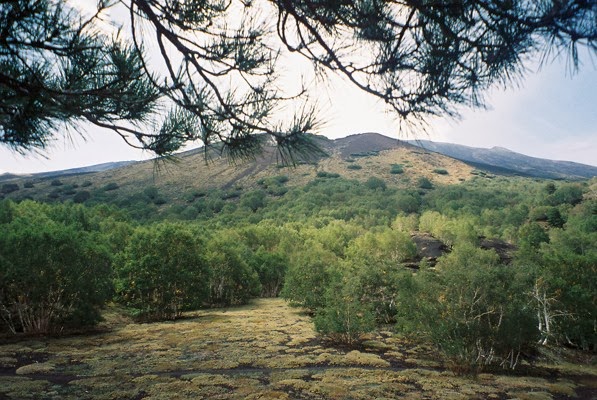
…and what better way to celebrate Yuletide than by posting some photos taken in the Mediterranean during a warm Autumn? After the photos posted of climbing the vulcano of the Aeolian island of Vulcano, here's some of the boat trip we then took around it.
More to follow and, as ever, full set on Flickr.


More to follow and, as ever, full set on Flickr.
Sunday, 22 December 2013
UBU ROI
Cheek
By Jowl, Barbican Theatre

Should
you not be familiar with this infamous play,
an absurdist assault on the senses, know first that it's first
Parisian staging in 1896 led to instant audience uproar. (Author
Alfred Jarry later claimed he'd hired goons to stir by countering the
rest of the audience, cheering when they booed and vice versa.) At
the inaugural Dadaist club, the Cabaret Voltaire, extracts from the
play were read. It's plot and, more important, tone were actually
best described by another audience member I overheard - “imagine
'Macbeth' if it had been written by Cartman from
'South Park'.” (And I really
wish I'd said that.)
Initially,
I'll admit, I was suspicious of the notion of a version with live
actors. I've always contended the play works best either with
puppets, as was a Jarry's original intention, or as an animation.
(The first public performance used actors, but masked and described
by Jarry as “man-sized marionettes”.)
Both
mediums lend themselves to render the title character as monstrous
and diminutive, and are least likely to try and humanise the sick
beast. (He was described by the Independent's Paul Taylor as “an
ovoid oaf... a Humpty Dumpty monarch with a loo-brush for a sceptre
and a set of a lavatorial id-like appetites ungoverned by the least
suggestion of a superego.”) Crucially, his motives must be
as petty-minded as his means depraved. In particular, the faintest
whiff of 'proper' acting, of digging Stanislavaskian depths into his
green candle, are to be avoided at all costs.
As
it transpires, Cheek By Jowl have found an ingenious way around this.
They give a performance that's (in the colloquial sense of the word)
schizophrenic. They start out with a naturalistically played scene, a
dinner party held in the gleaming white of a designer home. This then
flips arbitrary into the id-world of Ubu, the gestures suddenly
spasmodic and grotesque, the voices strangulated and guttural.
Lighting switches and projections then change the environment almost
entirely, even as we're aware we're looking at the same scene.

That
last part is crucial. Throughout the props remain the same as the
standard domestic paraphernalia – a lampshade becomes a crown, a
food blender a weapon, silver foil booty, like children's play
transforming the meaning of objects while their parents are out.
In
one memorable scene the dinner guests arrive, then promptly reverse
out again – as if in a backwards film. Their seemingly spontaneous
gestures, their waving and hugging are reproduced exactly, suggesting
they were never so naturalistic in the first place.
...all
of which is of course as Freudian as my green candle. One is id to
the other's ego, the sublimated struggle of each against all, buried
only slightly beneath those bourgeois pleasantries. Proceedings swap
jolting back and forth between the two, chalk cut with cheese, never
giving you the chance to get used to either.
The
resetting is perpetuated through the performance, and needs to be.
Back then, you could stun an audience with the word “merde”,
which is precisely how Jarry started this play. Yet literal versions
of Ubu staged now, “merdes” all present, would no longer have any
shock value left to trade. It would be like the Sex Pistols reforming
and... oh, hang on, that actually happened. Anyway, you take the
point. The closer the imitation, the more the point will be lost.
It's a straight choice between preserving the form and keeping the
spirit. Which is, I suspect, why director Declan Donellan reacted with umbrage when an interviewer
described the play as a classic - “I don’t do [these plays]
because they’re classics; I do them because they’re good.”
Which is of course precisely the right attitude.

And
Ubu without the accoutrements, the hood, the spiral on the pot belly,
works like the vampire without the cape or the superhero without the
cowl. Which is to say, it works. It short-circuits
expectations, discards what once might have been emblems but are now
merely heirlooms, to get closer to the heart of things. The result is
a richly grotesque seam of black humour, where you're often not sure
whether to respond with shock or mirth, and mostly can't help but do
both.
The
play is performed entirely in French, with surtitles for us
linguistically challenged Brits. Much like the live actors, I
wondered how this would work. Keeping to the original language is not
necessary. Jarry's text could hardly be more basely anti-poetic so is
hardly likely to lose in translation. But, much like the live actors,
it works surprisingly well. Our received images of French may be as
the language of romance, diplomacy and expensive consumption, but in
actuality it lends itself to the guttural with ease.
While
the performance was almost ceaselessly inventive, it should be said
it was also overlong. In that sense it was
actorly, as if those performances were too priceless to be shoehorned
into mere purpose. Yet 'Ubu' should, above all
things, be a short, sharp, shock. This was particularly noticeable in
the opening. As said, the 'classic' opening cannot be kept, and
swapping it for a naturalistic scene may be smart. But it risked
going beyond lulling us into a false sense of security, and instead
sending us to sleep. And what foreshadows and undercurrents there
were seemed a rather banal literalisation of the theme, reaching
their nadir with the camcorder close-ups of the stains in the toilet
rug.
The
film projections could also feel superfluous. The semi-abstract ones,
used for scene-setting worked well. Much of the play is set in what
Jarry described as “Poland, that is to say Nowhere.” He suggested
getting someone to walk on and “put
up signs indicating the locations of the various scenes”.
By comparison,'Hamlet'
is a historical documentary about Denmark of scrupulous accuracy.
Suggesting at the setting, rather than indelibly taking us there, is
the perfect thing to do. But the repeated live projections of the
scene we were actually watching seemed gimmicky, done simply because
they could.
But
more problematic is the character of the teenage son, brooding under
his sullen fringe. At times he seemed able to switch things between
the 'ego' and 'id' settings, as if he was magically in charge of the
play's remote control. Perhaps we were in similar territory to
Haneke's film 'Hidden', with the teenager as the
inside outsider, neither guest nor host at the dinner party - and so
able to see it for what it is.
If
so, it feels too close for comfort to the self-image of the teenager.
'Ubu' is of course not a politically sophisticated
play, nor is it intended to be. Jarry wrote it as a young man, early
versions while still at school in order to satirise a teacher.
Running on pith and bile, it in many ways was a punk record before
its time. Yet to simply flatter the teenager as a natural rebel seems
too much. The child is of course living off the silver foil of the
parents, even as he emanates disdain from their sofa.
There's
also an odd connection between the family teenager and the avenging
Prince Boggerlas, who is of course not an outsider but very much a
character within the play. It's like he casts himself in the play and
so gets to make himself the hero. The climactic scene, as he stalks
and dispatches his adult antagonists, seemed to push things beyond
'Hidden' into Lynne Ramsey's post-Columbine 'We
Need to Talk About Kevin'. (The Independent review even suggested the alternate title
'We Need to Talk About Boggerlas.')

This
scene is notably not in Jarry's original play, where the monster
survived to belch and grab again. And we seem encouraged to fit it
with another added scene – the beginning. In one he prowls the
house with a camcorder, in the other a gun, as if we should find an
equivalence between them. But a post-Columbine Boggerlas is frankly
boggling. Any suggestion his counter-Ubu is merely another Ubu, a
monster begat by such monstrousness, does not seem to have been
reflected anywhere else up to this point.
And
how could it be? The teenager was more than half a century distant
when 'Ubu' was first performed. His roots are more
in the grasping nature of the child, of infantile fixations being
grotesquely indulged by the power inherent in an adult body.
Jarry
himself came to be nicknamed Ubu, and as time passed took on more and
more of his gait and manners. Which suggests to me Jarry's intent was
different to all that, both more potent and more incisive. Who is
Ubu, chest stuffed with medals he was awarded himself for valour in
furthering his own self-interest? Of course he's us.
He's every self-centred thought you ever had and suppressed
shame-faced, turned into a totem to assail you. He only does what we
would do, given his half-a-chance.
Jarry
himself said “I wanted the stage to stand before the public like
one of those mirrors in fairy tales... where the vicious villain sees
himself with bulls' horns and a dragons' body, like the exaggerations
of his own vicious nature.”
Or,
to translate into pithier and more modern parlance - “that's you,
that is.” We become represented by a puppet so he can work like a
fetish, drawing out the evil that it may be shut away somewhere else.
Modernism
is always ridiculed for assuming it has a radical audience, while
actually relying on a bourgeois one. Yet 'Ubu' is
aimed straight between the eyes of that bourgeois audience. Teenagers
may have not originally been in Jarry' sights. But they should not
escape his distorting mirror. None should escape.
(This,
incidentally, is why I've always considered it misplaced to tie Ubu
too closely to Franco, Botha or any actual tinpot dictator. Ubu may
in many ways resemble Brecht's Arturo Ui from the play of the same
name. But while Ui was tagged as a diminutive copy of Hitler, Ubu's
pot belly is broader than that.)
But
perhaps the true test of an adaptation isn't whether it re-works the
text into a new configuration, but whether it portrays the text in a
new light. At one point Ubu, looking for fresh financiers to bag and
dispatch, the better to line his pockets, stalks the audience.
Breaking into English for the only time, he reminded us that where we
sat bordered the City of London – one of the world's great
financial institutions, whose recent Ubu-like greed and folly has
brought misery to millions.
But
mostly it brought to light that, if the teenager is in many ways a
problem of the production, the production is still able to find a
problem in the play. While the play became a darling of modernist
shock, it is in many ways quite reactionary. First performed during
the dawning days of Modernism, it looks back as much as it does
forward. Ubu's crimes are entirely bourgeois; his insatiable greed,
his lack of decorum or respect for tradition. His self-coronation
scene compares him to Napoleon.
While
the Tzar is referred to as “builder of mountains”, a proper toff
who rules by divine right. Lacking these reserves and refinements,
Ubu goes all-out to sate his senses. The tomb-robbing scene sums this
up the best. Gold is buried with the ancestors out of respect for
tradition. In seeking to rob it, Ubu is seduced by its cash value and
fails to see its true worth.
Perhaps
this is a side-effect of the play's purpose, of holding that
distorting mirror up to the bourgeoisie. For they do not through
choice distinguish themselves from the proletariat so much as the
landowning class, grandiloquent and indulgent, too comfortable where
they sit to be driven by avarice.
The
downside of Jarry's anti-naturalism emerges here, for one of the
things unnecessary to show on stage becomes the armies pressed into
fighting one another. The final line of Jarry's original was
“there'll always be a Poland. Otherwise there wouldn't be any
Poles.” Yet this Poland is Nowhere. And no Poland means no Poles. A
play that makes the bourgeoisie monsters, but monsters according to
their own compass, may be congenitally unable to come out any other
colour than Ubu green. Perhaps a play devised in a boarding school,
however irreverent, was always going to be circumscribed by it's
walls. In this way the anti-bourgeois is like the teenager. He is
still defined by being bourgeois, unless or until he finds some other
centre of gravity.
So,
in inventing a fresh perspective from which to see this play, the
production exposed a political weakness endemic to it. It may seem
strange to feel grateful for having been shown one of your favourite
plays in a lesser light. But yet I am!
Coming
soon! 2014 would seem most likely. For we seem to be at the
end of the year again. However did that happen? So the next few weeks
(or, more likely, couple of months) will be dedicated to some quite
unseemly catching up. Be it gigs, exhibitions or (as here) plays. If
Ubu's sin is avarice, mine is surely tardiness...
Subscribe to:
Posts (Atom)