googlee7ea825f63edb3f6.html

Tuesday, 30 September 2008

IT ALL STARTS WITH A DRONE


If I’m being slow to respond here, that quite possibly suits the subject matter. Pete Ashton wrote Loving The Drone back (yes, really) on Dec 17th. This response has since been slowly maturing all that time, like a fine wine, and not at all because it got stuck under something else and forgotten about.

Peter wrote how he was listening to Sunn O))) (pictured) and “like a blast of dark light, I suddenly got it.” Though there wasn’t such a single cinematic moment where I got drone, I’m delighted to hear this. However, Pete then goes on to quote Paul Morley as an articulation of his experience. To which I ask, what is “the drone of meaning and no meaning” supposed to mean? WTF has “life on Mars” got to do with any of this? But the worst thing about Morley’s nonsense is Morley’s sense, that he manages to mix so much meaning up with his blather. Reading this, some might come to dismiss all drone music as emperor’s new clothes stuff. (Disclaimer: If you say my comments are no more substantiable than Morley’s I will not argue. If you claim they’re equally pretentious I will sulk terribly but not actually respond.)

In writing this rejoinder I find I’ve stumbled into writing a trilogy on musical forms. I asked here ‘Is Impro the Primal Musical Mode?’, then here the related question of whether folk music constitutes our identity? The fact that I answered ‘no’ in both cases may be considered a clue as to what I will say about drone.

However, while I might deny that folk is the music to we’re biologically programmed to respond, a fuller response might be that folk is itself born in the drone. This might have largely been quite accidental - folk instruments tended to produce drone effects only as a byproduct, like the tape hum or disc crackle of its day. But I can’t see why this should change anything. Accident is always the mother of discovery. To me this just adds weight to my contention that drone is not a genre of music. To me drone is music, with all the other forms the offshoots and sidelines.

Drone is the music we first played to ourselves. It was a ritualised use, where the music itself wasn’t the focus but a means towards the effect it had upon the participants. It’s widely believed so many ancient rituals were held in caves, stone circles or similar places in order to echo and maintain the sustained tones. Its likely mantras are more individualised attempts to simulate the same effects.

Of course you can’t listen to drone the way you can other music. You tend to listen to music at a meta level, not to the instruments so much as the interplay between them. In popular music, this comes out like a conversation between a ‘group’. In classical music, it’s like words or phrases strung together by the composer. Listening can become almost like watching a film, as you start to sense things like the climax coming in. Popular music in particular seems keen to approximate a sense of forward momentum; how many songs contain words like “let’s go”, “here we go” or similar?

Drone dispels all that by immediately pulping all the separate instruments down into a kind of primordial soup. All our conventional descriptive terms, such as ‘allegro’ or ‘fortissimo’, are designed to explain how fast or slow music is progressing. But drone music doesn’t progress, it’s just maintained. Notes don’t get replaced by other notes in a string, sounds just merge with sounds that arrive after them. This often leads to the complaint that drone music is monotonous and (inevitably) boring. However if is endless that doesn’t mean it is static. It merely means people are listening to the music in the wrong way.

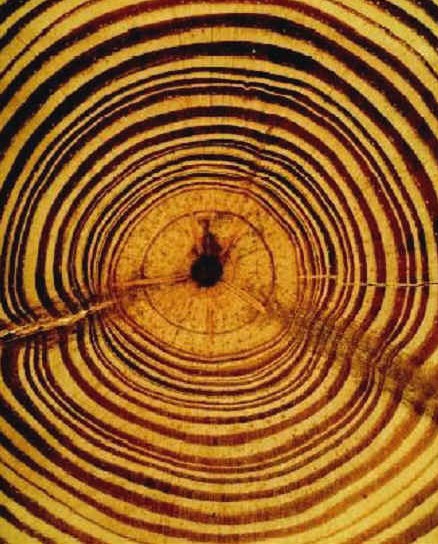
Though drone is not precisely analogous with minimalism, it does exhibit why the term ‘mininmalist’ can be such a misnomer. Through extended duration, apparently simple textures reveal greater and greater levels of complexity. It’s like looking into the grain of wood, or following the falling of a waterfall; the more you look, the more there is to see. It’s like looking into a cave. First your daylight-tuned eyes make out only murk, but the longer they look the more emerges. In many ways I can’t think of a more maximalist music than the immersive world of drone.


Of course it’s quite possible that the sub-tones and variations to be found in drone appear quite accidentally. To me that’s even part of the point, the essence of drone’s ‘sameyness’ is that nothing is ever the same. Indeed, much drone music tries to minimise the player’s role by enabling rather than playing the sustained tones. (‘Drone’ is after all also used as a term for unwilled or unmanned.) This is different to impro music, where the musician tries to let his consciousness surrender to his subconscious. In drone the musician must surrender altogether, like a medium becoming a mere conduit of communication. In Sound Projector 8, Ed Pinsent enthused of drone-merchant Jilat that he “has done his level best to efface the traces of playing.”

Sometimes this was achieved by preparing instruments to be permanently held down, sometimes by exploiting and amplifying imperfections in equipment. The guitars on Lou Reed’s Metal Machine Music were ‘played’ only by force from their own amps, in a complete feedback loop without human involvement. Disinformation boiled things down further by creating performances from nothing other than the mains electricity used to power them, sometimes for up to six weeks at a time.

There’s also a strong overlap with electro-acoustic music and field recordings, for example Chris Watson recording wind blowing or ice cracking. Drone is about the elemental – it’s not so much composed and then performed but captured and set up to run. (In this way, and however name-defying it may sound, drone isn’t even reliant on sound. After his tenure in Eternal Music, Tony Conrad made films via, for example, hitting the film-stock with a hammer so fault and fracture-lines appear.)

In one of the best comments I’ve heard about music, David Byrne said a function of it was to give us a sense of time outside clock time. In our linear, deadline-driven, time-poor culture, I’m sure he’s right. But drone doesn’t just contend clock-time, it suspends it. The Theatre of Eternal Music would always start their performances before the audience were allowed in the venue then make them leave again before it was finished, to give them a sense of a music not bound and formed by duration but (you guessed it) eternal. We only experience a segment of the music, just like our lifespans permit us only a segment of time. Head honcho La Monte Young went on to construct a ‘dream house’, where the drones were perpetual and visitors could stay as long as they chose.

Over Metal Machine Music (long dismissed as a mere wind-up), Lou Reed dismissed accusations it was unchanging by insisting it was ever changing, and was in fact the sound of the universe. Similarly there’s a (quite possibly apocryphal) story that La Monte Young discovered drone from the sounds his fridge made when it went on the blink! While the Slits recorded ‘In the Beginning there Was Rhythm’, I would counter it all starts with a drone. One of the Jilat pieces mentioned earlier is titled “a long drone-like pieces of muisc which attempts in its minimalism to be a thing in itself without external reference, having an analogue in certain states of consciousness where being is experienced also as a thing in itself and not contingent upon meaning or purpose.” (Though of course I’m kidding about that being the title of the piece. The full title is longer.)

While drone is sometimes dismissed as bliss-out and escapist, it doesn’t have to refer out to anything else in the universe because it already encompasses the universe. It doesn’t merely encompass the sound of the big and the small, it denies the distinction between those sounds. “As above, so below” is an important concept in drone. Blake’s conception of “infinity in the palm of your hand and eternity in an hour” is just up drone’s street. Once the sounds are isolated, can we tell the grand scheme of the universe from electricity passing in a wire?

Typically of drone, it sounds at once like the universe and at the same time like the womb. Morley is surely right to say it’s “the sound inside the womb, the sound of your thoughts before words became your thoughts”. Charlemagne Palestine has insisted “I was born in the drone!” Experiments have suggested that maybe everything did sound like that then, but I’d go further and suggest that everything felt like that then too. Ed Pinsent has commented “loud intensive drone music [lets me] retrieve some deeply personal memories I thought were long buried.” Drone music draws it’s effect from enveloping you in sound, like a womb state. (Conversely, when I first heard the cacophonous rush of Tomorrow Never Knows the first it made me think of was the rupture of being born.)


However, drone reaches back further than the deepest personal memories. Morley is also right to describe drone as strangely comforting. But I’ve often felt a paradox within drone, its sheer eeriness can at the same time be unsettling. Some ‘dark’ or ‘doom’ drone leans more to one and some ‘ambient drone’ to the other, but it’s an important factor that it contains both. Drone ultimately reaches back to ancient conception of the Wyrd:

“Our tribal ancestors and mystics of ancient Europe lived out a view of life called Wyrd: a way of being which transcends our conventional notions of free will and determinism. All aspects of the world were seen as being in constant flux and motion…Following on from the concept of Wyrd was a vision of the cosmos as being connected by an enormous, all-reaching system of fibres rather like a three-dimensional spider’s web. Everything was connected by strands of fire to the all-encompassing web. Any event, anywhere, resulted in reverberations and repercussions throughout the web.”
Brian Bates, the Wisdom of the Wyrd, Rider Books, 1996

My contention is that we respond to drone music not simply because we genetically recognise something ancient, but because we respond to this non-linear anti-causal conception of reality which it embodies. It is quite simply humans playing not only in harmony with each other but with everything else. And it’s unsettling quality is partly because of its unfamiliarity to our modern sensibilities but more because it is unsettling – it presents a view of the universe which is never settled. True drone music is a world away from the soothing soundscapes that accompany New Age utopias. Drone was, is and will forever be something savage.

See also:
Lucid Frenzy on Tony Conrad’s Tate performance this summer
Wikipedia’s entry on drone music
A reasonable starter’s guide to drone musicians

Tuesday, 23 September 2008

THE UPSIDES AND DOWNSIDES OF COLOUR OUT OF SPACE

September 2008, Sallis Benney Theatre, Brighton


“Welcome to the third Colour Out of Space. Three days of unstructured, cross platform sound experimentation featuring concrete poetry, re-wired electronics, avant-noise, out-jazz, home-built instrumentation, Kabuki free-vocalists and more.”

...”and more” there was! After the first Colour Out of Space inexplicably passing me by, I can now only hope that this event becomes an annual fixture. Not only is the sort of music you never expect to hear now on for a reasonable price at a venue practically down the road from me, the event has a nice organic feel to it. There’s nothing reserved or stuffy about proceedings, nor is there much sense of avant-guarder-than-thou. In fact, intimate and dripping with camaraderie, it partly reminds me of the small press comics events I attend such as Caption. (As one example, all the acts seem to hang around the whole weekend to catch their fellow performers at flow. And I was particularly enamoured of the way acts were announced by the ringing of a school bell, whereupon we’d troop in from the garden for our next instalment of droning Berlinners.) I’m sure if I were to suggest that this festival rocks I would be immediately put to the torch by a posse of Finnish noisemongers. But...you know what I’m trying to say.

Of course with over thirty (count ‘em!) performances to blurt, screech and drone, the odds are you won’t like everything. In fact, with almost every act incorporating some degree of improvisation, this is almost inevitable. Improvising is something like mining, you strike out hoping to hit a seam of something rich. But one night can be a lot of labour for little gain, then the next you strike lucky straight away. That’s all to be expected, and even adds to the excitement of the moment. Want the handsome prince and you have to be prepared to kiss some frogs.

A classic example of the bounty of serendipity working would be In Camera’s set. As they launched into their delicate electronics and ethereal bowed strings, the marquee tent creaked in a sudden summer storm, the rain pattering accompanying percussion on its sides. Have you ever been tucked up in bed on a winter night, reading a tingling ghost story by candlelight? Well multiply that feeling by a factor of ten! It was perhaps the ultimate moment in an ambient set meeting and perfectly merging with the room ambience.

As a consequence of this essential unpredictability, there seems little point in making a nerdy little list of each troupe next to a mark out of ten. See the exact same acts another night, and the whole order might be re-thrown. (Unless of course In Camera have hired that storm to tour with them.) Instead let’s look for patterns, stuff which worked and which didn’t, upsides and downsides of this sort of music.

Despite my enthusiasm for all things bleep, I had spent some of last year hoping for a few more words. Of course there’d been lots of vocals, culminating in Phil Minton’s glorious feral choir. But only post-Dada prankster Jaap Blanc and a few others had incorporated discernablewords. Do some see improvisation as the opposite of storytelling? Surely we can make up a story as easily as we can a feedback guitar drone! David Thomas was to make a latter-day career out of it. But that’s not what I’m on about here...

There’s the scene in Donnie Darko where the ousted teacher writes ‘Cellar Door’ on the blackboard as a goodbye to her charges. She explains “an expert linguist” (actually Tolkien) claimed the phrase to be the most beautiful in the English language. Of course this has nothing to do with doors to cellars, it’s turning the sound of the phrase into a musical miniature in your mind. The fact it’s now removed from it’s meaning is precisely the point. It’s like the exercise of looking at a page of text (say this one), until all the letters turn back into shapes. The way the word is seen as such an epitome of cultured thought makes it fair game for such undoing.

Koichi Makigami took up Blanc’s ‘sound poet’ role this year, an excellent performance perhaps enhanced by our lack of understanding of Japanese. (The nonsense comes easier that way.) Byron Coley ran a workshop on the word I didn’t manage to make, but I didn’t enjoy his performance so perhaps I didn’t miss much. Overall, I’d say there were no more words than last time, but then there’s always next year...

One frequent critique of this sort of thing is that there’s nothing to look at, bar some spotty herbert doing some diffident tinkering. The Sound Projector’s Ed Pinsent has written before that this shouldn’t be seen as a failure of electronic music so much as its incompatibility with old-fashioned spectator-style venues, and he’s at least part right. Things often felt more natural in the outdoor marquee, where acts tended to play in the round, than the school assembly room that is the main hall. (While a recent Brighton Expo night of laptop music pretty much failed in the Concorde rock venue.)

However, in our modern multi-media world, you have to ask – why choose to stimulate only one sense at a time? It seems pointlessly restrictive, particularly in a venue which doubles as a cinema, which even separately shows films as part of this very festival! When, early on, some quite spectacular visuals erupted around Core of the Coal Man, hopes raised – only to be, for the main part, dashed. (It was even some effort to find an illo for this blog-piece, even with the assistance of Google Image!)

Of course other acts tried to overcome this problem in their own way. Leslie Keffer attempted to finish her set by stepping from behind the laptop to reveal an party skirt then dragging everybody up to boogie - a plan sadly scuppered by technical failures and English reserve. Dave Phillips and G*Park dimmed the house lights almost entirely, and performed a piece with such redolent sound design that your ears followed it around the room and you felt inside those cavernous sounds. The whole question of what to do with the room was thereby extinguished. Equally, groups such as Skullflower (see above) look and act more like regular bands (in every way except their sound) so that particular problem doesn’t arise.

Let’s emphasise what we need is some visuals or performance element which synaesthesiastically merges with the music. Coal Man’s great visuals wouldn’t have saved things if the music had been bad (which it wasn’t). It was notable that the two acts which most stressed the performance angle (HRT and Weirding Vessel) pushed the ritual element of performance but scrimped upon musical substance. Both came on with a huge splash. Less than five minutes later, you were bored. Closer to the mark would be Bruce McClure’s ‘projector performances’. From what I gathered, the musical element was pre-recorded to which McClure manually adjusted celluloid loops. But very soon in, you were no longer looking and listening, you’d lost your category distinction between the two things. You were just taking it in.

Another recurrent weakness... far too many acts seemed content as mere demonstrations of their instruments. The scene’s ceaseless faddishness for new gadgets and devices may be partly down to this. It sometimes felt like a new toy had arrived on Christmas Day, and the recipient was running through the menu to check out what it could do. New and unusual sound sources are, of course, all to the good. But this misses the essential point that all instruments are merely... guys... instrumental. This argument has nothing to do with proficiency, it’s of no importance whatsoever who is proficient in their instrument and who isn’t. You don’t get any sense of the personality of the performer coming through, just a tourist trip through some settings.

Step forward, Gastric Female Reflex, for your wooden spoon award in this regard. But perhaps a more interesting example was Limpe Fuchs, whose set was emblematic precisely because it danced upon this very dividing line. Fuchs came complete with some mouth-wateringly inventive home-made instruments (including a ten-foot glockenspiel made of slate) plus some equally inventive ways of approaching them (including dragging stones down those slate keys). But she’d flit restlessly from one instrument to another, abandoning it as soon as things seemed to be getting going. It was like watching a child in a playpen, jumping hyperactively between all the toys. But instant composition isn’t the same thing as non-composition. Fuchs needed to either make something with the toys or release them into a workshop situation where we all got a go. She should either have come out the pen, or invited us into it.

But perhaps these comments lead into one wider criticism. David Toop once complained the electro-acoustic scene was a genre without an audience, and thereby hermetically trapped.
The electro-acoustic influence was not rife here, but perhaps his words carried a warning. Indeed at its worst, you did feel that afore-mentioned spotty herbert was just doing on stage what he normally does in his bedroom. This might lead to a scene, but only a backslapping society where each and every new set is treated as a masterwork appreciable only to the elect few. (Impro music isn’t auto-innocculated against cliché, despite what some of its adherents like to claim.) Art needs some kind of outreach, which isn’t necessarily the same thing as showbiz.

Taking the same point the other way up, it has always amazed me how ‘outsiders’ assume all this is some cerebral affair where we applaud the clever innovations of the performer. Well me, I wouldn’t know Pro Tools from an effects pedal! As I have often argued, it’s abstract nature means music can have a more direct effect upon your emotions than other styles of art. Sad music doesn’t have to spin you yarns about dying dogs or orphan boys, it can just be sad. But, by cutting itself off from the more obviously man-made elements such as melody, this music has the opportunity to instill a more immediate and direct effect upon your emotions. It’s rawer than rock, and richer than symphonies. In the right hands, its power to affect you is immense - and absolutely not dependant upon specialised or rarified knowledge. It should not be consigned to the bedroom or kept in the conservatoire!

You may observe that even the organisers’ own attempt to label all this (quoted up top) ends up not as a term to pin all this to so much as a semi-tongue-in-cheek list. While non-afficonadoes lump all this stuff together, there is far more variety available here than at the most eclectic regular music festival. You could pick any two acts at random, and there’d be more space between them than, say, a speed metal and a roots reggae band.

Speed metal and roots reggae are, at least to some degree, still based in blues. It’s like all the other music you ever heard was some shade of blue or other, then suddenly the rest of the spectrum is supplied and you get to hear orange, green, scarlet and black. (There was definitely no shortage of black.) Extra colours, courtesy of outer space.

http://www.colouroutofspace.org/
I expect most of these acts have websites of their own, in some capacity.The Colour site doesn’t list them either...

Thursday, 4 September 2008

EVERYBODY’S GOATEED NOWADAYS (A HARANGUE ON HIP, A CRITIQUE OF GEEK)


As proof I don’t just use the internet to read Andrew Rilstone’s comments on Doctor Who, I was recently perusing K-Punk’s critique of hipsterdom. Despite the fact that neither article he’s reacting to is worth reading of itself, I’m a fan of K-Punk - even at the points where I disagree with him. For example, when he condemns hipsters as “pathologically well-adjusted” he is surely bang on the money.

However, when he calls the hipster “a vague irritation at the periphery of awareness” of “the general population”, I would claim quite the opposite. Of course, the self-conscious hipster has always cared more about his hipness quotient than anybody else has done, or indeed even could. But in many ways the culture-surfing hipster has come to determine our post-modern era. For one thing, culture has largely abandoned segmentation for a grey homogenisation – we are all brand-wearers now, everybody’s goateed nowadays. Listening to “keep-it-real grime” or “rad hip-hop” no longer places you outside the mainstream, for it will all win a Mercury Prize eventually. So the only distinguishing marker left is to be ahead of the curve. And “I used to be into them last year” is precisely where the hipster plants his pad.

More pertinently, the hipster has come to epitomise our relationship to culture. The hipster hangs out inside a hermetic, rarified world where there is only room for appearances. Music and art become interchangeable with the brand-name clothing as signifiers for the self. The objects are merely there as something to hang the labels from, which stand so easily for a projected ‘self’ with no greater depth to it than they do. Devoid of substance, everything can safely be jettisoned as soon as it’s classed “last year”. Thereby insulated against attachment, the hipster can feel neither pain nor pleasure – save a temporary salve of peer approval. With the world so shrunk, everything appears effortless to the hipster. His life is one of perpetual torpor.

One example of the leakage of hipsterdom into the general culture is the rise of ‘smart casual’ workplaces. You’re no longer required to wear a stock uniform to work. But you’re also aware that to wear the same clothes you lounge about in at home is not an option. You are as judged for what you wear to work as ever, making it your de facto task to generate some pseudo-individuality within conformism. This is the hipster’s challenge in a nutshell.

But the point where I really disagree with K-Punk is where he negatively contrasts the hipster against the geeko-outsider, the “sense of abandonment and maladjustment” found in “Metal, Goth and even, Gold help us, Emo.” It’s not just that the geek is any less a stereotype than the hipster, it’s that they are the two sides of the same tarnished coin.

At the level of general appropriation, the charismatic, smart-casual Blair was (by politican’s terms) a hipster. (Bono was exultant at finding a tuned guitar in his office, pronouncing there “hope.”) While of course the crumpled, number-crunching Brown couldn’t be more of a geek. And of course the media encourages us to focus on this difference, and of course it’s the last thing we should actually do. It merely serves to obscure the fact that their policies are interchangeable. The same is true of the wider culture.

K-Punk’s comments are particularly bizarre, for geek culture has penetrated the mainstream almost as surely as has hip. With both defined by consumption, what differentiates them is their method of consumption. The collectivist geek is the addict of consumption, wanting the set of everything irrespective of whether he even likes it or not. The dilettante hipster passes his faddishness off as connoisseurship. In general, everyone else now consumes as addicts whilst carrying the belief this makes them connoisseurs. In the past, only geeky genres such as Science Fiction made it onto video collection releases. Nowadays everything’s available on DVD, from nature shows to sitcoms to cheesy cop shows.

But the real exemplifier of geek culture penetrating the mainstream must be comics. Back in the early Eighties comic fandom almost reflected gay culture, with its mix of ‘out’ fans and ‘closets’ who kept their sorry hobby a secret from friends and workmates. Nowadays... well, just read those reviews of Dark Knight.


K-Punk is however, much closer to the nub of it than the above might make out: “When youth culture was interesting it was because of alienation... the sense both that the young were not adequate to the world and also that the world was not adequate to them. I am nothing and should be everything.

Of course in a fucked-up world, the only non-fucked-up response is to be is fucked-up. But what makes those moments of youth culture special isn’t when they abandon cool for alienation, or when the two are held in separate-but-equal contrast – it’s when the two were dialectically synthesized. You need to be grub and butterfly simultaneously. Think of Ziggy-era Bowie or Stooges-era Iggy, it’s impossible to separate them into examples of alienated outsiderhood and of cool-as-fuck-ness. (As John Lennon once said “part of me thinks I’m a loser. The other that I’m Christ Almighty.”) What makes it alienated is also what makes it cool. Even the more credible ‘cool’ icons such as Jim Morrison seem to suffer from the lack of something to me. There’s no tang to the taste, no sense of internal conflict, merely a sugar rush.

The chief drive to alienation in youth culture is, after all, not social or political but merely hormonal. Of course this can sharpen a youth’s antennae to wider concerns, but it can as easily narrow into sheer self-pity. Merely insisting on your right to feel fucked-up leads nowhere except wallowing. Once you’ve made your alienation your identity, you’ve become a hopeless case. Youth culture must carry feelings of alienation, but to avoid the sulky bedroom it must also suggest an antidote. At the same time this antidote must feel volatile and tenuous, something precariously grasped. It’s not a formula, where the two can be combined in the correct amounts – the key is the reaction which then results.

You probably won’t be too surprised to hear me say this, but at root it’s all to do with shamanism. The shaman is the sickly kid who has the task thrust upon him to heal himself, and through this stumbles upon some strange new form of transformative power. The shaman is no master of his trade, like a blacksmith or carpenter. He doesn’t truly understand this power itself, but can only explore it and offer it to the rest of the tribe through performance. The shaman remains an outsider to the rest of the tribe, even at the same time they join in his rituals.

Okay, here’s a question for the reader. What about the ‘geek chic’ image, first put forward by Talking Heads and Devo – which side is that on? No conferring. Your time starts now...

Wednesday, 27 August 2008

DARK KNIGHT

Be warned! Great big bat-spoilers ahead!
(NB Such is the popularity of this film that it’s still showing at the flicks – meaning this review counts as current. Fear not good citizens - normal service will shortly be resumed.)


1. A Different Bat Time, A Different Bat Channel


Before the feature started, the cinema played the old Batman TV theme. (You know, the one where his Bat-mum calls him in for his dinner.) Surely a calculated piece of cheek, for this is preannounced to be not Batman but Dark Knight! Even if you’re not enough of a comics fan to know the Frank Miller associations of the term, you’ll have seen the trailer where the Joker talks about killing “the Batman”. That pronoun alone is enough to tell us this is Batman for grown-ups, the creature cursed to wander the night battling its monsters. The TV show Bats was always too weighted down by the contents of his utility belt to find use for a pronoun.

...none of which is good news. Its a peculiarity of superhero films that they’ve become stuck in the same trap as were comics in the Eighties. “Finally”, the argument goes, “we have the sophistication to give these characters the gravitas they always deserved.” Perhaps it’s just me, but I tend to reserve the term ‘gravitas’ for those who keep their underwear inside their trousers. To quote from the film, “why so serious?”

Christopher Nolan’s earlier Batman Begins, though popular among many, seemed to me a classic example of such folly. It spent its time building up a credible case for how a man might take up pointy ears in order to frighten off the Mob... in short it set itself up to fail. But others who had reacted to Begins in the same way seemed to take to Dark Knight (for example PatrickMM), so I tried it out. And found it genuinely was from a different Bat Time and different Bat Channel.

There’s an early clue that we’re in for a different take. Lieutenant (not yet Comissioner) Gordon has made a pin-board of ‘Batman sightings’, with pictures of the Sasquatch, Loch Ness Monster and the like pinned to it. Though the film has almost no plot overlap with the Miller comic whose name it borrows, in this way it picks up something Miller did which was missed by many of his imitators. Miller was never interested in the mundane details of how superheroes might function, whether they changed into their costumes on rooftops or in phone boxes. His fascination was with them as beings larger than life. He used them as symbols rather than bearers of supposed psychological depth.

2. Join the Laugh Side


So to start on a high note and go out on a limb, let’s praise Heath Ledger’s portrayal of the Joker – which brings out this approach to a tee.This icky, feral monster, smeared in peeling make-up, is the film’s centrepiece. Compared to Ledger, Jack Nicholson now seems a gurneying cabaret turn.

Super-villains tend to be more interesting than the straightlaced heroes. But this is the Joker’s film to the point where even the makers aren’t working very hard to pretend otherwise– some of the film posters feature only the Joker. “Ledger has a weird collection of tics and twitches, kinks and quirks” comments The Guardian’s Peter Bradshaw. Ironically, this is the sort of Hollywood ‘method acting’ that’s normally so irritating, assembling a bag of mannerisms and calling that a character. (Check out Meryl Streep in just about anything.) But it so happens for the Joker this is absolutely perfect.

Origins tend to take a special place in superhero films. Comics often saw them only as an excuse to get going. Films, conversely, fixate upon them. Partly this is for formal reasons. Unlike comics, films aren’t ongoing but are one-off events, and so require a starting point. But also, films often aspire to supply a psychological dimension missing from the flat paper. Characters in the comics just are, they’re described by their appearance. In film, as in the first rule of drama workshops, they always need a motivation. (In the comics, Batman himself waited six months to get given one.) In Batman Begins, Tim Burton’s Batman , or for that matter Spider-Man or Daredevil, their origins continue to define them through the films.

In the very inverse of the Batman from Begins, the Joker has no backstory. When he’s caught, he can’t even be pinned to a set of fingerprints. (Gordon grumbles “No matches on prints, DNA, dental... Nothing in his pockets but knives and lint. No name, no other alias.”) He taunts his victims with supposed origin stories, each a bedtime story tailored to terrify that victim the most. Taking his origin out is a powerful a statement as putting something in. As K-Punk points out “What Ledger does... is play the make-up... evacuating the Joker of all interiority, by refusing anything which would contain the Joker's wildness or compromise the autonomy of his facepainted persona.”

Partly as a consequence, you’re never quite sure how crazy he really is. One moment he’s looking like he can’t reach the end of his next sentence, the next he’s pulling off the most audacious masterplan. Is it all an act, calculated to induce fear? Or is he really limitlessly malevolent? It even feels possible he could be completely crazy and entirely calculating. This serves to keep the Joker unsettling and unknowable. You can neither reason with him nor even give in to what he wants – for you don’t even know what he wants.

Though he commits crimes, the Joker is entirely unmotivated by personal gain. When he ends up with the money, he does with it what he’d do with anything else – he burns it. As K-Punk comments “The Joker is free in the same way that the death drive is free: he acts with indifference to consequences, glorying instead in a kind of ungrounded unbinding of orderly causal sequences.” Hence the scene where he is brought in ‘dead’ for a mobster who’s taken a contract on him. Of course it’s a ruse, but the point is he’s unbound by mortal fears - he’s living as if already dead.

Yet despite his fully indulged pyromaniac tendencies, what he really loves to take apart is people. He sees the law and the mob equally as his opponents, and devises elaborate and sadistic schemes purely to disrupt their schemes. “The mob has plans, the cops have plans, Gordon's got plans,” he complains. “You know, they're schemers. Schemers trying to control their worlds. I'm not a schemer. I try to show the schemers how pathetic their attempts to control things really are.... Introduce a little anarchy, you upset the established order, and everything becomes chaos. I am an agent of chaos.” The really scary thing about the Joker is that he thinks he’s doing what’s best for us. When he dresses as a Nurse, he’s administering us a short for what ails us – no matter how much it stings.

The Joker is what Rogan Taylor labelled a Demon Clown in his study of shamanism The Death and Resurrection Show. Demon Clowns, though themselves part of tribal societies, would recklessly disrupt the most sacred ceremonies and provocatively break the most deeprooted taboos. Taylor associated them with the immaterial underworld demons who tore apart the astral shaman. Both were about assaulting and stripping the psyche, reducing all that’s false and extraneous to leave us with what we’re really about. When we have all our illusions torn from us, how will we see the world then?

The character’s propensity for knives and (in one case) pencils comes in here as a counter-weight. He may be an agent of an abstract, but these serve to make him feel immediate and in your face, not some phantasm of boogeyman. He’s half-whispered-legend, half-feral monster.

But like all good updates on a theme, all this also harks back to the original Joker from 1940. To quote K-Punk again the film “manages a feat that is near impossible: it reinvents The Joker look whilst also maintaining fidelity to the comics.” His schemes are often the same as in his very first appearance, audaciously announcing his crimes in advance purely to trounce the authorities, declaring war on the criminals as well as the cops. The original, more dandyish Joker look may simply have come from being easier to draw than all those cracks in that make-up. (Wikipedia states the film’s also based on a more recent comic I haven’t read – The Long Halloween.)

3. The Two Faced Contagion


If it’s significant that one film poster features a solo Joker, it’s as significant that another manages to combine a signifier for himself and Batman. “You complete me”, the Joker tells pointy-head exultantly, professing them to be eternal forces who will “do this forever.” But it’s not just a matter of the laughing Joker against the scowling Bats. The one thing Batman Begins did get right was to find parallels between its heroes and villains. If we only see a contrast between them, we’re watching a fixed system, with no movement, no interplay. The Joker’s scheme to bring down Batman is not to kill him after all, but to make the two of them more alike. And in a sense they are alike, both operating outside of society to force their vision upon it. There is always the paradox that Batman does to criminals what they would do to their victims – terrify and intimidate them. He’s not big on due process. Batman’s chief differentiator from crime, that he doesn’t work for personal gain, is struck out here – neither does his adversary. The Joker would agree with Batman that criminals are superstitious and cowardly. He’d just say the same about everybody else.

But they are not the only parallels in town. Notably, Rick Norwood complains “every other character [bar the Joker] is one-dimensional... None have any of the complexity of real human beings. Even Harvey Dent {Two-Face] switches between all good and all bad at the flip of a coin.” This criticism isn't wrong, at least in the sense of being inaccurate. But it misses what the film is trying to do.

The characters are big and bold as primary colours, but we get our shades and patterns from watching their interplay.There’s a key scene where the camera circles Batman, Gordon and Dent on the police station rooftop. (A scene echoed in the film’s finale.) Dent is the sun to Batman’s moon, the public face of good. He’s endlessly referred to as “the shining light” or (still less subtly) “the white knight.” He will clean up Gotham by legal and public means, by rallying the people behind him. But Gordon contrasts the others too. He’s more anonymous than the crusading Dent, low-key and pragmatic. While Dent wants to focus on cleaning up the Police Department, Gordon would rather see it imperfect but functioning. At one point Gordon ‘dies’ to go undercover. Meanwhile Dent publicly takes the rap for something he didn’t do, to a roomful of flashbulbs.

Moreover, characters are often contrasts with themselves. This is most obvious in Harvey Dent’s transformation into Two Face, but is also true for Batman. Of course, we know that, ike Dent, he wears two faces. But here, when Bruce Wayne, he’s given to talk about Batman in the third person. There’s a repeated scene where he faces his Batsuit on a stand, as if it were somebody else.


To get here, something of a leap is made. After a film which concentrated entirely on Batman’s origin, it’s never mentioned here at all. This isn’t akin to the Joker’s tauntingly with-held backstory, this film is a continuation and we assume it’s there. But it is pushed into the background, and for a solid reason. When Wikipedia claim “a main component that defines Batman as a character is his origin story” we might quibble about those first six months, but when they add “Batman is...driven to fight crime” it seems unarguable.
However, a major plot element rests upon the conceit that Bruce Wayne is not similarly driven. He imagines that Gotham will one day be cleaned up, at which point he can retire Batman and marry his fiancee. Wayne’s will for this can even make Batman more fanatical, more intent upon his mission.

All of which are smart ideas... which don’t quite come off. Dark Knight is part explosive action film and part cop thriller, and manages this join. It’s also part slam-bang superhero story and part polyphonic psychodrama...and here it gets itself into more trouble.

Which isn’t to say such a thing couldn’t work. But transcending genre conventions is like transcending the rules of grammar. You have to understand those rules before you can go breaking them, or the results become messy and incomprehensible. Here the whole three-way thing tends to vie with Batman as the titular hero. It’s not that genre has limits which preclude anything morally ambiguous happening. It’s that its conventions stack so high that we need it telegraphed when something morally ambiguous is incoming. Perhaps his bat-vices need to be more telegraphed, like the Dalek episode of Doctor Who.

And it doesn’t help that the Joker’s star shines so brightly no-one else really competes. Batman has unfortunately come across as something of a stiff in all his films. He doesn’t look action-figure ready, he looks like he’s already the action figure. What can be rendered sinewy on paper merely looks blocky and lumpen on screen. They implicitly acknowledge this during the film and give the costume a redesign, to ill effect. Batman looks great as a shadowy figure, hovering on the corner of events. But when the spotlight falls on him he looks uninteresting.

Neither can Two Face match the Joker for villainy. His make-up, the very thing that so sells the Joker, seems something of a mash-up - like they couldn’t quite decide whether to make him frightening or cartoony. This is never more evident in the um... eccentric decision to leave the Joker out of the finale. You realize at that point that the whole emotional triangle only really works as a supporting act. Asked to carry the show, it limps home. Bereft of the Joker, none of the film’s other themes really adhere. They’re just.... you know... plans.

4.Torture Porn For Neo Cons?


Perhaps as a measure of the way we’re supposed to take this sort of stuff seriously nowadays, the political ramifications of this film seem to have sent the hens a-clutter. Some liberal commentators have seen in it a dangerously right-wing agenda, such as Spencer Ackerman’s review ‘Dark Knight Reflects Cheney Policy’:

"The Dark Knight" weighs in strongly on the side of the Bush administration. Confronting the Joker, a nihilistic enemy whose motives are both unexplained and beside the point, the Batman faces his biggest dilemma yet: whether to abuse his power in order to save Gotham City.”

Needless to say, Conservative sites have been lining up in agreement, such as SouthCon:

“Chris Nolan's Batman is basically Dick Cheney, forty years younger, in a black ninja suit. How cool is that?”

(Meanwhile, check out the mailing comments here)

Of course as I noted in my Spider-Man 2 review (from Lucid Frenzy’s Olde Printe Days), this partly just par for the course. Superheroes are big broad symbols, not tight and focused ones. We imagine what lies under the mask, and we imagine what we want to see. Picture a superhero appearing in an editorial cartoon, and you already picture him getting cramped and diminished, pinned to a position. And, as with Spider-Man 2, just because someone’s interpreted a film doesn’t necessarily mean that they’re right. The Neo Cons were presumably busy counting up all their foreign policy victories all the times the Joker manipulates his enemies into torture, including the occasion this leads directly to his escape. This is clearly not built to be a pro-Cheney treatise.

Nevertheless, the liberal critics are tapping into something, for there is something problematic going on here. Ultimately, Dark Knight trips over its own genre roots and fails to reach anything a genuine anti-conservatism would entail. Part of the problem is putting the larger-than-life characters in a ‘realistic’ (please note inverted commas) city setting. There’s a gulf between the main characters and the troubled populace which cuts as deep as any Shakespeare. The vigilante Bat-men seem to be there purely to make it clear we should be cheering his Bat-deeds rather than aping them – don’t try this one at home, kids. K-Punk is correct to dismiss the Neo-Con reading, but still see in this the shadow of Leo Strauss and his “noble lies and deadly truths” doctrine. Perhaps the conceit is that these main characters decide to give the populace what they consider them to need, but then just morph into their own roles.

The classic example of this is what everyone is calling the Deux ex Nokia finale. Batman’s collective eavesdropping on all the City’s mobile phone conversations is a brick-subtle analogy of the infamous Patriot Act. It’s openly questioned within the film, by the Bat-sidekick Lucius Fox. However, we also seem supposed to associate it with an earlier conversation about Caesar. With the barbarians at the gates of Rome, the populace decide to grant Caesar absolute but temporary power. Except... surprise!.. when its time for Caesar to give up these powers he seems less than keen to. But why is this analogy raised? Is it all a red herring? For having won his battle Batman merely torches his own device. Is his sheer ‘goodness’ supposed to stem from the fact that, if he can’t hang up his cape, at least he’s always wanting to? Or is it, as seems equally likely, that he’s our hero so is ipso facto untempted by such apples? It’s like Frodo slips the Ring on anyway, luckily finds there to be no adverse results and everybody can just go home. As an answer to the problem of granting others supreme power it isn’t one.

Superhero films do not naturally offer us the concept of collective responsibility. The one time the populace do rise above the status of a bewildered herd is in the twin boat/prisoner’s dilemma scene. Here they are only partly rescued by Batman, and they do much to resolve the situation themselves. However, it should be noted that the implications raised are themselves literally anti-social. Society is merely a kind of mob, inside which we feel safe to bay for blood. Everyone votes for the other boat to be blown up over theirs, but when asked as an individual to be the one to press the button we then assume responsibility. But even granting this conservatism, the scene rings false. You’re simply not convinced they would have acted the way they did, either in reality or the world the film has conjured up. Like the scene in the first Spider-Man where the crowd turn on the Goblin, you can’t help but feel the makers baulked at the implications of their own logic and bottled it.

In some ways this scene feels a microcosm of the film. The whole structure can’t withstand the presence the Demon Clown it itself releases, he corrodes what it is trying to create. If all we have to hold us together is these noble lies, this mask of bogus heroism, isn’t he the one actually telling us the truth? Isn’t his shock therapy actually setting us free after all, while Batman merely offers us the blue pill? The film can never quite raise itself up above its own genre conventions, indeed it often seems to fail to understand them, so is riddled with fault-lies for him to exploit.

Of course you can argue this doesn’t matter much. With the twin boat scene as perhaps a glaring exception, and unlike the characterisation problems raised earlier, none of this is likely to disrupt our ride too much. These are politico-philosophical questions that might not occur to too many popcorn-munchers. And as Savanaroloa puts it, commenting to K-Punk’s Bat Mailbag: “The real political ‘problem’ with the film...is also a political insight... It is a sign of the times that the people is simply a fickle opinionated multitude (with) never a collective in sight.” A film can be more expected to encapsulate its era than fix it. In which case it is only too appropriate for the poster to be given over to the Joker.

Monday, 11 August 2008

OH NO, NOT AGAIN!

Yes, but this is the last Doctor Who episode for Andrew Rilstone to write about, and consequently for me to comment on.

So next will have to be me saying something myself...

Monday, 4 August 2008

OOPS! I DID IT AGAIN!

More Who-related stuff will appear here, for those who like that sort of thing.

But for now all I've managed is some jibes from the cheap seats as Andrew Rilstone discusses Silence in the Library.

It's worth reading.

Honest.

Thursday, 17 July 2008

THE NEW DOCTOR WHO AND THE STRANGE DEATH OF LIBERAL ENGLAND (Part Two)


Click here for Part One

Two Hearts to the Doctor

It would be tempting to try and split this tension into some Doctor vs Rose dichotomy, presenting the old Gallifrean as uneasily cohabiting the Tardis with some “happenin’” street gal from Streatham (innit). Something like the Simpsons episode where Itchy and Scratchy get Poochy dumped on them because he’ll appeal to “the kids”. Certainly, the Rose subplots are at times the most annoying and the least Doctor Who-like. In The Empty Child, for example, the Doctor gets caught up in some genuinely creepy goings-on with a gas-masked kid, while Rose puts on a trendy Britpop T-shirt and employs the whole of the BBCs CGI department for no discernable reason before bumping into the equally gimmick-prone (and ceaselessly annoying) Captain Jack.

But that would be more neat than accurate. To see past this, we have to somehow see past Billie Piper and get to Rose as a character. In Dalek for example, Rose plays a pivotal role, effectively telling the Doctor how things are done on his show. It’s even arguable Rose should be seen as the central character. Not only is the first episode called Rose but the last is Bad Wolf, after her nomme de plume. Perhaps, like Alan Moore’s Halo Jones, New Who is really the story of an ordinary girl who did extraordinary things.

Besides, the Doctor doesn’t always behave absolutely like the Doctor here. As a character, he is famously reluctant to resort to violence. He has two hearts rather than two fists. For example, in The Empty Child he mentions replacing a weapons factory with a banana plantation – “I like bananas.”

But let’s take the episode where the Doctor acts the most un-Doctor – the aforementioned Dalek. This pulls a similar rug from under us as End of the World. At first it seems to be about the conflict between the Doctor and the cocksure arrogance of millionaire collector Van Statten. The Doctor explains the Dalek will kill everything it encounters because “it honestly believes they should die.” The Dalek’s like a snake or scorpion, living out its nature. Van Statten, conversely, is the underbelly of human society – a spoilt child wanting all the toys for himself. The drama is wrought from Van Statten not heeding the Doctor’s warnings. But slowly we come to realise it’s about Rose, about her telling the Doctor not to become what you fight. “Look at you”, she tells him, as he finds himself holding a heavy-duty ray gun.

All very effective… except the Doctor has already had his persona blunted by too close an association with today’s he-man heroes, who mix right with might so often we’ve almost forgotten there’s any other type of character. Seeing him pick up a weapon loses some of its impact when we’ve already seen him guide missile strikes and the like. Captain Jack may be intended as an action man for the Doctor to counter-balance and overrule, but it rarely works that way in practice. At times it just feels like he’s contracting out the he-man stuff.

The true dichotomy at the heart of the series between Davies’ ‘man out of time’ vision and the supposed demands of today’s ‘yoof’ audience. There’s a Doctor Who where Davies’ childhood nostalgism mutatred with his more downbeat adult sensibility, and produced a dark meditation of alien-ness and exile. But there’s another where Davies got boyishly excited to play with all the action figures – hence the struggle. As Davies himself put it: “Right from the very first meeting, the BBC said to me ‘early Saturday evening, six or seven o’clock’ – and that has decided what the show is.” Most of the endemic weaknesses almost everyone has seen in the series – the lack of extended stories, the rushed and over-neat endings, the preponderance of Earth-bound settings – come from this source.

Of course, the BBC’s populist instincts may well have been correct in themselves. It’s worth pointing out that Davies’ dark vision of exile wasn’t really ‘old Doctor’ either, and could have turned into one of those cult classics which you and I loved and no-one else watched. What’s important to note is that the old Doctor was part of an era where it was more possible to straddle such contradictions, indeed where such an ability was regarded as one of the very foundations of broadcasting. For today’s narrowcasted times, things are much harder.

We Demand Narnian Wardrobes and Lucky-Dip Landings!

…and there’s another (associated) piece of traditionalism that should never – repeat, never – have been thrown out. In the ultimate rule of if-its-not-broke-don’t-take-your-sonic-screwdriver-to-it, the Doctor should not be able to control the Tardis! This rediscovery of the time-flight manual may well have been brought in to allow for the preponderance of Earth-set stories. Though there’s allusions to adventures on far stars, the furthest the on-screen antics get from our home planet is a couple of satellites around it. Davies has openly said the Saturday-night-at-six-or-seven-o’clock audience might not take the Quadrillian quadrant or whatever, so he was more prone to set events in central Swansea instead. A working Tardis might explain why they keep coming back to the same place week after week. If so, this was a mistake built to justify another one…

Of course the Tardis is like a microcosm of this, or for that matter any other, successful series. Apparantly occupying only a set amount of schedule time, it gives the optical illusion of being bigger than it looks – hinting at other offshoots and adventures which we never see but tease at our imaginations. But as any stage magician will tell you, for optical illusions to work the audience mustn’t look at them too hard.

There are functional reasons for a random Tardis apleanty. For one it keeps the box in the background, where it belongs. It works best as a Narnian wardrobe, enabling another adventure then sitting quietly in the corner until its end. (The corollary rule to its uncontrollability is that only the Doctor and his chosen assistants ever get to go inside it – a rule which gets broken just as often and just as annoyingly.)

For another, it stops the Tardis being a get-out-of-trouble-free card. A go-anywhere-at-any-time box which is by-the-way indestructible needs a pretty hefty chunk of green kryptonite to counteract it’s power. Without any of this it becomes either a story-extinguishing deux ex machina plot device or a time-paradox worrying tooth, with neither a path to go down. After I’d had this thought episodes appeared to encapsulate both these ideas, which marked the twin low-points of the first season. Fathers Day (the one with Rose’s Dad) nominally blamed the death of the Time Lords for it’s ultimately nonsensical timebending games, but it was the souped-up Tardis which (literally) drove them to it. Boom Town (the Slithene-in-Swansea episode) took the opposite tack and ended up in perhaps even a worse place. It’s bizarre to think we’d complained about deux ex machina endings before this gormless literalisation of the concept, where Tardis becomes just another word for God. We truly didn’t know when we were well off.

Finally, and most obviously, the lucky-dip landings make for a perfect source of stories – like the Tardis is a dressing-up box without a bottom. But there’s more than plot functionality afoot, and this takes us closer to the heart of it. The Doctor’s nomadism, his exile from his sedentary race, is the very nub of who he is – the endless itinerant, the astral traveller… (If you really can’t guess where this is going, it gets revealed in the finale.)

But the contradictions of Davies’ two vying approaches (as alluded to earlier) cut straight across this heart. Returning once more to The End of the World, imagine how much more poignant Rose’s plight would be if she was not just a visitor to a strange time but marooned from home. Her Earth would be as dead to her as surely as the other Earth was dying before her. Her calls to her mum on her astrally-assisted mobile could have become a regular feature. As the years travel go by her mum’s still inside the same afternoon she left, asking her what she wants for tea that night. The mobile, the totem of street-girl empowerment, would paradoxically come to underline her isolation. But this is Saturday-evening-at-six-or-seven-o’clock, and there is time for none of that.

The Re-uniting of the Ways

You really want to know how Doctor Who it all is? There’s a simple measure. Listen to the theme tune! Music is often drama’s skeleton key, the element they assume you’re only taking in subliminally. The new theme tune has strings added, this is true. They are annoying, an unnecessary intrusion to the cold electronic beauty of Delia Derbyshire’s original. But then it could be worse – they could be higher in the mix! With a little effort of will, you can even block them out. How high those strings are in that mix is a barometer of how watered-down the concept has become.

But, as the saying goes, who cares? Though everybody inevitably measures this Doctor against their childhood favourite, he should most sensibly be compared to his nearest neighbour – Sylvester McCoy. This despite the fact that so much is nicked from the McCoy era – modern tough-gal assistants and flying Daleks – then labelled as new by the hype machine. But, while the McCoy era could throw up some good ideas, it mismanaged them. This incarnation rediscovers and makes more of them. Though it’s anti-traditional ruthlessness is often pushed too far, it’s still the right direction to travel. And thank the Tardis for what it isn’t – a perfectly preserved museum piece.

Besides, in many ways this series takes things back to basics. For all his years of going anywhere and being anyone, the Doctor must have something at his core. In fact the series’ endless flexibility only makes it more vital that this core remains inviolate. Who – who really – is the Doctor?

Andrew Rilstone defines him as “an essentially non-violent character who solves things with his mind.” Fair enough in itself. But the Doctor is more than a latter-day Sherlock Holmes, asserting brains over brawn and subjecting mysteries to rational explanation. A brain in the wrong hands is just as much a weapon as an exterminator stick. The Doctor has an enlarged brain, true, but more crucially he has two hearts. He’s called ‘The Doctor’, has magician-like ‘assistants’, travels astrally. Science is merely his magic. He’s a shaman and an alchemist, and the thing he’s ultimately about is transformation. He’s even given to transforming himself from time to time.

Evil in his universe tends to be less an absolute force and more a product of the misguided or misunderstood. It’s less about kicking bad guys and more about healing the sick. In The Empty Child, for example, the malevolent monster disguised as a child crying for his mummy turns out to be nothing other than a child crying for his mummy.

The fans might baulk to hear this, but the character can only time travel as well as the script writers allow him. Unless this new series is made for us, about our time, it’s a waste of our time. Its conceit is to present something that’s about now but to aim for the audience of old – the universal, family audience of long-lost liberal England. It finds that audience more fractured, less homogenous than in the past. So it presents its main character as lost, the last of his kind, fighting battles others have forgotten. The adventure is on. Just as he journeys to heal some imaginary alien society, the Doctor must spin stories whose telling re-bonds us, which heal our society. If that sounds like a tall order, then small wonder the failures are frequent. But adventures are not made to be easy. And there are successes in there too.

“You need a Doctor”, Christopher tells us in the series’ finale.

Damn right we do.

Sunday, 13 July 2008

THE NEW DOCTOR WHO AND THE STRANGE DEATH OF LIBERAL ENGLAND (Part One)


Exploring new frontiers of time and relative dimensions in lateness, here’s something about the Ecclestone era of Doctor Who – beamed in from the old print days of Lucid Frenzy. After the second part, something slightly more recent will follow. Try to imagine the title atop an imaginary Target novelisation, Daleks advancing across village greens and exterminating cricketers. Oh, and PS – Plot Spoilers!

The Time Paradox

It’s reminiscent of that quote from the Woody Allen film, about wanting our loved ones to take over the role of our parents – while simultaneously putting right every wrong thing we feel our parents ever did to us. But it’s also reminiscent of the scene from the Simpsons where Bart hugs the TV instead of Homer, because “it did more to raise me than you did!”

In short we expect the new Doctor to live up to every selective and over-inflated childhood memory we have of the old – while simultaneously souping up and revitalizing the show for our more discerning modern palettes. And then we go and invest a completely disproportionate amount of emotional weight on it succeeding.

Meanwhile, in counting up special effects budgets or measuring the wobbliness of sets, we simultaneously miss the point from the opposite angle. Just turning a Dalek’s plunger arm into a deadly weapon is like sticking a tail fin and cattle grille on an old banger. Without changing anything under the bonnet, you’re just weighting it down.

Perhaps the best thing the new series can do is sidestep the whole question, and encourage us to do the same. Like a rock star’s son, it has to cut itself free from the shadow and take to the stage in its own right.

Mirrors That Reflect

Besides, for all our nostalgism there’s a lot with the old Doctor Who which needs putting right. How familiar does this sound? An old boy with contrived eccentricities and some annoying kids turn up on some arbitrary planet. There reside some good but rather ineffectual guys, who turn out to be beset by some apparently effectual bad guys. They run around for a bit, then by episode six find out the bad guys are super-susceptible to something or other. Maybe it’s the rubbing of fingers on balloons, the seven times table being recited backwards, or something else along those lines. This dispatches said baddies screamingly, there’s a wheezing groaning noise and they’re off to do it all again the following Saturday.

The very professionalism of the Doctor’s philanthropy becomes a problem. He’s like a cosmic plumber, the bodily extension of his sonic screwdriver, never actually touched by the problems he solves. He’s like a space tourist, admiring the scenery but never actually getting out the car. The right hands saw this problem and made sure the situation reflected the inner state of the Doctor and his companions in some way. But all too often he was in the wrong hands, and became a cipher.

The new series strides in proclaiming its desire to fix this fault in our cosmic fixer-upper. As ever, Andrew Rilstone puts it well: “[Russell] Davies said that he wanted Doctor Who to be character driven. Or ‘emotionally literate’, if you insist… The main ‘fantasy’ plot can be quite silly, but this doesn’t matter because it is really only a peg on which to hang some character drama. The End of the World was not really about a lot of rich aliens on a spaceship being menaced by a baddie, it was about the Doctor’s relationship with Rose.”

Once you grasp this central point you get the very advantage, not only of Doctor Who but of fantasy, SF, magic realism or whatever you choose to call it. In a soap, to reflect the character’s mental state you have their kitchen or front room. If they’re in a bad way, this room could look a bit messy. In SF you can build a whole planet up from scratch just for them. Its like comparing a fairground hall of mirrors with the mirror in your bathroom. One looks more interesting than the other, but that interest is based on the knowledge that its still reflecting you in some distorted way. Forget that and it soon becomes a gimmick or mere distraction.

No Direction Home – The Strange Death of the (Old) Doctor

Once you get the sense that this could all be going somewhere, then good plot construction can come on board. This means more than simple plot twists, such as the near-weekly notion that Rose must be dead… no really dead this time, no wait, there she is by the drinks machine. Several times it pulls the street magician’s trick of getting our eyes to follow him in one direction while he pulls the rabbit out from another. Returning to The End of the World, we start off thinking this is Rose’s story, about her exile from home. Then we’re hit with the Death of the Time Lords! The Doctor’s the one who can never go home! Whok! We never saw that left hook coming!

Once introduced, this ‘never go home’ theme becomes the main thread of the series.It’s not one that every episode hammers away at, but the more successful episodes tend to allude to it in some way. It’s a smart card to play for it has a metafictional dimension, which plays on the series’ nostalgism. In a very real sense the Doctor’s home world is dead – the family sitting down together and tuning in the paternalistic old BBC set, with honey still for tea. His reappearance conjures up associated memories of our own childhoods, also dead.

But it also has a deeper, more political dimension.The Doctor was the epitome of English enlightened paternalism. Shouldering the white man’s burden as he sorted out their problems for the Thals or this week’s gang of grateful foreigners. Yet there was simultaneously a genuine liberalism about him – a distrust of conformity, a celebration of difference, a faith in brains over brawn. Its scarcely a coincidence that the series’ classic era was the ‘permissive’ Sixties and Seventies, a moment of opportunity poised between the crushing rocks of the two Cold Wars.

But while the strange death of liberal England has dragged most popular media rightwards, Davies’ Doctor recoils to the left. Most episodes have some political subtext or other. Let’s take The End of the World again, seeing as it’s lying so handily where we last left it. It parries resurgent British xenophobia by exposing the absurdity of keeping Earth-race purity alive while the planet is dying. So far, reasonably traditional. Pertwee or Baker could have done all that. Other episodes push it a touch further, putting crop-tech dystopias against anarchist rebels (The Long Game).

But Aliens of London most decisively runs up the colours, which are no longer classic small-l liberalism. The real Prime Minister is usurped and locked in a wardrobe by shapeshifting profiteering alien imposters, only for the natural order to be restored and the golden age returned. In The Empty Child, the Doctor tells wartime London not to forget to create the welfare state. (Even though we all have.) For all its frenetic modernity and foregrounding of mobiles and internet connections, the New Doctor is Old Labour.

Try Satire and Some Take Ire

But perhaps the biggest leap is into direct political satire, undertaken most blatantly by the controversial Aliens of London. The significance wasn’t that the Doctor was put into conflict with some value embodied by the British Establishment (such as warmongering), but that he was put into conflict with the sitting Cabinet – or at least an immediately transparent stand-in. This was a leap too far for even the more intelligent quarters of Who fandom (aka Andrew Rilstone) who complained the programme traditionally addressed such questions through “allegory or morality play… Had I been briefed to talk about Iraq in the Doctor Who format, I would either have sent the Doctor to… some totally fictitious world on the brink of war, or else… used the real war as a backdrop to an alien-invasion story.”

As well as being ‘un-Who’, Andrew seems to take exception to the metafictional implications – the story is simultaneously set in our ‘real’ world and yet not. Well so is every other piece of political satire ever written! I have a vision of a puzzled Andrew sitting before Spitting Image or holding a Steve Bell cartoon, wondering why Thatcher is suddenly a puppet or Dubya now has a monkey’s body.

As for it being ‘un-Who’, perhaps so. Perhaps traditions are being undermined. But, if you’ll pardon the expression, who cares? For the post-war generation, sticking a Dalek spaceship in Trafalgar Square had a particular resonance. That’s why its variants could be repeated so often over the next twenty-five years without everyone switching off out of tedium. For us a flying machine crashing into a tower has a particular resonance, even when the tower’s the very un-twinned Big Ben. But it’s not the same resonance. The different image works upon us in a different way. We’re different folks and we need different strokes. New times warrant new approaches.

But if there’s no rule to stop the new Doctor doing satire as a genre, that doesn’t mean he can undo its own intrinsic flaws. This is less true of Aliens of London than of Bad Wolf, which mixes the old Pertwee episode Carnival of Monsters with Kneale’s Year of the Sex Olympics and then throws in a dash of the Truman Show for good measure. A parody of our TV-addled times is welcome, even from the TV, but going specifically for the Big Brother brand and the Anne Robinson quiz show is a mistake. It’s what turned the latter-day Simpsons to folly, seduced into toothlessness by the neatness of celebrity cameos. Animal Farm is not made a lesser work by the fact that Stalin never read Napoleon’s lines out on Jackanory. The first rule of satire is to never get too close to your target. Pissing on them works better that way. (Little capital is made from going for the brand names anyway. Giving The Weakest Link the death penalty is the throwaway gag you thought of the first time you saw it. More critical distance may have given more bite, not less.)

All Along the Telegraphing

But while the programme needs updating for our age, it can’t be taken too far or change be made for change’s sake. Can’t, but inevitably does. The old Doctor cuppa is put through the makeover cappuchino machine, and ends up tasting different but with a whole lot of froth to wade through. The first episode in particular gets things off to a very bad start, with lots of flip ‘ironic’ dialogue clearly tailored for the Buffy generation.

And of course on the back of this comes the hype. Which at best is harmless, and its even fun to see Daleks back on the cover of the Radio Times. But with the hype comes the telegraphing. You can run from this, but it’s hard to hide. For example, even if you didn’t read the hype articles it was hard to switch off the telly before the next-episode trailer. First the initial Dalek appearance was given this way, when it was clearly written to be a surprise sprung on you mid-way through the episode. But this was beaten hands down by the second Dalek appearance, given away despite being a cliffhanger twist delivered at the end of the next episode!

Of course you can get all meta-historical about this if you so desire. Legends and folk tales absolutely lack the concept of a first reading (and with it the concept of a twist or surprise), as they were normally recited communally. It would be like putting a twist in the middle of the Easter Mass. Even early novels had chapter-head summaries which existed solely to give the game away – “whereupon Jane discovers Mr. Rochester’s first wife to be still alive, quite mad and hiding in the attic” etc. But those things were written that way! Today’s stuff is written with the twists in mind, then spoils them itself!

Part Two will follow shortly…

Sunday, 6 July 2008

DOCTOR WHO SERIES 4 (Part Two)


SILENCE IN THE LIBRARY/ FOREST OF THE DEAD

Never one to shirk controversy, I’m willing to stick my head on the block and call Stephen Moffat a quite good Doctor Who writer. It’s only surprising how few others have noticed this…

This two-parter partly reminded me of The Matrix, only in a good way. After hordes of horrific copycats, including some by the makers of The Matrix, you need that qualifier! But like The Matrix it divided everything into two realities, then signifies the ‘real’ reality (where people do normal things) as fake and the big adventure one as real. It’s quite literally the TV adventure show which is the real thing here! Moffat even extended to convention by metafictionally lumbering ‘real’ reality with storytelling devices, such as jump-cutting.

By this point Moffat’s mofits are starting to show, for example the innocuous phrase turned into sinister catchphrase ("are you my catchphrase?", "Hey, who chose my catchphrase?"), or its corollary the hysterical cry repeated in modulated tones. Does this mean that in three years time we'd be as glad to see the back of Moffat as much as Davies? Possibly, except many of Davies' devices were bad news to start with. (Deux est machina = Latin for cheating.) A better example might be Chris Claremont, people found his scripts fresh at first but the faster and faster he was made to churn them out made them old fast. Maybe Moffat shouldn't write any more episodes per series than he is currently.

MIDNIGHT

A combination of the fact we know this to be the budget episode and the trailer suggested we were to get something of a rip-off, specifically of the classic Twlight Zone episode Nightmare at 20,00 Feet- so it was a pleasantly surprise when what appeared was a more intelligent homage to another episode entirely, The Monsters Are Due on Maple Street.

Personally, I’m always a sucker for claustrophobic/cabin fever stories so I was away. I didn't quite understand the point of the trip if they couldn't even look outside once they got to the emerald waterfall, but...

Perhaps the moment which sums up the episode’s effectiveness is when the woman is first taken over by the monster. As she slowly turns to face us we naturally expect some sort of rubber mask, but the spooky expression she makes merely with her own face is much more effective. It was fitting for the 'monster' to stay unexplained (what was its relationship to the Sky woman? etc), and we can only hope they don't retrofit some post-hoc bollocks onto it later. With the whole point that it was the Wormtongue thing which could make you think and do the worst, to explain it would just undermine it. It’s also cool the way the Doctor didn't solve everything, the second time they've done that this series. (After Planet of the Ood.)

Whilst watching the episode, I wondered how much more involving it would be if this wasn’t a Doctor Who story at all, if we didn’t know for sure whether the stranger was or wasn’t involved with us all. However, some people on the Barbelith board argued it was effective to see the Doctor deprived of his powers – after all we’re used to his power of persuasion being used almost as a super-power.

TURN LEFT

It's classic wish fulfilment stuff of course. If we'd just taken one random turn left instead of right, we wouldn't be working in offices but out living lives of adventure and saving the universe on a semi-regular basis. Not that there's anything wrong with that. As a measure of how much I liked this episode I don't have actual criticisms. But there's a few points I was a bit agnostic about...

i) I found the motives for the Trickster a bit obscure. (Assuming it doesn't turn out to have been on the side of Armageddon, which isn't suggested. It’s more like it was a mega-cardshark who came across Donna at random.)
ii) The series often foregrounds genre conventions. Normally you're not supposed to ponder on the likelihood of the Doctor meeting Donna twice, you just accept it as a story enabler. Then they suddenly pick it up and wave it at you. The risk here is that by flagging up some conventions they’ll expose and undermine all of them, and bring down the house of cards we’re watching.

iii) Perhaps relatedly, this episode was heavily reliant on past continuity. You even had to think why the Master and the Toclafane don't turn up. (Presumably because the Doctor going to the far future makes that happen.) While elements had previously been seeded, that tended towards the background and the episodes themselves worked pretty much standalone. It's true I happily watch serials where the very opposite is true (I've even watched Babylon 5 from time to time!), but I'm not sure that a series shouldn't come down on one side or the other.

Moreover, this question perhaps has an extra edge in the context of New Who. More than anything else, New Who has two sets of foundations – the old mass-broadcast family TV show, then the later novels and radio plays thrown to hungry fans whilst it was off the air. I had previously dismissed these (sight unseen) as fanwank, though I was later to discover some of my more favourite stories to be based in them. (For example, Family of Blood.) Nevertheless, while it will be forever pulled in the direction of its more vocal audience, the show neglects its general audience at its peril.

THE STOLEN EARTH

These grand finales can’t help but induce a split reaction in you. Throughout New Who, they’ve normally been eclipsed by seemingly more minor episodes. And that seems true of them taken as a whole, it’s not just a matter of the pay-offs not packing enough of a punch. Dalek was much more memorable than Parting of the Ways, Girl in the Fireplace than Doomsday and Blink than Last of the Time Lords. It’s as if Who was always an eccentricity, a quirk of scheduling which didn’t translate into the scale and portent of event TV. (True, the mid-season two-parters have often fared better, for example Silence in the Library from this very series.) And yet when you sit down before them, cup of tea in hand, you find your hopes are high…

This finale induced a big fear in particular – crowding. With so many guest stars (most from two spin-off series I don’t even watch) would there be room to actually do anything, or would this be the wedding of Reed and Sue Richards? This did become a problem, but not as much as might have been feared. While some complained the ‘subspace network’ was yet another contrivance, we needed such a contrivance if this was to be stitched together at all. But Davies’ real smart move was to remove the Doctor from most of the action; the more and more who reappear the more we’re reminded the Doctor isn’t there.

However, the one pointless reappearance and cul-de-sac of a subplot was the Juddoon. It’s already been established that they’re the only sort of police we’re ever going to get in the Whoniverse, rulebook-bashing meatheads who border on mercenaries. Now, for the first time in his many lives, the Doctor goes running for the fuzz? Then gets surprised when they react a bit like… um… the police might do? Neither do they actually help him solve the riddle, their ostensible purpose, so much as stand around while Tennant speed-dates some exposition. It would have made more sense and induced more tension to keep the Doctor offscreen rather than subject us to this.

Now you, me and everybody has had cause to complain Davies just writes big set-pieces stitched together by sci-fi gobbledygook. But then again those set-pieces don’t write themselves, and at times he exhibits a huge talent for them. When we look upon our heroes crestfallen faces as they hear the massed Daleks endlessly chanting “exterminate… exterminate…” it’s a memorable moment, a positive twist on the way they’ve been successively reduced to a catchphrase over the years. (Though admittedly its heartrending to try and imagine how much better that would have worked if we hadn’t been tipped off the Daleks were coming.)

Better still, this is smartly followed by a scene which suggests the very opposite. Though not picked up on by the good guys, there’s clearly murky goings-on in the world of Dalek politics. What might have been mere melodrama suggests a slightly unstable triangle between Davros, the Red Dalek and the insane, babbling Caan.

JOURNEY’S END

Okay, so Davies ain’t gonna quit those deux est machina devices anytime soon. We know going in that he’ll paint everyone into a corner, give us some feint about letting off a big bomb, after which it’s Donna’s go at becoming God - fixing everything then getting better. (Or more accurately, worse.) But why does it have to be yesterday’s card trick up his sleeve? What we get is a fusion of the ending of the first and second series, or possibly the second series upside down. Donna’s temporarily granted everything she was ever after, but this not only means she can never have it again – it has to unhappen, she has to be taken memory-less back to her former life, a kind of death.

But admittedly Davies is bringing back something which works. Donna’s entire plotline has throughout been classic wish-fulfilment, if a temp from Chiswick is ‘special’ enough to save the entire Universe then what price could be laid on you or me? (“You've had a life of work and sleep and telly, and rent and tax and takeaway dinners. All birthdays and Christmases and two weeks' holiday a year, and then you end up here.”) By embracing such wish-fulfilment, Davies hits the nail on the head.

And then what is there left to do to the nail but bend it? It’s perhaps ironic that after worlds have been moved and put back again, the most memorable scene is the Doctor telling her he’s off, her not really hearing and him walking out into the rain. Understatement can be the strongest language of all.

Onto other business… the Doctor’s ‘reincarnation’ was in itself merely manipulative. Davies had clearly thought there’s no point to a cliffhanger which ‘kills’ the Doctor, as we all know he won’t die. But he just might reincarnate – so let’s throw in that!

However, it did give us the subplot of the ‘other’ Doctor. There’s the nice scene when Davros triumphantly brings up something oft-mentioned by fans, that the Doctor merely outsources his destructiveness to others. The other Doctor is clearly his id, this destructiveness made manifest – as witnessed by his exterminating the Daleks. Unfortunately the episode is so busy that the plotline feels undeveloped. Though the proper Doctor registers his disapproval of this explosive solution, we really need a confrontation between them we don’t get. As in the genre conventions it foregrounds, it ends up almost proving the very rule it set out to undermine – in the absence of anyone else, the Doctor just conjures up another him to do the dirty deed.

And on the subject of underdeveloped subplots… It’s revealed that Davros is far from master of his creations. Though the Doctor taunts him as their ‘pet’, it seems more like he’s treated like an awkward grandfather, given his own flat from where he’s visited rarely. The supreme egoist might have preferred death to this dishonour. However this splendid revelation is dropped only to fall, it’s not really taken anywhere.

And what’s all this about the Daleks wanting to destroy the universe? Haven’t they previously clamoured to conquer, to press the rest of us into servitude? Isn’t one of the ironies of their limbless existence that they need slaves, to quite literally be their hands and feet? If they had reasoned that they were never likely to conquer the universe, that their failures had been too frequent, so instead they needed to burn Rome, that might have been a nice moment. As it was it pushed them back into the generic – they were simply bad aliens doing bad things, just so they could be stopped.

NOT MUCH OF A CONCLUSION...

After the distinctly below-par third series, this was something of a return to form. (Admittedly it had duff episodes, but Who always has and probably always will…) Whether this was Davies saving the good stuff up for his swan song is of course another thing but (as the saying goes) who cares?