googlee7ea825f63edb3f6.html

Friday, 21 March 2008

“WHEN THE ICEBURG HIT…”: An Appreciation of Gillian Welch’s Time (The Revelator)


“Not a shirt on my back, not a penny to my name,
Lord I can’t go back this a-way”

-The Kingston Trio

i) “Who could know if I’m a traitor?”
It was the penultimate track Everything is Free that first drew me to this CD by country artist Gillian Welch. At first my fascination confused me; I didn’t find myself at all in sympathy with Welch’s theme, that its become harder and harder for artists to make a living these days. (“They figured it out, that we’re gonna do it anyway, even if it doesn’t pay.”) While I certainly wouldn’t claim to match Welch for creativity, I’ve never been paid much for any artistic endeavor I’ve ever pursued and reached the ‘gonna do it anyway’ point without thinking about it too much. Everything is free? I don’t see the downside. “I can get a straight job.” Yeah, join the bloody club girl!

Finally it struck me it wasn’t Welch’s subject that grabbed me so much as her tone. In a genre stuffed with tearjerking laments to dead dogs, Welch had cut through to country’s real heart – the point world-weary resignation becomes almost a Zen state. (“Try to make a little change, down at the bar.”) The song ends with her defiantly figuring it out, “I’m gonna do it anyway, even if it doesn’t pay.” There was a shoulder-shrugging toughness in the face of hard times that had no place for sympathy nor time for sentimentality. Just like blues, country started as a poor people’s music. And poor people can’t, quite literally, afford such indulgences.

Listening further I realised that, though such a tone pervaded the album, the types of songs were very different - and it was really only one type which interested me. A more accurate (if less catchy) title for this screed might be ‘a critical appreciation of somewhere between half and two-thirds of this CD’. It’s not just that they’re recorded in different styles or have different tempos, it’s that they come from different worlds. For example, Red Clay Halo is a character song, sung in the first person and standing or falling on the sense of reality it conveys. We’re asked to visualise the red clay dust on the guy’s boots, a detail picked out to convey authenticity. The other songs are symbolist and multifaceted. The red in My First Lover recurs through different objects capturing the singer’s attention, indeed the objects are only there to illustrate the colour which floats through the song standing for something in its own right – an opposition to “that white wedding gown.”

If Red Clay Halo was a picture, it would seek to convince you that you were looking through a frame into real space. If many of the other songs were pictures they’d be strange Symbolist/Cubist arrangements, where symbols and objects floated in splendid isolation with no concern for normal rules of time, space or motion. Red Clay Halo has musical and vocal lines as straight and direct as the character, while the lines from the more metaphysical songs are twisted and interwoven. In fact you stop listening to them as separate lines, and focus instead on the inter-relationship between them.

Lyrically, pretty much the same thing happens. The line “saw a wheel within a wheel, heard a call within a call” sums things neatly up. Lines and phrases recur during and even between songs, sometimes with shifting words. (Listen out for “sails in rags with the staggers and the jags” for example, and no, I’ve no idea what ‘staggers’ or ‘jaggs’ are either!) The songs virtually finish each others’ sentences, in fact at one point they do that quite literally. (Ruination Day is Part Two of April the 14th and picks up the same line, even though the songs are in different styles and rhythms.) At the same time there’s as many paradoxes and contradictions, where every line seems to be stalked at some point by its own opposite. Every barb becomes double-edged, and ambiguities interbreed with other ambiguities… I like to imagine I’ll be diving to the bottom of this well, and coming back up with lungs still full of air and the magic wishing coins. I’ll probably just muddy the surface for the sake of some small change, but I’m willing to try anyway.

The CD often sounds the way a dream sequence in a film feels, where the edges of the frame washes out, apparently simple phrases taking on a numinous significance and everything happening with stately slowness. It also reminds me of a bright winters day, where everything’s lit with an almost forensic clarity but with an absence of warmth that creates an eerie sense of unreality. (There’s even some un-country references to winter, as we’ll see.)

Welch’s particular sub-genre is sometimes referred to as ‘neo-traditionalist country’. (Though Wikipedia attempts to lumber her with the horrific splice term ‘alternative neo-traditionalist country’!) It’s unlike alt.country, which works more like a punk’s spirit came to inhabit a country musician’s body. Neo-traditionalism tries to conjure up an alternative reality where Nashville never happened, and we never left the simpler unadorned sounds of Hank Williams and the Carter Family. (Welch’s previous album was tellingly titled Revival.)

Songs are littered with references to old country artists (such as Johnny Cash) or quotes from old songs. (For example the “they were one, they were two, they were three, they were four..” section is from The Kingston Trio’s 500 Miles.) This self-conscious referencing of past mythology is something I often find annoying in rock music, when served up by U2 and others. But rock music is supposed to be the soundtrack of modernity and innovation. Country, conversely, has the look back in its very marrow. It’s music that’s always had at least one eye on the past.

However, country may just have different pitfalls which are equally deep. You can easily end up like a folk purist; in trying to reconstruct a dead tradition you assemble a perfect fossil of what was once a living animal. But Welch’s triumph is not to shy from but to accentuate the perils and failings of this approach, at times seeming to insist on its impossibility the same time as she pursues it.

Welch takes such concerns head on in the near-title opening track Revelator, where she describes herself variously as “a pretender’, “a traitor” and finally “Queen of fakes and imitators”. However the full line is “who could know if I’m a traitor?, Time’s the revelator”. Or, in other words, the rest of the CD will reveal all. But for now only time knows, and time ain’t telling.

ii) “I wished that I played in a rock ‘n’ roll band”
The next song, My First Lover is ostensibly the story of Welch leaving her first boyfriend. However, it’s notable that she doesn’t leave him for anyone or anything else – the refrained line is “and she’s free.” Moreover, a combination of the elusive colour red and the Steve Miller song Quicksilver Girl inspires her decision, suggesting she didn’t merely swap one man for another but give up such human concerns for a life dedicated to music.

This implicit idea is taken up more clearly on the later April the 14th, picking up on the red metaphor with red skies and her visit to the “redeye zone”. A kind of cousin to Everything is Free, it details her inspiration to become a musician coming from watching a loser band (“sick and stoned and strangely dressed”) playing in a dive bar. When the song starts Welch is merely visiting the bar. But by the time it ends she’s shifted to clearing up like she works there. The song fits into a long tradition of songs where artistic talent is bestowed like a curse, falling unasked and leaving the victim to wander forever barred from leading a normal life. The song conveys this combination of curse and calling quite brilliantly.

But the event is also bookended with bizarre references to icebergs, shootings and Okies, themes taken up further in ‘part two’ Ruination Day. This starts to make more sense once you realise that April 14th was the day Lincoln was shot, the Titanic sunk and the ‘Black Sunday’ when a giant dust storm sparked a massive migration of farmers from Oklahoma. However this doesn’t mean that it’s a commemorative song, or that Welch is asking us to wear a poppy for some specific historical incident. The somewhat surreal image of Okies fleeing icebergs should be something of a clue that these events are being treated as images, to mix up and juxtapose, not mere chronological lists. The Titanic sections focus on how “far from home” its survivors were, like victims of a Biblical flood.

By unifying into one day every bad thing that befell the Earth, Welch has created a metaphor for the Fall - after which we are all lost in the water, miles from home. By including the Okies she carries the suggestion that this also meant the end of the golden days of country, where the music became rootless, dislocated, inauthentic. But by folding her own fall into musicianship into the moment, she creates a choice paradox - by picking up a guitar she was forced to join with a tradition she might forever be cut off from, yet her only chance is to play her way out.

Such themes are reminiscent of Dylan’s late 60s albums The Basement Tapes and John Wesley Harding. Turning back on the hallucinogenic grotesquerie of his earlier years, Dylan resolves to “try to tell it like it is with no need of pranks.” Similarly Welch looks fondly back upon the time where Elvis just “put on a shirt his mother made and went on the air”. But Dylan’s once disdainful sneer has transformed into a yearning cry, which puts the emphasis all on the “trying to.” Sometimes the hardest thing you can do is just sing something simple. Welch sums it up with the line “think I’ll move back down to Memphis, and thank the hatchet man who forked my tongue.” Welch wants in her heart to sing Elvis’ direct sentiments, but marooned in the modern world, her tongue can only speak in allusion and metaphor. In both cases the words contain balances and nuances, both within and across songs, which rely upon repeated careful listenings. But this, the very subject of my praise, is also presented by the singer as an encumbrance, a kind of curse.

iii) “Step into the light, poor Lazarus”
The final track, I Dream a Highway (audaciously long for a country track at fourteen minutes) is in some ways a counterweight, the ‘answer’ song to such questions. Though the parade of symbols follows no narrative, there is a kind of temporal chronology at work – from the “moon in the mirror”, through “twilight” to “blind and blistered by the morning white” of the day she finally walks out into. The album’s called Time, but what kind of time are we talking about? Revelator was unable to guess the future. In My First Lover not just the future but even the present were absent, the point where the action moves offstage. April the 14th suggested life was locked inside a cyclic, recurring crisis. I Dream a Highway is linear, as linear as the highway that forms its central image.

The song’s mood also counters much of what has gone before. The first verse is “John he’s kicking out the footlights, the Grand Ole Oprey got a brand new band”. Typically double-edged, it refers to the time a drunken Johnny Cash smashed up the Grand Ole Oprey stage. Yet the song slows down the moment of destruction, bathes it in a tranquil glow. Against April the 14th and Ruination Day, the overriding tone is one of redemption, of a life lived to the full. (“Drank whiskey with my water, sugar in my tea.”)

But of course a highway can be traveled two ways, back (“back to you love”) and forward (“step into the light”.) And alongside the highway is the image of the “winding ribbon”, with no obvious up or down. The paradoxes that haunt earlier songs are here in spades, a getaway car that’s merely “an empty wagon full of rattling bones”.

And what of the “you” the highway is taking us back to? There’s repeated references to a Lazarus-like dead love, in some ways a mirror to the left lover in My First Lover. However, despite Welch’s penchant for such mirroring, to bring back the hazily half-remembered figure here doesn’t really fit. Some lines seem more to refer to Welch’s personal and musical partner, David Rawlings, for example:

Which lover are you, Jack of Diamonds?
Now you be Emmylou and I’ll be Gram
I send a letter, don’t know who I am


Such identity confusion seems reflective of their previously-mentioned habit of playing and singing in such an intertwined way you can’t really tell who’s doing what. But Rawlings is clearly neither dead nor reborn.

As noted earlier, the song refers to Johnny Cash, and an earlier track to the death of Elvis, “all alone in a long decline.” Elvis is even coloured in the same silver and gold as the highway and ribbon. All of these may be part, but only part, of the big picture - for it feels as though Welch is singing about something far greater than any single individual.

Despite the references to Hollywood the song takes place in rain and snow, and asks “who will sustain us through the winter?” But just as Welch manages to bring back Lazarus, it is he who sustains her. Lazarus is the whole of country music, yet simultaneously more than that. David Monaghon described Dylan as “calling on modern man to see the spiritual virtues that are to be found by looking in the past.” Lazarus is these, Lazarus is everything that has been expunged and drained from country music; a heart which once beat openly but is now buried under a shroud of WalMarts and multiplexes. Like an Arthurian King, the world is in winter without him. But memory maintains our connection. While we are capable of dreaming a highway back to him, he’s in sense revivable. Can Welch pull of the task she’s set herself, and make music worthy of the grand tradition? And can country’s heart be revived and rewoken? Ultimately, it’s the same question.

The album opens with “darling remember” and closes with “I dream a highway back to you”. But both songs are equally about the future. Welch contends the only way to look forward is to trust the past with your back. She doesn’t skimp on the knives and poisons that populate the past, instead she learns to live with them. Don’t deny the past’s mistakes or wish they could somehow be annulled but accept that they happened, and live today accordingly.

“What will sustain us through the winter?
Where did last years lessons go?
Walk me out into the rain and snow.”


World-weary resignation finally reached that Zen state.

Wednesday, 12 March 2008

THE TRILOGY OF THE DEAD (PLUS ONE) - PART 2

PLOT SPOILERS continue in this second part, taking us from Dawn to Land.


'DAY OF THE DEAD' (1985)

'Day' most obviously returns to the set-up of 'Night', where a group of besieged humans fall not only to the dumbass army of zombies surrounding them but to their own inability to get along. The main conflict at first seems to be enlightened scientists versus small-minded military, that staple of genre fiction. Our hero’s even a scientist - Sarah. (With the CoolBlackGuy reduced to her pilot sidekick, John.) The military want to take on the zombies in naked battle, which as the film makes abundantly clear is absurd – they’re outnumbered many thousands to one. They’re reliant on instinct as much as the zombies they want to fight.

But while through Sarah the scientists initially appear more sympathetic, the more we learn of the blood-spattered chief scientist and his grotesque Dr. Moreau-like experiments the less clear this seems. Pursuit of abstract knowledge has disengaged him from the world and with it all humility, morality and ultimately sense of survival. Against a devotion to brawn, he has only an equal but opposite devotion to brain. Neither are what’s needed. Day originally intended the scientists to live in an electrified compound and the military in a bunker. Apart from providing corollaries for their respective ideologies, this neatly echoes the house vs. basement argument of the first film.

To get 'Day', you have to pinch the tag-line from 'Dawn' - “When there is no more room in hell, the dead will walk the earth.” (No-one from there will miss it much, it only gets alluded to briefly anyway.) The supernaturalism of Night returns, in a film set during Halloween. But while Night uses the supernatural merely to extinguish the rational, Day goes on to fully embrace it.

In Dawn’s blink-and-you’ll-miss-it reference to Hell, CoolBlackGuy Peter mentions voodoo customs and that his ancestry is Jamaican. (Most black Americans are African in origin.) This time he’s called John, comes with a fully-fledged “yah-man” Carribbean accent, a fondness for wacky baccy and everything bar a rasta hat. Crucially he lives in a caravan outside the main bunker, with his Irish (equally non-Anglo Saxon) co-pilot. In what is probably the film’s skeleton key he offers us:

“You want to put some kind of explanation on all this? Here’s one as good as any other. We’re being punished by the Creator. He visited a curse on us. Maybe He didn’t want to see us blow ourselves up, put a big hole in the sky. Maybe He just wanted to show us He’s still the Boss Man. Maybe He figure, we getting’ too big for our britches, tryin’ to figure His shit out.”

True, this account never gets proven in any formal sort of way. But all the explanations from previous films (the meteorite in Night, the gas in The Crazies) have been standard McGuffins tossed in casually either to silence our questions or to taunt and confuse us further. This one sticks, largely because it suggests our very searching for the Rosebud of a ‘rational explanation’ is part of what’s getting God so pissed off in the first place.

While in 'Dawn' it’s the characters with failings who don’t survive, here it’s much more explicitly the bad who get punished – from Sartre to Brecht to some combination of Dante and Bosch. Almost all the soldiers cross themselves before they die and the (probably over) extended scenes of them being torn apart and devoured are reminiscent of the folk-demons of the underworld who would rip apart their victims.

The film opens with a calendar showing October 31st and closes with another showing November 1st. (Meaning a lot of action gets compressed into one day, but never mind that.) The calendar itself stands for human audacity, us intent on imposing our will on the movements of the natural world. But there’s also a supernatural resonance to the dates. 31st is Halloween or the Celtic Samhain, where “the barriers between the worlds [would] fade and the forces of chaos invade the realms of order, the material world conjoining with the world of the dead.” November 1st is All Saint’s Day, the day when such barriers have been closed again.

John keeps saying they should escape their duties and flit off to an island, and in the final scene they do. In 'Dawn' some characters are looking for “the island”. Asked what island they respond blankly – “any island”. Of course they’re all going to die. 'Daw'n was about nomadism, staying settled means stepping into a trap. This island might be no less a state of mind, but it represents something other than folly. This island represents salvation, its white beaches the heaven the good guys have reserved for them.


'LAND OF THE DEAD' (2005)

Night is followed by dawn, in turn by day and then by…land? This trivial detail, unfortunately, is telling.

'Land' pushes even further into the zombie-ridden future than 'Day', with humanity pressed back into gated compounds. As 'Day' was the de facto sequel to 'Night', this is to 'Daw'n. Except this time the humans are divided along class lines, the super-rich inhabiting consumerist paradise Fiddler’s Green while the humbler humans camp in the outskirts - and must brave the zombie realms to forage for them.

The main failing of the film lies right there. The original trilogy is very much set in our world turned only half a notch towards horror. Pushing everything into the future makes everything bigger and more transparent, but works as a process of removal which blunts the social satire element. What’s more this post-apocalypse world is actually pretty clichéd Max Max stuff to boot, and would have looked out-dated in the Eighties (when it was first mooted). It’s got the borrowed Humphrey Bogart elements from all those films, the hero (Riley) who tries to avoid involvement in the rebel underground but finds himself getting pulled in etc etc. (It was originally called Dead Reckoning, the name of the tank-like device in the film everyone wants to possess, which was the title of an old Bogart flick.)

Worse, it even gets distracted from it’s own simple premise. Romero had for may years talked about making a movie about contemporary LA, with the zombies standing in for the homeless. The ‘exclusive’ Fiddler’s Green is meant to pre-exist the zombie apocalypse. (We see flickery ads for it.) But on top of this get grafted lots of September 11th and Iraq War parallels. For example, it’s made an office-block-like tower rather than the walled gardens you’d expect, all so missiles can be pointed at it and the World Trade Centre parallels emphasised. It’s as if 'Dawn' had been continually sidetracked by a subplot about Watergate. (After seeing the film I read Romero admitting “sometime after the invasion of Iraq we… tried to put more emphasis on the new-normal post-9/11 era”.)

Another noticeable plot device is that the trouble-causing Cholo rebels not at the class imbalance but because as a Latino he’s not admitted even when he’s amassed the necessary cash. Caste not class is intended to be the object of our outrage here.

It would be tempting to say that in this film the zombies get the best lines. They definitely are given the best scenes. In the film’s greatest conceit the CoolBlackGuy of the earlier films is now made a zombie, nicknamed Big Daddy. His outrage at the frequent human forays into his territory, and consequent ‘murders’ of his undead mates, somehow instills in him the rudiments of intelligence and he leads an undead assault on Fiddler’s Green. Like in the early scenes of 'Animal Farm', you’re left to root for the underpriveliged zombies getting their own back! It’s perhaps significant that Land is the only film to start with a zombie scene, then move onto the human characters. The world is now theirs, it’s just that we’re obstinately refusing to concede it to them.

There’s some good scenes where he gets distracted by the petrol pump or can’t figure why the now-unplugged road-drill isn’t working. We could have done with more of those, suggesting his nascent intelligence is actually quite nebulous and can easily be derailed. Unfortunately the film takes it all the other way. He becomes a deus est machina figure of vengeance, remorselessly going after the evil head of Fiddler’s Green (Dennis Hopper) despite the fact he’s got no reason to even know who the guy is. As the ‘good’ zombie Big Daddy is only allowed to kill the villain. This selective morality is even more emphasised by the ending when, having killed anyone who’s (like) bad, the zombies en masse then decide to leave. A surviving human explains that maybe they weren’t so bad after all. Just peckish?

Romero’s as good as ever at capturing moments. There’s a classic one right at the beginning, with a zombie jazz band ‘playing’ a desultory parody of a New Orleans funeral march. Unfortunately he’s as bad as ever at capturing characters and in this more conventional film that starts to matter. Despite the Bogart comparisons Riley has none of his sense of moral ambiguity, he’s just plain bland in his goodness. Unlike the heroes of earlier films he won’t shoot his buddies when they get zombie-bit. (Needless to say, instead of the ramifications of this getting explored, someone less good just happens along and does it.)

Ultimately, the film only fitfully feels like part of the same universe as the others. There’s the pop-up shocks the others eschewed, but are a generic horror staple. (The zombies aren’t supposed to be smart enough to hide, but they manage it well enough.) It feels not only conventional but not a particularly good conventional film, or even a not particularly good conventional film from the eighties which has only just got released. Romero’s original ideas only occasionally turning up to surprise us into remembering who’s film we’re watching. Fourth films in trilogies. Never smart.

Friday, 7 March 2008

THE TRILOGY OF THE DEAD (PLUS ONE) - PART 1

With the release of Diary of the Dead, what better time to post this examination of George Romero’s famous four zombie movies, from the old print days of Lucid Frenzy. (Part two to follow)

PLOT SPOILERS? – Plot spoilers are here and start even within this plot spoiler warning! Read no further to avoid! Otherwise you will… the dead return to life and attack the living! Oh bugger, just slipped out!


'THE NIGHT OF THE LIVING DEAD' (1969)


Someone makes a good point in the 'American Nightmare' documentary which accompanied the UK re-showing of this cult classic. Watching a Hitchcock horror was like putting yourself in the hands of a master craftsman, whose special skill was tingling your spine but only just enough, who you trusted to push you up to the edge but never take you over. Watching this film, or one of the others from the late Sixties crop, was like falling into the grip of the psychos and monsters who filled them – who seemed to have no sense of where to stop or what the rules or limits were. Suddenly, anything could happen.

For example, this film’s heavily indebted to Hitchcock’s 'The Birds'. But while 'The Bird's slowly built up character and situation before the first feathered assault, here the first zombie lurches itself at us after about five minutes (in broad daylight yet!), in the middle of what seems like the first character introductions. One is killed straight out, the other turned near-catatonic and stays like that for the duration.

Most ink has been spilt about Ben, the tough black survivor, and his similarities to Malcolm X et al. He’s certainly the central character. But the film’s core is Barbara, this traumatised victim. For the first quarter of the film we follow her as she stumbles, stupefied and uncomprehending. Even when we stop seeing events literally through her eyes, we still see them metaphorically. Talk of a meteor causing the dead to walk is included, but only to taunt us. This isn’t a world where a mystery is poised only to be neatly solved and dissolved by some “rational explanation”. This is a visceral and arbitrary world we’re thrust into, which defies sense and responds only to force. We’re in… quite literally… a nightmare.

At times it’s hard to tell this wilful defiance of explanation from the zombie mythos not being formed. Perhaps tellingly, they’re not even called zombies but “ghouls” or “things”. The zombies are stumbling, stupefied ids, primordially afraid of fire. The clothes or, in one case, shower-cap of their former lives hang off them, an insult to our humanity.

The film is given a low-key, docu-drama feel. It’s like the news reports of riots and assassinations that filled the telly at the (late Sixties) time, given only the slightest twist to be re-labelled drama. There’s a key moment when the surviving humans find a working TV, and hopefully switch it on for info. But they find only a jumbled and chaotic scene, a meteorite which may or may not be causing the outbreak, which gives them no help whatsoever. The media, the voice you turn to for guidance and reassurance, is just giving you more of what’s happening outside the window.

The film is itself built like a zombie, eschewing surprises and fairground-ride shocks. Watching it is like being slowly pounded by a blunt instrument. It’s as if we could turn the cameras round we’d find the director and crew were all undead. The plot lumbers forward rather than advances, towards an inevitable resolution with few twists or turns. Events along the way are jumbled and left deliberately incoherent, characters only briefly sketched in.

But for all the faux-docu feel, this film has a sense of style that was less followed by its sequels. It often feels like a latter-day expressionist film, composed of strong light-and-dark contracts and deep-field photography with objects shoved into the foreground. It could be argued the awareness of construction that comes with expressionism holds the film back from where its sequels go. But actually it’s appropriate. Expressionism was from the beginning about portraying inner, psychological states, eschewing the notion of an objective reality. As Bergman put it, “no form of art goes beyond ordinary consciousness as film does, straight to our emotions.” The menacing shadows and angles of expressionism have become Barbara’s fear-filled world.

There’s immense similarities to Peter Watkin’s faux-documentary agit-prop piece 'Punishment Park' (1970), not just in the use of docu styles and ticks to unnerve and unsettle, but in the near-pathological need to mercilessly trample over any remaining shreds of Sixties optimism. (Watkins spoke of 'Punishment Par'k as a “fusion of two seemingly contrasting elements: realism and expressionism.”)

More to the point, it’s this mixture which ultimately makes the film. You, the film connoisseur, becomes confused watching it. Is it an art movie, avant garde in its refusal of conventional story structures? Or is it a crude exploitation flick, shedding unnecessary baggage because it can’t wait to serve up the meat? The usual handles to tell that sort of thing are taken away, our smarts are assaulted and rendered useless. The style of the film ultimately becomes as unsettling as the content.

DAWN OF THE DEAD (1979)


'Dawn' rests upon a kind of temporal sleight of hand, where the events seem to immediately succeed what’s happened in 'Nigh't. (We even fly over the zombie-hunting rednecks, while the TV studio scenes echo the TV-watching scenes of 'Night'.) But everything that happens is contemporary-set for ten years later, most especially the shopping mall. ('Dawn’s almost official subtitle is “the one in the shopping mall.”)

It’s a more conventional film than 'Night', with story development, cross-cutting devices, and if not a happy ending a less absolutely downbeat one. It’s given a classic tryptich structure. The downbeat opener establishing the zombie threat, this time in the big city, is most similar to 'Night'. Human society seems to be hopelessly hurtling towards hell in a handbasket. Then we get an almost idyllic middle section where our heroes believe themselves to be locked safely inside the shopping mall, surrounded by every consumer durable they could ever desire and looking down on the locked-out zombies. The final section you can probably guess…

If 'Night' is Romero’s version of Sartre’s 'No Way Out '(where the humans fail because they can’t get along), 'Dawn' is Brecht’s 'Mother Courage'. The humans fail individually through personal weaknesses, either greed (Flyboy) or conceit (the trooper). Despite the nihilistic surface, 'Dawn' is actually a morality play – while the characters who exemplify these follies die for them, the others live.

By this point, we’re all used to the Mall setting. But at the time, taking zombies out of the standard shadows and into the garish neon lights must have seemed audacious. Gone are the menacing expressionist angles of its predecessor. (Or more accurately confined to one scene, where Flyboy’s followed down the Mall’s back corridors by the shadow of a single zombie, which may be the most expressionist moment in Romero’s career.)

'Nigh't has the celebrated climactic redneck scene where the zombies just become an absurd stumbling shooting gallery, but the film’s characters all fear them. Dawn is unafraid to play up their lumbering comic nature even within the film, there’s even a scene of the brutes getting custard pied! But even as we laugh we know the inevitable result. When the trooper gets bitten there’s no feigned surprise or attempt at a twist, he slowly, painfully becomes a zombie and is blown away by his buddy. Unlike 'Night', Romero plays us more than one note this time. But he’s just as keen as Brecht to tell us where all this is headed…

Unlike the supernatural ‘ghouls’ the zombies are here ‘things’, the superstitious element gone for an anti-consumerist satire. The zombies have to be given some human residue, or they wouldn’t be trying to get back in the Mall. With the extra ‘space’ to it’s mid-section, Dawn finally spells out some of it’s zombie mythos via radio voice-overs and the like. As Wikipedia put it, “…the movie standardised the practice of eating human flesh in zombies, and… the zombie outbreak being a contagious virus spread through being bitten by an infected being.” (Rules which seem to contradict somewhat. Once you’re bitten by a zombie you tend to get eaten, in which case how do you ever manage to come back to life? Maybe we’re better off not asking…)

Fran is poised between Barbara’s scream queen and 'Day’s post-Ripley survivalist Sarah. I’d guess that her whole character comes from Romero being unsure what to do with her, but he uses this ambiguity to good effect. At first she’s constantly having to be rescued by the menfolk and exhibiting women’s intuition (only she can see the Mall’s a trap). She’s even revealed to be pregnant, as if to underline her girly vulnerability. But by the end she’s transformed, shootin’, flyin’ and fully taking care of herself.

The anti-consumerist satire survives the screechy fate of other such Seventies movies, partly through Romero’s endless eye for detail. When the humans need to learn to shoot, the line up storefront mannequins to fire at. While the anti-consumerism’s little more sophisticated than Stairway to Heaven, and character development negligible, the film survives by being stitched together from such iconic moments. Romero would quite likely have been useless in any other medium. But with this eye he can make a film compelling even when telling you exactly what’s going to be happening.

Sunday, 2 March 2008

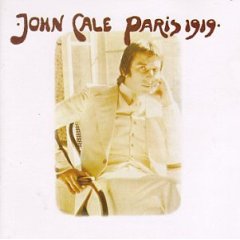
‘FROM BARBARY TO HERE’: THE DARK ACHIEVEMENT OF JOHN CALE'S PARIS 1919


“The road from Barbary to here
She sold then stole right back
The vanity, insanity
Her hungry heart forgave
The fading bride’s dull beauty grows
Just begging to be seen
Beneath the magic lights that reach
From Barbary to here”


Julian Cope once called Love’s Forever Changes a “dark achievement” and, while I don’t know if anyone ever specifically asked him, I expect Arthur Lee himself would concur. It’s a classic album of course, but a “dark achievement”? I see Forever Changes as more of a game played with the listener, a dance of psychedelic-coloured veils, a box of disguises, a series of feints never settling long enough to give itself away. It’s got a vein of darkness running through it, true, but it’s a vein of dark chocolate. Forever Changes is like one of those truly irresistible cakes that put something tangy in the mix in order to make the sweets taste sweeter. It’s exquisitely beautiful, but it’s a beautiful confection.

Now John Cale’s Paris 1919, that’s a dark achievement.

The location of the Velvet Undergound’s songs couldn’t have been any more American, with even the gaps between the tracks virtually oozing the Lower East Side. But with this album Cale took things back to his European origins. There’s more placenames adorning the lyric sheet than you’ll find on the average map, and in a sense it is a map – of a Europe, in Sylvia Plath’s phrase, “scraped flat by the roller of wars, wars, wars”.

Paul Weller sang of “civilization built on slaughter”. Part of the genius of Cale’s conceit here is to specifically expose European civilization to its bloody roots. After all, none but the terminally stupid could miss this point if we were just talking about America. Its’ de rigeur in Euro-snob circles to dismiss America for cultural crassness and for booted imperialism, like the two always belong together. But juxtaposing the beauty of Euro-classicism with the brutality of its roots is something of a masterstroke. The very phrase ‘Paris 1919’ immediately conjures up visions of elegance, but is simultaneously reminiscent of the carve-up treaty that followed the First World War and led almost directly to the second. Cale’s cold yet melodic voice, the audial equivalent of cut glass, perfectly captures this combination. Cale himself described the album as “the nicest way of saying something nasty”. The point about the line “from Barbary to here” is that the line is a short one.

In some ways it reminds me of Kubrick’s near-contemperaneous Barry Lyndon (1975), where the sumptuous classical soundtrack and pompous annunciation of the characters vie with the brutish events. This was a full four years before Brit-punk upped and challenged the predominance of American accents in popular music, and the effect then must have been more striking. The Welshman even appropriates a parodic, strangulated Englishness - particularly in Graham Greene and the title track. (Ironically, the album was entirely recorded in LA with members of Little Feat!)

However, that’s not to say it merely juxtaposes form against content, the ornate arrangements concealing the nasty content, still less follows the polemic of Weller’s anti-Western rallying. (Maybe, just maybe, the more-for-laughs track Graham Greene matches that description.) It’s actually doing something much more existential. When you first listen, you’re seduced by the sweetness of the music. Then the dark achievement of the words start to stain. But soon the two become inextricable.

It’s like taking a tour around the ancient hearts of the cities of Europe. You know the architectural splendour of each exquisite building to be built with the wealth of war and plunder, like scented flowers growing out of shit. Admiring them is like admiring the finest markings on the most predatory spider. You’re unable to resist being seduced by their beauty but neither can you forget they’re the signs of a killing machine. The very same thing simultaneously attracts you and repels. Paris 1919 ultimately implicates you in a terminally paradoxical world where the sweet can never be separated from the savage.

“We burned and we looted
And frightened ourselves
Before we learnt mothers
Could haunt us with words”


There’s a debate about whether the character on the train in Half Past France is a German solider headed for war or Cale himself headed for a gig. People like to pin that sort of thing down, don’t they? Of course, on an album populated by ghosts, it’s both – but that point alone won’t get you to the heart of the matter. Like many songs it’s about capturing a moment, and asking who is supposed to be experiencing that moment is at best secondary.

Journeys on trains or ships can offer moments of encapsulated serenity, an escape into limbo, between the volatile world you just left and will soon be re-joining. As soon as we arrive there’s going to be some unspecified kind of battle, but the train moves at it’s own speed and for now there’s nothing to do but luxuriate in the emptiness of the moment, “looking out from here at half past France”. The song’s refrain is particularly serene.

In fact, for such a dark album it has several such serene moments, certainly more than you’d find on the later Music For a New Society. For example, check out:

“If the sacheting of gentlemen
Gives you grievance now and then
What’s needed are some memories of planning lakes
Those planning lakes will surely calm you down”


As Matthew Spektor puts it in the liner notes, “I still don’t know what ‘planing lakes’ are but calm me down they do”. (The alternate drone version on the expanded CD is perhaps still more serene, but fits less with the orchestration and thematic unity of the rest of the album.) However, serenity is notably achieved the Wordsworth way, by removing yourself from human interaction, by swapping sacheting gentlemen for planning lakes. The humanism of, say, Tom Waits couldn’t be more absent from Cale’s world. As he sings elsewhere “people always bored me anyway”.

In case it’s not obvious, all of this is to describe the mood which suffuses the album. It’s not like some equation where each line sung and each note played draw proceedings schematically towards some intended, calculated answer. I’ve not the faintest idea what, for example, “the cows that agriculture won’t allow” means any more than I did the “planning lakes’. But I don’t suppose Cale did either and I don’t imagine it matters much. When a song has lines in it like “then Martha said…” the worst thing you can do is start wondering who Martha might be, or start looking various Marthas up on the internet. You’re not getting into the song, you’re actually moving away from it. As much as a song can be said to have a ‘sense’, you get to it by succumbing yourself to it, then seeing what’s left after its washed over you.

As with any album there’s a few exceptions to this thematic rule. The title track’s orthodoxly surreal, pitting male clerical rationalism against an unspecified female apparition. The glorious opening line, “she makes me so unsure of myself”, even makes it sound like a kind of topsy turvy love song, with the Churchman as a befuddled suitor striving to “claim” his otherly love. The la-la-la chorus comes to sound like a child’s defensive incantation, a kind of “ghost, ghost, go away, come again some other day”. The “efficient” clock, by which we “get to know the date and tell the time of day”, is ironically turned into the place she “casually appears” from, like a cousin to Dali’s floppy watches.

At the song’s end the general theme reasserts, with allusions to the French Revolution…an event usually thought to have been over by 1919. Truth to tell, it makes a better title for the album than the track. The song sounds so thoroughly English, for one thing. But Cale had carelessly already used up the natural title, Ghost Story, on his first album.

There’s precisely one rock’n’roll track on the album, the glitter-beat Macbeth, and it’s hard not to see it’s stomping as a mis-step. It’s not bad exactly, though the vocal in particular seems oddly flat and subdued. It just doesn’t fit in with the company. It’s as if Elvis had turned up at a Versailles ball… actually, it’s as if Alvin Stardust had turned up at a Versailles ball and said he was Elvis.

Despite this minor blemish the album turned out to be a high-watermark in Cale’s career, marking the end of an informal anti-rockist trilogy with Church of Anthrax (1971) and The Academy in Peril (1972). I also associate this period with his work on the two best Nico albums, Marble Index (1969) and Desertshore (1971), albums that always remind me more of Cale than Nico. They breathe of that defiance of convention and brief sense of possibility that briefly fluttered in the early Seventies, but eventually led back to the bar-room. With the next album, Fear (1974) Cale himself was back to writing gutsy rock’n’roll music to chop up chickens to. Psychotic and often deranged rock’n’roll, true, but something more nebulous and precious had been lost. Only once, on the much later Music For a New Society (1981), would he ever return to such exulted themes. This gives the ghost-heavy, elegiac nature of Paris 1919 an extra poignancy.

“I can’t bring back
I can’t think back
It’s fading again
The tin boys and young girls
All fading away…”

Sunday, 24 February 2008

WINGS OF DESIRE


There’s only two kinds of really great films. There’s the stimulating films like Persona or Chien Andalou, fascinatingly inscrutable parables which you could watch endlessly and still want to see again. Then there’s the nourishing films like La Regle Du Jou or To Kill a Mockingbird, which feel so richly humane and heartwarming you cannot help but feel touched by, meals which you couldn’t bear to think you’d never see again. Yet Wings of Desire is somehow both. It’s survived being turned into both a Hollywood classic and a car advert to remain essential viewing.

“For me the film is like music or a landscape. It clears a space in my mind, and in that space I can consider questions.” Roger Erbert

It’s not a film that’s going to appeal if you hold to the common idea that film is something linear, or a novel which is just acted out in front of you. Like many of my favourite films it’s immersive nor discursive, it’s more like a piece of music which engulfs you and takes you over with its mood.

Set in divided Eighties Berlin, the film might appear a timepiece. Carl Jung once said of the Berlin wall, “the world is now dissociated like a neurotic”. But this is far from a historical record of life in a divided city. For one thing it casually jumps around time, turning a corner it finds itself in a bombed-out wartime Berlin. But more importantly it uses the divided city as a metaphor for a divided humanity, everyone walled inside their private self.

“They no longer sit in a circle, but rather sit apart. And one doesn’t know anything about the other.”

A key image in the film is the library - each inside his own cubicle thinking his private thoughts. The angels however can pass between the solid barriers and eavesdrop on each of these thoughts. (One of which is the old poet’s given above.) Unseen the angels converse only with each other, sharing such observations.

“When the child was a child, it was the time of these questions. Why am I me, and why not you? Why am I here, and why not there? When did time begin, and where does space end? Isn’t life under the sun just a dream?”

However, it boggles my mind how few people actually seem to understand the role of the angels. Many seem to assume they inhabit a state of ‘pure spirit’, above mere humanity to which we should aspire. The references to childhood which open the film (quoted above) are often taken to be a reference to humanity’s unadvanced state. But these notions can be answered with a simple point. This is not a story of a human who became divine, but an angel who became human.

It may be illustrative to compare the angels to the Tralfamadorians, the aliens in Vonnegut’s novel Slaughterhouse Five. Like the Tralfamdorians, the angels have amazing perceptive powers such as the ability to see through time. But while the Tralfamadorians have reached a state of Zen-like superiority the angels are outsiders, trapped inside their powers. They’re aware the humans live much more limited lives, and see all their failings, but still look to them longingly.

The quote about childhood seems to me a more accurate description of the angels’ state than the humans. The angels are unattached, floating, groundless, without a specific place or purpose in the world. They watch the world attentively, even lovingly, but never quite comprehendingly. Their habit of listing their observations, like they can’t quite see the joins between things, is very childlike.

Damiel, our key angel, becomes human partly out of love for a human girl. (Though also to get the feeling of newspaper ink upon his fingers.) When he succeeds he recites to her an almost exact reversal of the ‘when a child’ speech – essentially “we are here, it’s now, it’s life, let’s live it.” Childhood, free from cares and commitments, is simultaneously free from involvement in the world. It’s a nice place to visit, but you don’t want to settle down there. When Peter Falk reveals he too was once an angel it’s suggestive that perhaps we all were once. (“Oh yeah! There’s lots of us.”) In this way the film is a rites of passage between childhood and adultness.

Simultaneously the angels are artists. They watch life from outside, taking notes. Much of the content of the film is from things Wenders observed in exactly this way, and decided to add. (For example Peter Falk’s sketching of people.) The human Damiel falls for, his route into the human world, is a trapeze artist. Associatedly, the angels are the cinema viewer. Rober Erbert has written of how the “camera seems liberated from gravity; it floats over the city, or glides down the aisle of an airplane. It does not intrude; it observes”. In this way the camera is another airplane. Their world is black and white while the ‘real’ one is in colour. In The Wizard of Oz, filmed in a black-and-white era, it was the fantasy world which burst into colour. These days even newspapers are in colour and black-and-white has become an ‘artistic’ frame.

“I want no longer to hover above, I want to feel a weight within me, abolishing limitlessness and binding me to earth.” – Damiel

All these views are valid and complementary, and in no way vie with one another. However, it’s simultaneously true that the film is ultimately about alienation. Damiel escapes the role of a mere observer of life by embracing humanity. But let us not forget the city where the film is set. The film is not some glib New Agey parable about “following your bliss”. In many ways the humans are as alienated as the angels, locked in their subjectivity, writing epic poems they hope will make everyone else understand, never finishing them. As Richard Raskin has said; “Damiel’s quest is not a denial of the spirit but a wish to live a life in which spirit and body are united.” The trapeze artist aims in her art to achieve weightlessness as surely as Damiel longs to feel weight, and that is the magnet which attracts them. The humans and the angels have the two halves of something which must be put together – empathy for others combined with a will to live.

When Damiel first becomes human, Peter Falk exultingly tells him what he has to look forward to. “When your hands are cold, you rub them together, you see, that’s good, that feels good! There’s so many good things!” Like the graffiti on the Wall, the film often manages to find colour in the bleakest-seeming places. Some films manage to make you see cinema in an entirely new way. This film reminds you of things in the world outside the cinema, things you’d always known but had forgotten to notice. It reminds me of the final line in the Glenn Dakin comic strip, Mr. Night Disappears, “to boldly go where everyone has gone before.”

You know, I even kind of like the sequel…

Sunday, 17 February 2008

CLOVERFIELD


PLOT SPOILERS occur here (if not of the size of the beast that besets Manhattan about twenty minutes in… oh bugger, that’s a spoiler in itself!)

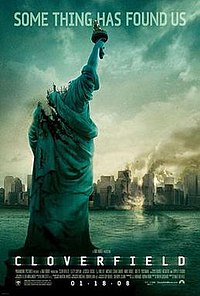
What was the old TV show where contestants had to perform one thing “in the style of” something else? King Kong in the style of Wagner and the like? Cloverfield feels like it’s been made on just such a dare, performing Godzilla in the style of Blair Witch Project, using jerky hand-held camera as faux found footage. In case you’ve been vacationing on the moon here’s the set-up - a bunch of Manhattanite yuppies just happen to be filming their party when a Godzilla-like hits New York and they keep filming during the resultant carnage.

Where it’s different to Blair Witch is in theme. Blair Witch was a much more personal and intimate story. It focused on the fraying state of mind of college-aged youths who, despite their talismans of maturity (camcorders and maps, though inexplicably not mobile phones), have their feelings of adulthood progressively stripped away. The film charts their reduction to fearful children. In this way Blair Witch was personal and psychological, while Cloverfield is concerned with the social.

The odd-sounding title was actually just a placeholder, a cover to hide any genuine info leaking out until the makers chose to release it. But the placeholder name gained currency on the net, so came to be left in. In many ways the monster, an unnamed Godzilla-like, feels like a placeholder too. We’re deliberately withheld a decent view of it until the very end, and any info on its origins or motivations are kept firmly at the level of speculation. (For those that really want to know that sort of thing, there’s some ‘viral’ marketing on the internet to clue you in. But that merely confirms the speculation of one of the characters, and doesn’t really have much to do with the film’s theme anyway.) The point is that we quite literally only see the monster from the characters’ perspective, who would know nothing of such privileged information. The film drops us into the chaos, hysteria and uncertainty that get thrown up, and doesn’t deign to offer us such reassuring pegs.

And those characters? Well they’re pretty much placeholders too. In Rolling Stone, Pete Travers described them as “walking MySpace profiles”. (A term that becomes all the more ironic when you learn the makers even gave these characters MySpace profiles as part of their marketing.) Though Travers uses the phrase as an insult, this actually works surprisingly well. After all this ain’t an attempt at Checkovian realism. The characters are supposed to be everymen with nothing special or unique about them - except for the single fact that chance put them in disaster’s path. When, for example, Rob has to tell his mother on the phone about his brother’s death, we know nothing of the particularities of their relationship. Instead we’re asked to consider how we’d cope with such a situation. (In fact a weakness of the film is that it doesn’t go down that path enough. The opening ‘party’ scene dwells on ‘characters’ who don’t – to put it mildly - reward our attention. It’s true we need some normality before disaster strikes, but the scene lasts too long and we end up checking our watches for the monster’s unsurprising arrival.)

Travers goes on to insist “Clovefield’s virtues are all mechanical”, and he’s certainy right it’s a film very much concerned with formal innovation. Back in the days of matte paintings and stop-motion, inserting special effects into the frame used to be dependent on locking the camera down. The sudden lack of camera movement often came to be a clue a ‘special effect’ was just about to occur. We’re used to faux-docu footage and we’re used to big scary monsters, to the point where both long since became clichés. What we’re not used to is seeing both put together. (Even Blair Witch showed nothing scarier on screen than some strangely assembled twigs.)

However, Travers is surely wrong to suggest this reduces the film to the ‘mechanical’. Early films used to show something like trains steaming into the camera, a formal device which still had an impact upon the audiences of the day. Similarly Cloverfield works best when it restricts itself to a conviction in it’s own central device, but find abundant amounts of courage in it. The combination of verité footage and giant monsters is less a nifty novel means to tell us the story than the very thing the film comes to be about.

It works like a trained musician restricting himself to three chords, but finding lots of sub-varieties within them. The ‘plot’ is often perfunctory and predictable. (Will our heroes obey army orders to evacuate Manhattan, or will they brave adversity to rescue their missing friend Beth? Go on, you’ll never guess!) But the wrings the film can pull from its device are many and varied, making it more a haiku device than a gimmick. Unlike Blair Witch it is filmed in near real time, enhancing our sense of being trapped in the moment. It smartly allows for quiet and uneventful moments, rather than reducing everything to a shrill headlong rush. It even finds a way to incorporate a flashback structure. (The videotape being used is filming over an earlier romantic moment between Rob and Beth, which the film keeps cutting back to.)

This sense of immediacy also feels like a welcome change when you hear producer JJ Abrams and writer Drew Goddard previously worked on such fodder as Lost. Lost seemed entirely predicated on the idea that we’d search the frame for ‘clues’, then swap them with our mates (or more often total strangers) on internet message boards. I am heartily sick of this reduction of films and TV shows to honorary computer games, and glad to see two of its worst proponents doing something quite the opposite here. (Disclaimer: there are ‘clues’ hidden here but they have nothing to do with following the front-story. I missed every single one of them while watching the film, and didn’t feel like I was losing out on anything.) It’s also rare to see a Hollywood film that does stick to a single idea, they normally suffer from the death of a thousand chefs where each one has squeezed in his own half-baked notion.

Every review I read of Cloverfield mentioned the September 11th connections at some point or other. Some call these crass, others cathartic, others just find it a marker-point where S11 became do-able in the cinema. And yet New York has been destroyed on film many times, both before and after that auspicious date. Godzilla himself was invited to trample Manhattan back in 1998 while the Big Apple was destroyed in both 2004 (The Day After Tomorrow) and 2005 (War of the Worlds) – you’d probably be hard-pressed to find a year when the city didn’t buy it. (And that’s ignoring the glut of such gung-ho-flavoured direct references such as 2006’s World Trade Center.) Clearly what’s triggering those associations is the faux-docu filming. Unlike many previous disasters S11 is imprinted in our memories through the types of filming we associate with small, intimate events such as weddings or parties - bringing home the notion that that was the day terror was brought home.

Admittedly, the makers do everything they can to reinforce this picture. Beth, for example, has to be rescued from a set of twin towers – one leaning precariously on the other. But the biggest memory-jogger of all is the sequence used in the trailer (and doubtless the film’s central image) – when a huge object hurled down a Manhattan avenue is revealed to be the head of the Statue of Liberty. It’s hardly possible to see such an image without being reminded of one thing – They Hate Our Freedoms. Yet the film’s monster is revealed to be brutish rather than sentient, even running round on all fours. It’s not at war with capitalist democracy, its just banging into buildings which happen to be in its way. It’s a powerful image, but also misleading and ultimately something of a cheat.

Reeves complains the film has “no politics” and thereby no meaning. Certainly what politics it displays seem confused. The military are very much movie-military. In one cringeworthy scene a major allows the gang to defy evacuation orders and continue searching for their missing friend - on camera even. In any real martial law situation, let alone such an extreme one, Rob’s remark “you’ll just have to shoot me” would lead to one response only – “I’ve already thought of that!” (Surely the faux-footage motif obligates the film to have some concessions towards believability.) But then at the end we discover the videotape we’ve been watching is being held by the military, obviously covering up their inability to cope with the crisis.

But again, these criticisms partly come from misunderstanding the very nature of the film. As Alan Vega said of his New York punk band Suicide “people were coming in off the street hoping they’d be escaping, and all we were doing was shoving the street back in their face again”. Cloverfield was marketed on the notion that many of us would pay good money to have bad memories shoved back in our faces again, and it seemed to be working at least on the night I saw it. In this it reminded me in many ways of the ‘re-imagined’ version of Battlestar Galactica. Galactica is a much wider work, taking in not only S11 but Vietnam, the Civil Rights turmoil… virtually every dark moment in modern American history. It’s opening episode, for example, is often said to be reminiscent of S11 but works as a much closer fit to Pearl harbour.

But the psychology is the same - using fiction as a piece of dispelling magic to take everything out there that’s fucked up and stick it all in one place. The bad stuff in the world is thereby made to feel containable by the very fact that you created a container for it. The advantage of having a Book of Everything That’s Fucked Up is that you can then shut the book anytime you want. Cloverfield is therefore no more interested in the military’s tactical response to the monster than it was the monster in the first place. It’s only question is – what if all this happened to you?

Of course Cloverfield’s immediate success, finding a dramatic device that fits our zeitgeist, may turn out to be its long-term failure. While it would be meaningless to speculate how this film might look in the future, where it leads now feels a much more closed question – it doesn’t. Like most Hollywood films, we’re given a coda that leaves the door open for a sequel. But what kind of a sequel could that be? Abrams has pointed to the many scenes where other bystanders wave camcorders and cameraphones, and suggested a follow-up could be made by following any of those people. But as we’ve seen, the whole point about these characters is their very non-specificness, that they were just chosen randomly from out of a crowd. Once you’ve had one everyman, the last thing you need is another one. Of course we could follow the military high command or delve into the monster’s origins, or one of many other plot points the movie leaves open. But that would by necessity create quite a different kind of film to the one here. Sequel proofness isn’t always a bad sign, I can’t imagine a sequel to Solaris or Weekend for example. But here it adds to the feeling that this film is primarily staking out a piece of territory to sit on, not invite further development. It found a style that hadn’t (until recently couldn’t) been used before, and it found that style summed up a very zeitgeisty moment. At the time, many suggested Blair Witch Project might throw open whole new ways of making movies. But all it really led to was a sequel almost everyone found pedestrian. Cheap camcorders were a great way to make that movie, not necessarily any other.

That observation may turn out to be ten times as true of Cloverfield. At a time when films seem to be getting longer, it’s a mere 85 minutes. But (particularly with that opening party scene) it would probably have been more effective had it been even shorter. It’s noticeable that the trailer, rather than acting as a teaser for the movie, effectively presents it in microcosm. It gives us the ‘normal’ opening, then throws the Statue of Liberty’s head down Manhattan. Some have argued we shouldn’t be given a full view of the monster, even at the late stage it appears. But it’s arguable all we should have ever seen was the trailer, with the monster left forever offscreen and unknown.

Tuesday, 12 February 2008

NO LONGER TRAPPED IN A WORLD HE NEVER MADE – A TRIBUTE TO STEVE GERBER


In case you haven’t heard this sad news already, comics writer Steve Gerber died in Las Vegas last Sunday.

Though Gerber had lately returned to comics after a stint working in animation, I dare say it’s his original Seventies years with Marvel comics which were his finest. In fact I don’t think it’s going too far to call Gerber the Alan Moore of his generation. He looked an immature medium in the eye and refused point-blank to recognise its limitations. His output was admittedly uneven, but that’s what you get with pioneers.

Tom Spurgeon makes a good point when he describes Gerber as “imbued with an underground comix sensibility but as overground as the spinner rack at your local supermarket.” Though of course his relationship with Marvel was to sour, his work still best exemplified the aspiration that radical ideas can sometimes be brought intact into the mainstream. Before I’d heard of either Alan Moore or underground comics, I was able to buy Gerber’s stuff via British Marvel reprints in my sleepy English hometown. I’m really not sure I was ever the same again…

Another good point was made in Mark Evanier’s tribute: “He was a sharp, brilliant human being with a keen understanding of people. In much that he wrote, he chose to depart from reality or (more often) to warp it in those extreme ways that make us understand it better.” I quickly lost interest in most of Gerber’s contemporaries (Starlin, Englehart, etc), who seemed to quickly get lost inside the cosmic. It was like their work became a hermetic arena where their crazy ideas could rattle around endlessly, but never actually get out and signify anything. Gerber could go cosmic too, but always managed to keep one foot plonked firmly in the everyday. While he strained at the leash of what could be put in a Marvel comic, he never forgot that Marvel comics had started with Spider-man sewing up his own costume in his tiny bedroom.

He had a fascination with losers such as Richard Rory, who were fairly transparent stand-ins for himself. These losers never turned green or mighty nor even saved the day all that much, they mostly just bumbled slightly uncomprehendingly from one issue to the next. This would reach its epitome with Howard the Duck, an autobiographical character barely disguised by being given a Donald Duck look. “Trapped in a world he never made” ran Howard’s strapline.

Though he could seemingly write anything from horror to comedy or absurdism to melodrama…though he could seemingly write all of those at one and the same time… at heart Gerber was a satirist. The old-fashioned Hogarthian kind who mocks the world not to titter but to rail. He’d put himself into his comics then pillory the fads and dud ideologies that surrounded him. He felt himself insulted by those things. He felt you should be insulted too.

Despite Howard and unlike Moore, Gerber never got to be as well-known as he should have been. Perhaps his return to Marvel was never blazing, more of a guarded rapprochement. Perhaps comics fans were never as keen to grow up as he was to give them grown up material. Though much of his classic material is now available it’s mostly crept into reprint, via the consolidated repackaging of Marvel’s Essentials volumes. At my local comic shop there’s a hefty one-stop section dedicated to Alan Moore, just like there should be. A fair and just world would have one for Steve Gerber.

Some Steve Gerber you really should read:
Essential Man-Thing Vol. 1
Includes the earlier strips from Adventure into Fear, but doesn’t really hit its stride until he’s given his own title.
Essential Defenders Vol. 2 & 3
Unfortunately Gerber’s issues are caught in the change-over, meaning you have to buy two hefty volumes when his strips alone would have fitted inside one slimmer one. You could of course read the issues not by Gerber which get included here… it’s a free country…
Essential Howard the Duck Vol. 1
The whole kit and kaboodle!
We also need an Essential Daredevil Vol. 5 solely for the Gerber stories therein!

http://www.stevegerber.com/sgblog/

Thursday, 24 January 2008

I AM LEGEND


PLOT SPOILERS happen big time in what follows…


Before you ask, no this will not be another snobby burial of a Hollywood action film. For one thing, there seems little point seeing Deep Impact then complaining it wasn’t much like Wild Strawberries. Hollywood action films shouldn’t be criticized for just serving up the thrills, particularly when for the most part they can’t even serve up the thrills. They’re less than functional, like a broken toaster or a takeaway that doesn’t even fill you up after you’ve paid for it.

However, every now and then you get a film that’s more than serviceable, that manages to top up the serving with something a bit more tasty. Of course we’re still talking about a takeaway as opposed to a sit-down meal, it’s just a takeaway with some salad added. But sometimes I’ll eat a takeaway, and I prefer them with some salad. I Am Legend deserves comparison to something like Terminator, possibly even Alien, in keeping up its combination of roughage with taste for most of its length. (More on that caveat later.) Perhaps part of its appeal is that its very much a psychological rather than political story. Its ‘enemy’ are not something ‘foreign’ so much as a distorted version of us. As we shouldn’t be expecting anything intelligently political from Hollywood right now (including from the ‘liberal’ camp), this is something to be welcomed.

Channel Four summed it up well when they described it as “a film that blends a blockblustery bluster with a gaunt apocalyptic sobriety to good effect.” I am admittedly a sucker for ‘empty city’ scenarios, but this film put a chunk of its considerable budget into portraying a quite awesome deserted Manhatten. While everyone’s compared these scenes to 28 Days Later they seemed to me much more indebted to 12 Monkeys, with their deliriously incongruous shots of wild animals wandering the boulevards. I might well have been happy with an installation piece rather than a film, which just panned over such shots for ninety minutes then went to the credits.

The empty city is a potent image which is unlikely to be tied to one meaning, in fact it probably lends itself to several quite contradictory meanings. For example, the abundant flora and fauna on Fifth Avenue give off a Ballard-like vibe, portraying the seductiveness of entropy. There’s probably a wealth of existential stuff about the primacy of the self. However the film really focuses on the psychology of being the last man alive in a whole city. At first our hero Neville (Will Smith) seems to be leading quite an idyllic life, hunting game down from a Cadillac like a post-modern hunter-gatherer.

Despite the screech of types it’s akin to the recurrent image of the single walker in a city at night. Only when the hustle and bustle’s taken away can we really see the city for the monument it is. Indeed the absence of others can feel liberating, like all those times you’ve wished those clogging crowds away. Significantly no-one in the early scenes appears dead – merely absent. As director Francis Lawrence has commented, “"We didn't want to make an apocalyptic movie where the landscape felt apocalyptic… there’s something magic about the empty city.”

However, in another sense, the emptiness just enhances the way the city feels anyway. The crowds are so ubiquitous, there’s simply so many other people that they become unindivudated and anonymising. The film flirts with the first take on Neville’s life, only to hit us with the depth of his isolation. When I first heard Will Smith describe the film as primarily a psychological study I was cynical. But the fantastical scenario is genuinely being used merely as a magnifier to explore facets of life we all recognise. The fancy effects and CGI budget are just a means to tell us about a guy who hasn’t been on a date for a long time. His hopeful broadcasts to other survivors sound like the saddest lonely hearts ads out there. (“I haven’t seen another person in three years. If anybody is out there. Anybody. Please.”)

Meanwhile these elaborate survival practices and non-stop checking of his watch start to feel more and more like a bad case of obsessive-compulsive disorder. Needless to say, when one of his daily visits to a non-existant rendezvous actually pays off and he comes across Anna, he doesn’t cope with it very well. This moment is underlined by showing the scene from Shrek where Shrek rejects teaming up with the Donkey. Having clearly been watching this video as regularly as all his other routines, he’s able to mouth along to every one of Shrek’s words. (Yet, as we all know, Shrek eventually accepts the Donkey.)

Even Anna’s Godbothering, though otherwise cringeworthy, adds to the theme. Her faith in God’s plan is matched to her belief that there must be other surivivors, the communal mixed in with the communion. (Though how so naive and unskilled a character has kept alive both herself and a small child is best not gone into.) Naturally, Neville responds by aggressively insisting on the death of everybody, like a neurotic insisting on the special nature of his problem.

As the film progresses we learn there’s two kinds of other folk in Neville’s life, the empty automata of showroom dummies and the Infected, a brutal antagonistic force. (The Infected are riven with the disease from which only Neville is immune.) While one is the passive crowd, the other is the active, antagonistic crowd, the danger in the city streets. While the look of the Infected is admittedly unimaginative (post Lord of the Rings bad guys) and identikit (as you’d expect from CGI creations), this does better enable their plot function – to represent the social group. In a neat plot twist Neville underestimates them, assuming them to be an unindivuated horde. He only learns the truth as they descend pack-like upon him…

Given this description, establishing a mood is obviously of central importance to this film. It must not only be clearly told, and both evocative and thrilling where appropriate, it must put up on the screen Neville’s mental state. Moreover, for much of the film Smith has no-one to act with apart from a dog and a few tailor’s dummies. It succeeds surprisingly well at this, allowing the pace to slow right down where it considers it necessary, a welcome change from the standard freneticism (which also serves to enliven the action scenes when they do arrive). Even when Neville’s dog is ‘vampirified’ by the virus this is not portrayed as a twist or even turns into a fight scene, the camera instead zooms in on the look on his face as he is forced to strangle it.

Moreover the story is conveyed less by exposition than by a kind of patchwork of clues, for example briefly showing a magazine cover on a fridge door that conveys vital information. Neville goes through his daily survival routines, and only later do we recognise the significance of some actions. There are flashbacks (which also allow for juxtaposed scenes of teeming New York streets as everyone tries to flee), but these are smartly kept short – usually cutting off just when we think we’re getting some useful information. One handy side-effect of this implicit approach to storytelling is that the nerds at Wikipedia have driven themselves nuts trying to determine what is ‘plot’ and what is merely interpretation.

Ironically, considering the high budget and heavy reliance on CGI, one of the most effective sequences couldn’t be more simple. In precisely the sort of thing you’d expect to happen in a film like this, our hero has to enter a darkened building likely to host enemy combatants. At this point, and like you would, he starts hyperventilating from fear. It shouldn’t be surprising but it is. It’s not the sort of thing you’d expect from a trained military man, nor from a hero in a mainstream Hollywood movie – and absolutely not the sort of thing you’d expect from Will Smith. Though this simple act, subconscious triggers are pulled and we can’t help but think “well if he’s worried…” (The effect is also heightened by this being our first encounter with the Infected.)

The power of so non-special an effect also exposes the sheer inadequacy of the term ‘plot spoilers’. A plot spoiler would tell you whether he does run into the Infected while he’s in there, or whether he manages to get out again… two things which on a lucky day you might be able to guess. Something like the hyperventilating is rendered unguessable through being so incidental to the plot, yet its very simplicity makes its effectiveness easily crushed by forewarning. It’s simply not going to get to you like it should if it’s preceded by a big caption saying ‘Hyperventilation Scene Coming Up’, it needs the space to steal up on you. It reminds me of the release of Blair Witch Project, a film almost entirely predicated upon such simple devices which was derailed by your knowing the most basic information about. Despite what others argue, ‘plot spoilers’ is not only an issue for films serving stock twists.

Sadly this good stuff can’t be kept up throughout. Most accounts agree the film goes off the boil before the end, but get arguing over where. Certainly the coda, where Anna and the boy are waved into an idyllic-looking citadel of survivors, is possibly the worst bolt-on feelgood ending since the one originally imposed on Blade Runner. You’re best off doing what us old ‘uns had to do with Blade Runner for years – shut your eyes and pretend it isn’t there.

But the real problem is that the actual ending isn’t that much more satisfactory. It’s not just that everything descends into a shoot-‘em-up, you’d kind of expect that. There’s even a strong image in our heroes locked in the laboratory against the teeming hordes, the last bastion of civilization shielded by just one thin sheet of glass. But then Neville merely passes the cure to Anna, then blows himself up to aid her escape. He makes some reference to her “God’s plan” business, which was a latterday and shoehorned theme to start with. You can’t help but think – so what?

As if turns out, a different ending was intended. We were supposed to learn that the Infected are only after the return of the significant other of Alpha Male Infected, who Neville has captured to experiment on. Once she’s back with the family, everyone can part as friends. This version of the ending is thematically much more consistent. Neville has previously dismissed the Infected as subhuman, and has got himself into this predicament precisely by underestimating them. Now he finds that what his survivalist instincts had seen only as adversaries or objects of study… really, they’d been his neighbours all along.

But the problems with this ending start with plot consistency. By this measure, it’s completely stupid. It’s been well established the Infected live off flesh and had been trying to turn Neville into dinner well before he ran off with someone’s girlfriend. Are they now offering to subsist off soyblood? Moreover this forgetting about all animosities, in a Rodney King moment of group hugs, conflicts with the tone of all that’s gone before. (Those familiar with the ending of the original Richard Matheson novel will also recognise this ending for the travesty it is.) But the real problem with it is that it’s both forced and neat, far too tidy a tie-up.

Before developing that point, let’s concede something the film does do well. Despite Neville’s obsession over keeping to his New York post and curing the virus, it’s actually caused by another, otherwise redundant character. (Somewhat unsubtly called Dr. Krippen.) I’m presuming here the film-makers considered the obvious, that as a scientist Neville could have created the virus and they chose to rule it out. If so, we should all be thankful.

By the Hollywood rulebook, a film is always structured around the hero’s ‘journey’ or ‘arc’, with every other character, scene and incident merely there to illustrate some point along this. As Andrew Rilstone has pointed out, the Batman, Daredevil and Spider-Man films all took the common thief who kills the hero’s father figure and turned him into the adversary. (In fact the Spider-Man films even pulled this trick twice just in case we missed it the first time!) It transforms from a random incident triggering the hero to fight crime on behalf of society, to a causal incident causing him to fight his personal enemy. It sucks in quite a literal sense. It sucks everything social and chance from the world, and builds instead a hermetic, even autistic mindset where everything that happens is happening to you and you alone – the perfect epitome of the ‘me’ generation.

Yet even with this saving grace, the intended ending still maps too closely to the Hollywood rulebook. It’s emphasised how Neville isn’t staying in Manhattan out of military duty or compulsiveness, but because to him it’s personal. It’s not even supposed to matter if the Infected totally transform in nature before the film’s over, because they were only ever put there to tell us something about Neville. Moreover, it contradicts with the film’s better instincts. The moral becomes about trusting your neighbours, which is not only somewhat trite but is ill-fitting for a film so obsessively about one man that it echoes his self-centric mindset. Even the other humans aren’t real characters, arriving with the barest of backstories. As the saying goes, there’s no team in I Am Legend.

Okay smartarse, so how should the thing have ended? As Neville has the cure in his bloodstream and all his setbacks revolve around getting it out, it occurred to me he might get eaten by the Infected but in so doing cure them. While this might have been harder to capture on film (perhaps relying on montage and voiceover), it would have created the irony where his own srvival instincts were the thing preventing humanity getting cured. Like genes, his cure would have only been of value while passed on.

Or there might have been an ‘open’ ending. Neville and the others could have been safe behind that extra-thick plexiglass but unable to leave and so unable to use it. Perhaps the lab could have doubled as his living quarters throughout, and contained food supplies. (Something which would also underline his compulsiveness.) Perhaps he devises an airborne cure, which he can’t spread without opening the door yet he’s dead if he does open it. Perhaps the situation even gets ‘normalised’ in that standoff, everything that was happening before on a huge scale reduced down to this one-room microcosm. Then it fades out and we leave the cinema wondering what we would do…

But perhaps there isn’t an alternative ending which would do justice to the film’s themes yet meet the expectations of a multiplex release. The earlier parts of the film combine the feeling of a mood piece or character study with being a chronology of events. But at its finale it loses this balance and finds itself forced to come down on one side or the other. Films will often end in an explosion if they prove difficult to resolve otherwise, such as Hell in the Pacific. So this film obligingly picks up a hand-grenade and autodestructs.

Thursday, 17 January 2008

THE GOLDEN COMPASS


"This is my review of the film of the The Golden Compass. It tells the truth. As for how to read it, you'll have to learn by yourself."

Before we go anywhere else, I first claim my civilian status! I have read precisely nothing from Phillip Pullman’s trilogy His Dark Materials, from whose first part this film is based. Consequently, while having had the books recommended to me, I have no opinion whatsoever on whether this adaption is honest or not to the ‘atheism’ of his theme. Instead I’m going to sidestep the question and instead use this ‘review’ as a springboard into the whole question of the contemporary fashion for books adaptions.

Whether it draws its power from the books or not, this film is far from the worst of its type and there are definitely things to commend about it. While it doesn’t have the dizzying sense of being hurled into the numinous you’d get from a Miyazaki film, it fares well enough at world-building. The set design is often elegant and imaginative. But beyond that it understands that it’s not the ‘otherness’ of other worlds that provides the frisson, so much as the sense of distorted familiarity. As in dreams we see familiar items rearranged and thrust into unfamiliar contexts. (Though a transformed Oxford may give a stronger sense of this to UK audience visiting.) Perhaps the appeal of such things lies in demonstrating to us how provisional our ‘reality’ really is, the product of accident piled upon accident.

[SKIP NEXT TO AVOID PLOT SPOILER!]
It must also be said Nicole Kidman also makes a splendid villainess in her portrait of Miss Coulther. She’s glamourous in the original sense of the world as spellbinding. But more than that she manages to convey some maternal twist to paternalism –convincing you she genuinely believes her bad deeds are for the greater good of the little folks, even when she openly admits she doesn’t consider herself bound to the same restrictions. While she’s clearly Lyra’s ‘bad’ parent to Azriel’s ‘good’, the truth is slightly more complicated – she makes it clear where Lyra gets her willfulness from, even as it’s the very stuff she uses it to defy Miss Coulther. She wants Lyra to become independent, just not too much. An argument over Lyra wearing a bag is simultaneously pettily familiar and sinister. (Of Dakota Blue Richard’s Lyra, however, perhaps the best that’s can be said is that she can’t stick to her adopted accent for very long. What’s ‘best’ about this will become obvious when she does remember to use her ghastly ‘urchin’ voice.)
[SPOILER OVER]

However, at times the film gives you just enough to suggest you’d have done better to stay home and read the book - floating interesting-sounding concepts only to let them drop. One of the central conceits of this parallel world is that everyone is accompanied by an animal ‘daemon’, a cross between an externalised soul and a witch’s familiar. (A very visual notion which might suggest Pullman always had one eye upon the film rights.) But rather than explore the effect of such a conceit upon their world the film quickly makes them mere plot devices - while Miss Coulter is cooingly seductive her daemon is an aggressive monkey. Meanwhile Lyra’s is made timid to emphasise her bravery, forever saying “do you really think you should go in there?” Ironically, the polar bear Iorek might have made a better ‘daemon’ for her than the one she is given. We first meet him chained and pressed into labour by humans, the obedient adult Miss Coulther would have her grow into. Later he comes to represent her defiant bullheadedness, the side of her that needs to hook up with her smarts. (Admittedly, more promising ideas appear later in the film, which I won’t spoil here.)

But the classic example of this is the Golden Compass itself. (NB You have to call the Alethiometer ‘the Golden Compass’ for the same reason you have to talk about ‘sci-fi’ in front of Isaac Asimov fans.) The first time Lyra uses it the hands point to a series of icons, a set of juicy clues to puzzle over. But for subsequent uses it just spells everything out in cheesy ‘dream logic’ scenes, misty-edged excuses for an info-dump.

On a more functional level, however, the film does not suggest such good things of Pullman’s books. There’s too many absurd plot-holes and logic lapses, even for indulgence of genre to allow. When we first come across Lord Asriel the bad guys are indulging in a clumsy plot to poison him, then a later twist reveals their actual plot revolves around keeping him alive. It also becomes tiring the degree to which Lyra gets rescued by the Cavalry – I caught four at least. And when the film ends she embarks on yet another perilous quest, while neglecting to take her last rescuing army with her! Perhaps she’s just figuring another will be along in a minute…

However, don’t these up and downs sound familiar? Isn’t the film/book relationship a strangely mismatched one to start off with? In its early days, cinema almost entirely subsisted from adapting books. At the time this was most likely aimed at reassuring middle class audiences (ie those with the money) that cinema-going was a ‘respectable’ activity, like novel-reading. But of course this literary baggage soon became an impediment to cinema’s growth, a counter-weight to the savage clash of images which the Surrealists saw in early Hollywood. Nowadays film is firmly wedged inside the feedback loop of re-making already existing films but (perhaps with the twin hits of Lord of the Rings and The Da Vinci Code) adapting books has also found some mini resurgence.

There may be many reasons for this. In a parody of its earlier days, punters may flatter themselves that by seeing a film of a book they are doing something semi-literary. In our time-poor present, they may figure they will never get round to reading the source novel and this is their best chance. (Which is, after all, the very reason I saw this film.) There may be some lurking notion that having an external source may be a way to establish a core for a film, and escape the through-line-less ‘death by committee’ so many suffer from. (This film alone suffered two changes of director and script.)

But the upside of the earlier aping of ‘respectability’ was an implicit commitment to see the book honoured. (Klunkers like the ending imposed upon Great Expectations notwithstanding.) It’s as if, after over a hundred years to practice in, film has learnt none of the basic rules of adaption and instead lost the will to really try.

First and foremost, it seems abundantly obvious that whatever your measure the contents of an average-length book will not fit inside an average-length film. Lining one up against the other is like the Dadaist cabaret turn, where a typewriter would be nonsensically ‘raced’ against a sewing machine. As with so many adaptions, this film feels like an assemblage - created from some Cliff Notes summary rather than the book itself. Whole scenes seen to consist of half-explained characters manifesting themselves, telling our heroine Something of Great Plot Importance then saying “anyway, must dash”. (Check out the Witch’s first appearance here for a classic example of cramming.) The effect is like opening an over-packed suitcase and having a whole bunch of stuff flung at you haphazardly.

This of course compounds with a general modern desire for films to be rushed, as if faster always meant better or more exciting. In the same way the trailer’s just tantalysing snippets of info strung together to get you to see the film, the film just plays the same trick at greater duration to get you to buy the Playstation game or spin-off single (or maybe even the book). Each incident crammed shoulder to shoulder with others, none is ever a moment to itself.

A possible solution might seem to merely up the running time. It’s to this film’s credit it doesn’t try this, but keeps itself to a modest 113 minutes. The fad for longer films may partly come from the absurd notion that length is a measure of quality, but more particularly derives from the Lord of the Rings films. Yet a film based on a Tolkien book lasting 178 minutes is one thing, a film based on a JP Rowling book taking up 161 minutes is quite another. Popcorn makes for a poor three-course meal.

But more importantly, it should be understood a book is a different medium to a film and merely upping the number of reels will not compensate for this. Novels, even adventure novels such as this, present what’s ultimately an intangible world. People sometimes say they do or don’t see a particular character as a particular actor, but while we’re reading we don’t have a mini-film playing inside our heads so much as a nebulous fog of concepts and images. Too often a book is merely reduced to a bulleted list, a series of plot points and encounters which are then stuck in front of a camera. If we’re lucky, enough of them make it through editing to leave some semblance of shape. It’s like making a 2D diagram from the contours of a 3D photograph, anything not easily captured in the new medium is simply ignored and left behind. (It would also be interesting to speculate that the novel is itself suffering a kind of backwards contamination, as writers emaciate their own work in order to make them ‘film ready’.)

After over a hundred years of attempts, do we really need to point out that an adaption is not the same thing as a retelling? An adaption cuts to the heart of something, boiling it down to its very essence, then distills it into something new. There was a more-or-less faithful version of 1984 released in (naturally enough) 1984. But no-one remembers it because everyone thinks of Gilliam’s masterful Brazil, which took massive liberties with its source.

About a decade ago, the BBC staged an adaption of Gormenghast. It was dubbed ‘Gormenghastly’ by the Sun in about five minutes flat, and correctly so. But it did provoke me to read Peake’s books, which had previously been lying forlorn on a dusty shelf and proved just as good as people had always told me they were. Would that I had remembered that lesson here…